

⅙ Thaler – Brunswick-Lüneburg-Calenberg-Hannover
Germany
Context

Material
References
KM: #Click to copy to clipboard401
Numista: #19204
Obverse
Description:
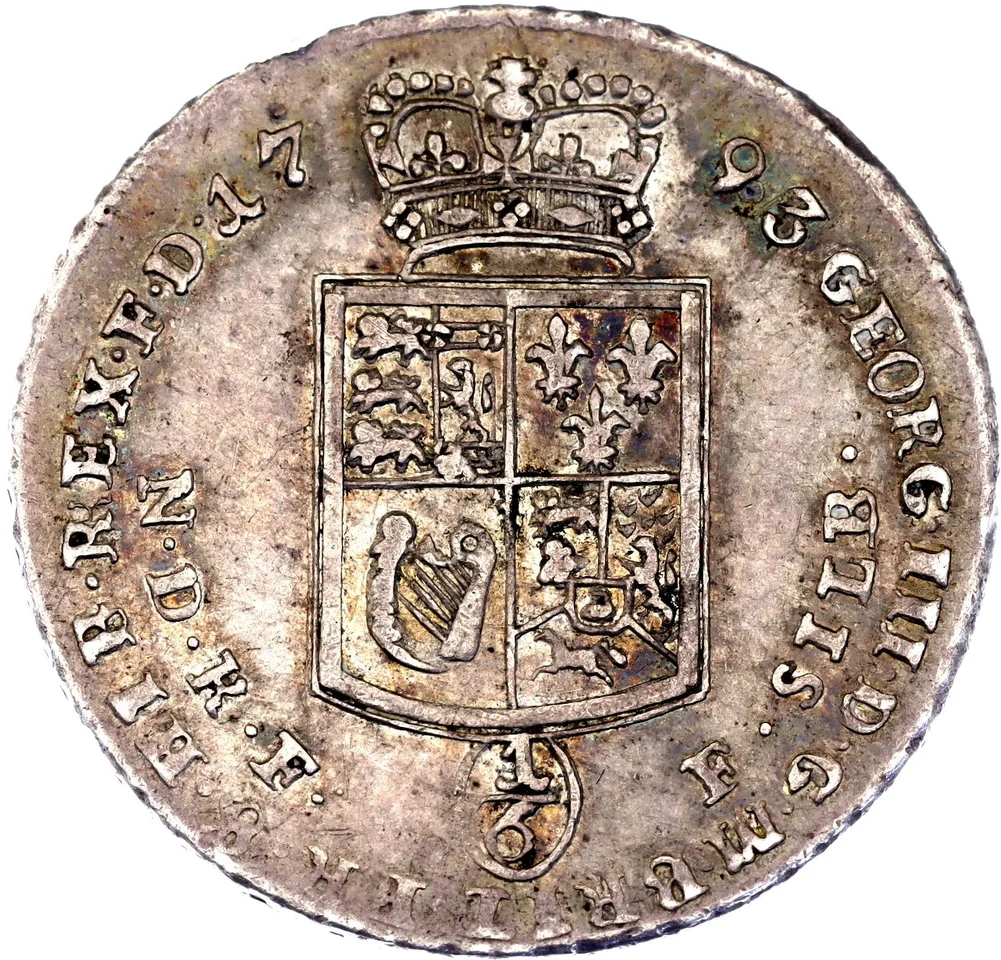
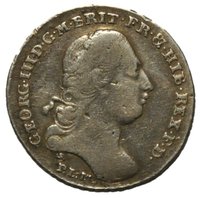
Crowned arms, value below, legend around.
Inscription:
GEORG.III.D.G.M.BRIT.FR. & HIB.REX.F.D.1798
Script: Latin
Reverse
Description:
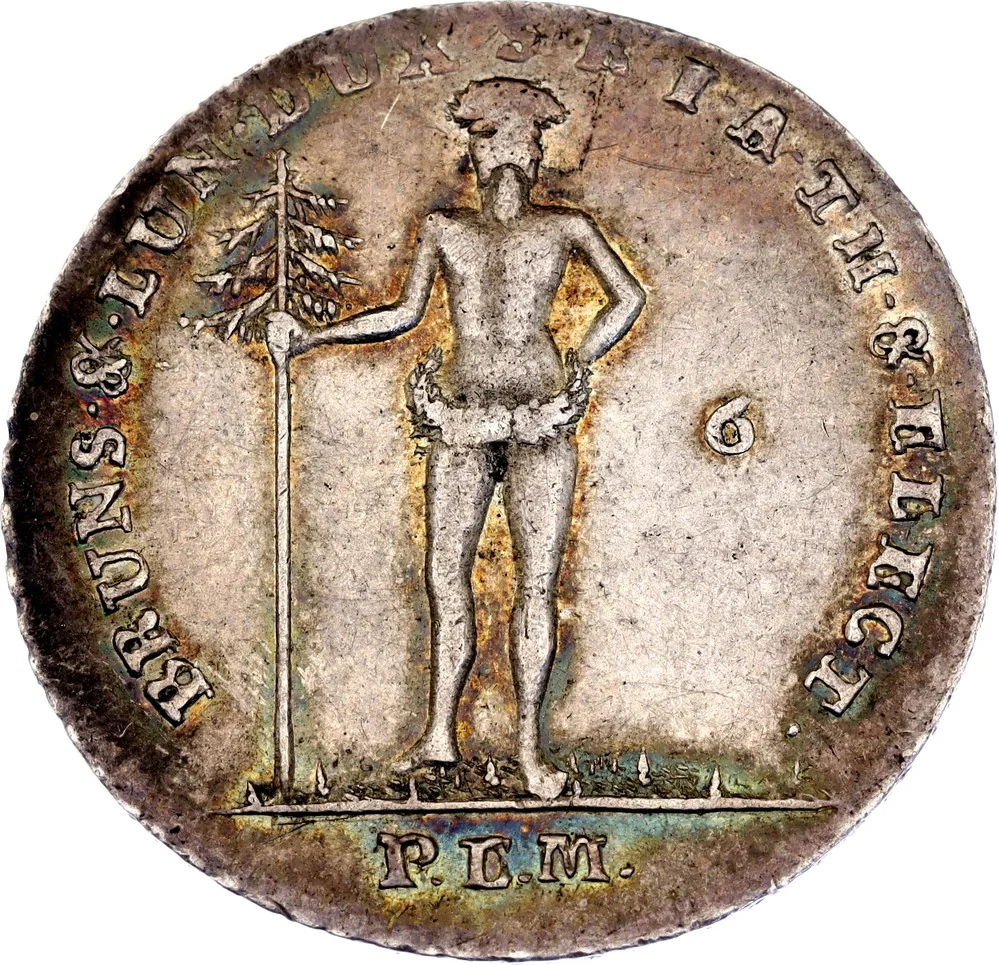
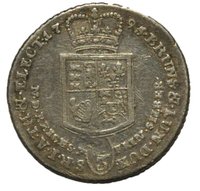
Wild man with a tree in right hand, a "6" to his left, encircled by legend.
Inscription:
BRUNS.& LUN.DUX.S.R.I.A.TH. & ELECT.
Script: Latin
Edge
Mints
| Name | Mark |
|---|---|
| Clausthal | — |
Mintings
| Year | Mint Mark | Mintage | Quality | Collection |
|---|---|---|---|---|
| 1793 | PLM | — | ||
| 1794 | PLM | — | ||
| 1795 | PLM | — | ||
| 1797 | PLM | — | ||
| 1798 | PLM | — | ||
| 1799 | PLM | — | ||
| 1800 | PLM | — |
Historical background
In 1793, the currency situation in the Duchy of Brunswick-Lüneburg, specifically the Principality of Calenberg (with its capital in Hanover), was complex and fragmented, reflecting the broader monetary disunity of the Holy Roman Empire. The territory did not have a single, unified coinage system. Instead, circulation was dominated by the Reichsthaler (Imperial Thaler), a large silver coin defined by the imperial minting ordinances, and its fractional units like Gute Groschen. However, these existed alongside a plethora of other coins, including regional issues from Hanover itself, as well as foreign currencies from neighboring states like Prussia and Brunswick-Wolfenbüttel, all circulating simultaneously at varying exchange rates.
This multiplicity created significant practical difficulties for trade and daily life. The value of coins was not solely based on their denomination but on their intrinsic silver content and the authority of the issuing mint. Consequently, merchants and citizens had to be experts in assaying and exchange, often leading to confusion and exploitation. The situation was further strained by the political context of 1793, as the outbreak of the French Revolutionary Wars began to disrupt continental trade and bullion flows, potentially putting pressure on the silver supply needed for coinage.
Administratively, the currency was under the authority of the Hanoverian rulers, who were also the Kings of Great Britain in personal union. While there were efforts to maintain standards through periodic minting ordinances, the system lacked centralization and modern monetary policy. The underlying economic structure remained pre-industrial and agrarian, meaning that the chaotic currency system was a persistent, if inefficient, feature of the economy, one that would not be fully resolved until the Napoleonic era and the later creation of a unified German monetary union.
This multiplicity created significant practical difficulties for trade and daily life. The value of coins was not solely based on their denomination but on their intrinsic silver content and the authority of the issuing mint. Consequently, merchants and citizens had to be experts in assaying and exchange, often leading to confusion and exploitation. The situation was further strained by the political context of 1793, as the outbreak of the French Revolutionary Wars began to disrupt continental trade and bullion flows, potentially putting pressure on the silver supply needed for coinage.
Administratively, the currency was under the authority of the Hanoverian rulers, who were also the Kings of Great Britain in personal union. While there were efforts to maintain standards through periodic minting ordinances, the system lacked centralization and modern monetary policy. The underlying economic structure remained pre-industrial and agrarian, meaning that the chaotic currency system was a persistent, if inefficient, feature of the economy, one that would not be fully resolved until the Napoleonic era and the later creation of a unified German monetary union.
💎 Very Rare