

¼ thaler – Hungary
Add to wishlist
Hungary
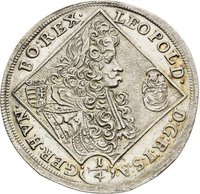
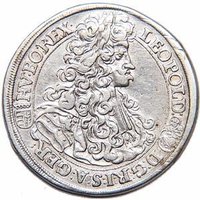
Obverse
Description:
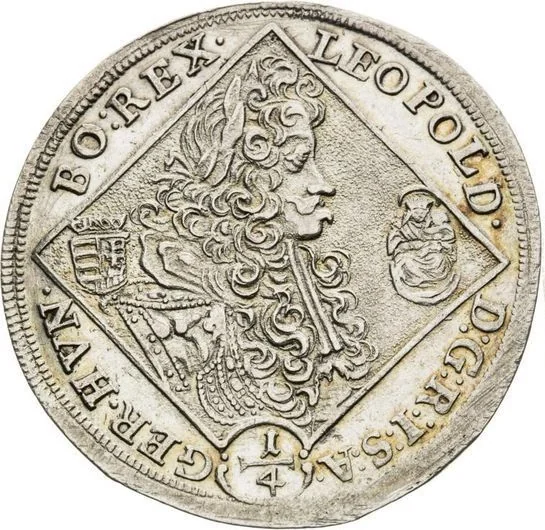
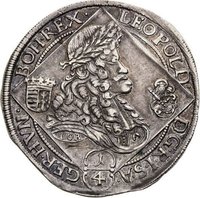
Bust right, Madonna and child, and arms in a rhombus; value below. Legend in four quartered pearl circles.
Inscription:
LEOPOLD · D · G · RO · IM · SA (1/4) GER · HVNG et BOH · REX ·
Script: Latin
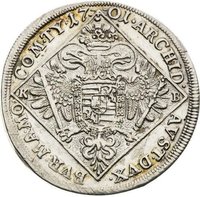
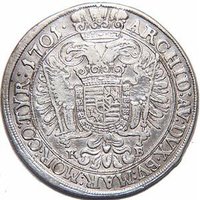
Reverse
Description:
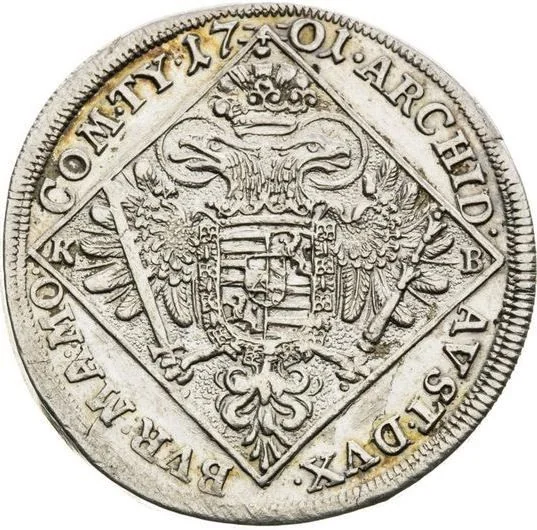
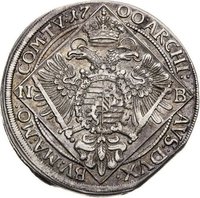
Imperial eagle in rhombus, legend in quartered pearls. Date divided in legend, no pearl border.
Inscription:
ARCHID · AVST · DVX · BVR · MA · MO : COM · TY 17 01
Script: Latin
Edge
Plain
Categories
| Symbols> Coat of Arms |
| Object> Cold weapons |
Mints
| Name | Mark |
|---|---|
| Kremnica | KB |
Mintings
| Year | Mint Mark | Mintage | Quality | Collection |
|---|---|---|---|---|
| 1700 | K | — | ||
| 1701 | K | — | ||
| 1703 | K | — |
Historical background
In 1700, Hungary’s currency situation was complex and unstable, deeply entangled with its political status within the Habsburg Monarchy. Following the Ottoman defeat at the Battle of Vienna (1683) and the subsequent reconquest of most of the Kingdom of Hungary, the territory was under the control of the Habsburg court in Vienna. The official currency was the silver Thaler (or Tallér), but the monetary system was not unified. Habsburg-minted coins, including thalers, kreutzers, and denars, circulated alongside older Hungarian issues, foreign coins from trade, and even Ottoman coins in some regions, creating a chaotic and inefficient marketplace.
This period was marked by severe currency debasement, a common Habsburg practice to finance continuous warfare, particularly against the Ottoman Empire and later in the War of the Spanish Succession. The Vienna court frequently reduced the silver content in smaller coins like kreutzers, leading to inflation and a loss of public trust. "Good money" (full-weight silver thalers) was often hoarded or used for foreign trade, while "bad money" (debased coins) flooded domestic circulation, a classic example of Gresham’s Law. This debasement effectively taxed the Hungarian economy, fueling resentment among the nobility and populace.
Furthermore, the Hungarian estates had limited control over their own fiscal policy, as minting rights were centralized under the Habsburgs. This economic subjugation was a key point of political contention, contributing to the growing national discontent that would erupt in the Rákóczi Uprising of 1703-1711. Thus, the currency chaos of 1700 was not merely an economic issue but a symbol of Hungary’s strained integration into the Habsburg state, where monetary policy served imperial ambitions at the direct expense of local stability and prosperity.
This period was marked by severe currency debasement, a common Habsburg practice to finance continuous warfare, particularly against the Ottoman Empire and later in the War of the Spanish Succession. The Vienna court frequently reduced the silver content in smaller coins like kreutzers, leading to inflation and a loss of public trust. "Good money" (full-weight silver thalers) was often hoarded or used for foreign trade, while "bad money" (debased coins) flooded domestic circulation, a classic example of Gresham’s Law. This debasement effectively taxed the Hungarian economy, fueling resentment among the nobility and populace.
Furthermore, the Hungarian estates had limited control over their own fiscal policy, as minting rights were centralized under the Habsburgs. This economic subjugation was a key point of political contention, contributing to the growing national discontent that would erupt in the Rákóczi Uprising of 1703-1711. Thus, the currency chaos of 1700 was not merely an economic issue but a symbol of Hungary’s strained integration into the Habsburg state, where monetary policy served imperial ambitions at the direct expense of local stability and prosperity.
Series: 1700 Hungary circulation coins
✨ Legendary