

1 denier – Hungary
Add to wishlist
Hungary
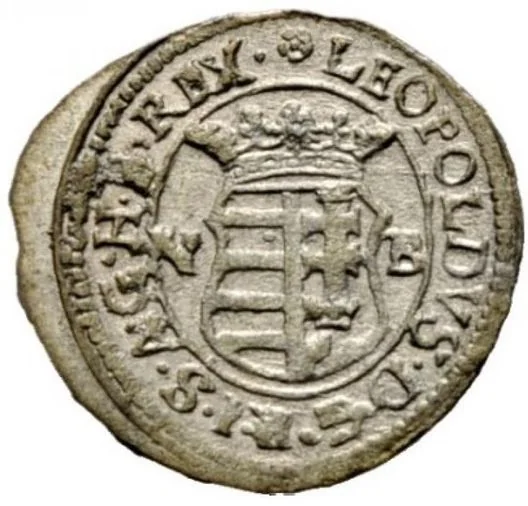
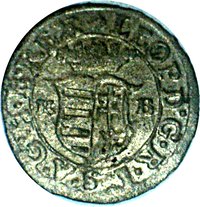
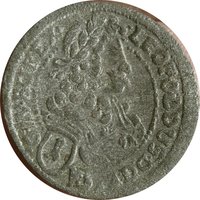
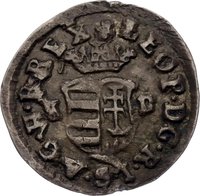
Obverse
Description:
Crowned arms divide N-B, within pearl circle. Nagybánya mint.
Inscription:
LEOPOLDVS · D · G · R · I · S · A · H · B · REX ·
N B
N B
Script: Latin
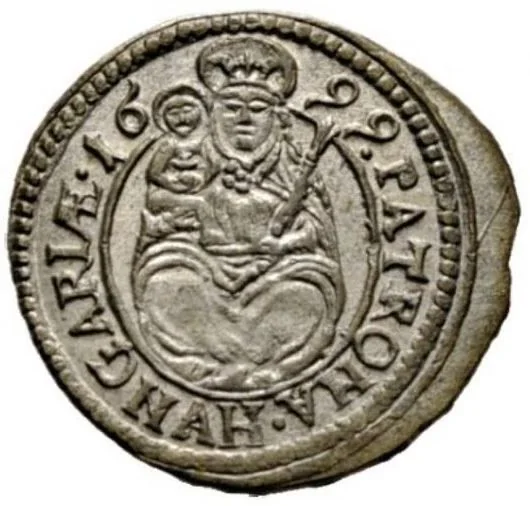
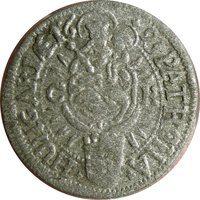
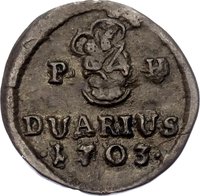
Reverse
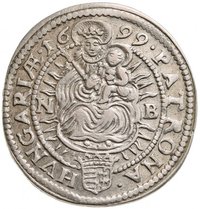
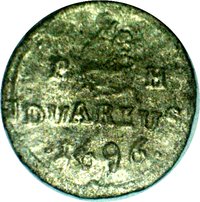
Description:
A non-radiant Madonna and Child, crowned and within a pearl circle, bisects the date with her head.
Inscription:
PATRONA · HUNGARIÆ · 16 99 ·
Script: Latin
Edge
Plain
Mints
| Name | Mark |
|---|---|
| Baia Mare | NB |
Mintings
| Year | Mint Mark | Mintage | Quality | Collection |
|---|---|---|---|---|
| 1695 | N | — | ||
| 1698 | N | — | ||
| 1699 | N | — |
Historical background
In 1695, Hungary’s currency situation was chaotic and deeply unstable, a direct consequence of its position on the front line of the Habsburg-Ottoman wars. The Kingdom of Hungary, largely under Habsburg rule but with significant territories still occupied by the Ottoman Empire, was financially exhausted by decades of continuous conflict. To fund the massive military expenditures of the Holy League, the Habsburg court in Vienna, under Emperor Leopold I, resorted to severe currency debasement. The primary coin, the silver thaler, remained stable for international trade, but the everyday silver denars and copper coins issued by the Hungarian mints were systematically degraded with reduced precious metal content, leading to rampant inflation.
This period saw the proliferation of poorly minted, low-value copper coins, known as krajcár (kreuzer), which flooded the market to pay soldiers and suppliers. The official exchange rate between these debased coins and the silver thaler was artificially set by the authorities, but the market rate was far worse, causing significant hardship for the population, particularly peasants and soldiers paid in near-worthless copper. Furthermore, older, higher-quality silver coins were hoarded or melted down, following Gresham’s Law (“bad money drives out good”), which only accelerated the economic crisis and loss of confidence in the currency.
The situation was compounded by a fractured monetary geography. Alongside the debased Habsburg-Hungarian coins, older Hungarian issues, Ottoman coins in the south, and even Dutch thalers and Spanish pieces of eight circulated in trade, creating a complex and unreliable monetary environment. This currency chaos eroded domestic economic activity, stifled trade, and placed a crushing burden on the Hungarian estates and peasantry, who were taxed based on outdated valuations. The monetary instability of 1695 was therefore a critical facet of the broader social and political tensions that would later fuel the War of Independence led by Prince Francis II Rákóczi in the early 18th century.
This period saw the proliferation of poorly minted, low-value copper coins, known as krajcár (kreuzer), which flooded the market to pay soldiers and suppliers. The official exchange rate between these debased coins and the silver thaler was artificially set by the authorities, but the market rate was far worse, causing significant hardship for the population, particularly peasants and soldiers paid in near-worthless copper. Furthermore, older, higher-quality silver coins were hoarded or melted down, following Gresham’s Law (“bad money drives out good”), which only accelerated the economic crisis and loss of confidence in the currency.
The situation was compounded by a fractured monetary geography. Alongside the debased Habsburg-Hungarian coins, older Hungarian issues, Ottoman coins in the south, and even Dutch thalers and Spanish pieces of eight circulated in trade, creating a complex and unreliable monetary environment. This currency chaos eroded domestic economic activity, stifled trade, and placed a crushing burden on the Hungarian estates and peasantry, who were taxed based on outdated valuations. The monetary instability of 1695 was therefore a critical facet of the broader social and political tensions that would later fuel the War of Independence led by Prince Francis II Rákóczi in the early 18th century.
Series: 1695 Hungary circulation coins

✨ Legendary