

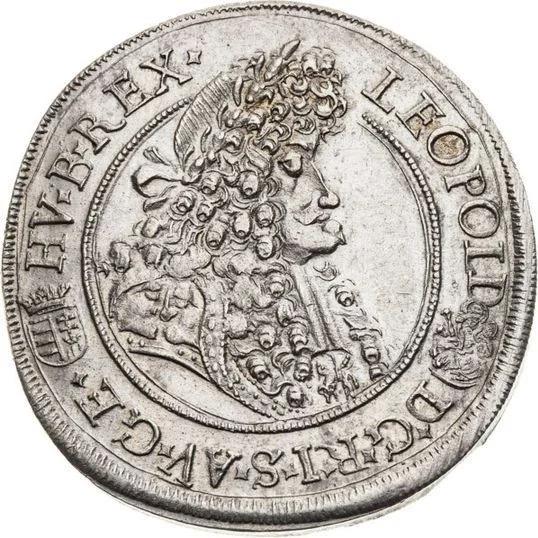
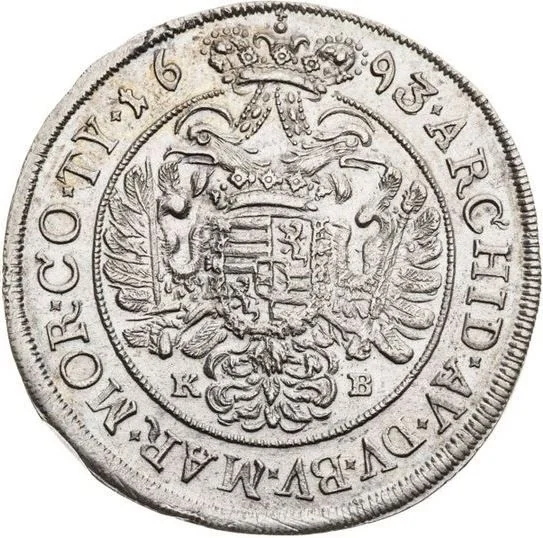

Obverse
Description:
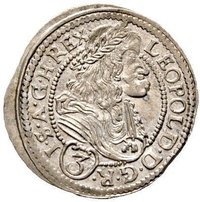
Bust facing right, Hungarian shield on left. Lower bust than earlier issue, lion head on shoulder.
Inscription:
.LEOPOLD D:G:R:I:S:AV:GE:HV:B:REX.
Script: Latin
Reverse
Description:
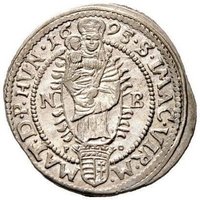
Imperial eagle, crown above, divides mint mark and date.
Inscription:
.ARCHID:AV:DV:BV:MAR:MOR:CO:TYR 16 93
K B
K B
Script: Latin
Edge
Mints
| Name | Mark |
|---|---|
| Kremnica | KB |
Mintings
| Year | Mint Mark | Mintage | Quality | Collection |
|---|---|---|---|---|
| 1692 | K | — | ||
| 1693 | K | — |
Historical background
In 1692, Hungary’s currency situation was chaotic and deeply influenced by the ongoing Great Turkish War (1683-1699). The Habsburg monarchy, which controlled the Kingdom of Hungary, was financing its massive military campaigns against the Ottoman Empire primarily through debasement of the coinage. The imperial mint in Nagybánya (today Baia Mare, Romania) was producing vast quantities of low-quality silver coins, particularly the denarius (denar). This deliberate reduction in the silver content, while maintaining the same face value, created a severe inflation that was felt acutely across the war-ravaged Hungarian economy.
This period saw a confusing circulation of multiple coin types simultaneously. Older, higher-quality thalers and ducats were hoarded by the population, disappearing from everyday use according to Gresham’s Law (“bad money drives out good”). In their place, the debased kriegsgroschen (war coins) and lightweight denars became the common media of exchange, leading to price instability and a loss of public trust. Furthermore, the Ottoman-occupied territories of Hungary used different Ottoman currency, while Transylvania, under Habsburg control but with autonomy, had its own minting practices, adding to the monetary fragmentation.
The consequences were socially destabilizing. Soldiers paid in the worthless coins struggled to buy supplies, peasants saw their tax burdens effectively increase as the real value of cash payments fell, and merchants faced unpredictable losses. The Habsburg state’s fiscal policy, prioritizing war finance over monetary stability, thus placed a heavy economic burden on Hungary, exacerbating the devastation caused by decades of conflict and hindering recovery in the reclaimed territories. This period stands as a stark example of early modern wartime inflation and fiscal exploitation within the Habsburg empire.
This period saw a confusing circulation of multiple coin types simultaneously. Older, higher-quality thalers and ducats were hoarded by the population, disappearing from everyday use according to Gresham’s Law (“bad money drives out good”). In their place, the debased kriegsgroschen (war coins) and lightweight denars became the common media of exchange, leading to price instability and a loss of public trust. Furthermore, the Ottoman-occupied territories of Hungary used different Ottoman currency, while Transylvania, under Habsburg control but with autonomy, had its own minting practices, adding to the monetary fragmentation.
The consequences were socially destabilizing. Soldiers paid in the worthless coins struggled to buy supplies, peasants saw their tax burdens effectively increase as the real value of cash payments fell, and merchants faced unpredictable losses. The Habsburg state’s fiscal policy, prioritizing war finance over monetary stability, thus placed a heavy economic burden on Hungary, exacerbating the devastation caused by decades of conflict and hindering recovery in the reclaimed territories. This period stands as a stark example of early modern wartime inflation and fiscal exploitation within the Habsburg empire.
✨ Legendary