

1 denier – Hungary
Add to wishlist
Hungary
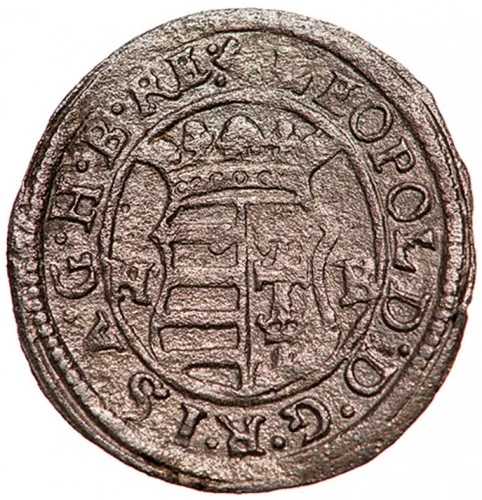
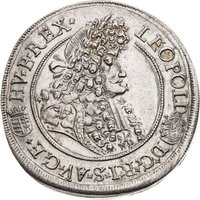
Obverse
Description:
Crowned arms divide N-B, within pearl circle. Nagybánya mint.
Inscription:
LEOPOLDVS · D · G · R · I · S · A · H · B · REX ·
N B
N B
Script: Latin
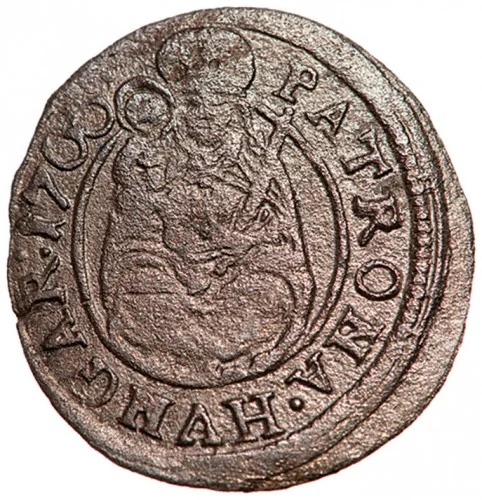
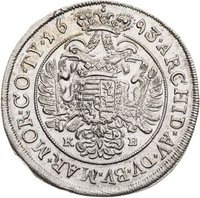
Reverse
Description:
A non-radiant Madonna, crowned and holding the child on her right arm, breaks through a pearl circle. The date concludes the inscription.
Inscription:
PATRONA · HUNGARIÆ · 1703 ·
Script: Latin
Edge
Plain
Mints
| Name | Mark |
|---|---|
| Baia Mare | NB |
Mintings
| Year | Mint Mark | Mintage | Quality | Collection |
|---|---|---|---|---|
| 1691 | N-B | — | ||
| 1693 | N-B | — | ||
| 1695 | N-B | — | ||
| 1698 | N-B | — | ||
| 1699 | N-B | — | ||
| 1700 | N-B | — | ||
| 1701 | N-B | — | ||
| 1702 | N-B | — |
Historical background
In 1691, Hungary’s currency situation was chaotic and deeply influenced by the ongoing Great Turkish War (1683-1699). The Habsburg monarchy, which controlled the majority of "Royal Hungary," was financing its massive military campaigns against the Ottoman Empire primarily through heavy taxation and the debasement of coinage. The imperial authorities in Vienna, notably under Leopold I, repeatedly reduced the silver content in coins minted for use in Hungary, such as the denarius and the tallér (thaler). This led to severe inflation, a loss of public confidence in the currency, and widespread economic hardship in a kingdom already devastated by decades of warfare and occupation.
The monetary landscape was further complicated by the circulation of a bewildering variety of coins. Alongside the debased new Habsburg issues, older, higher-quality Hungarian coins from before the wars, Ottoman akçe, Dutch thalers, and other foreign currencies circulated simultaneously. This created a complex and unstable exchange environment where the intrinsic metal value of a coin often far exceeded its nominal face value, leading to hoarding of good coinage and the rapid spending of debased money—a classic example of Gresham’s Law. The Habsburgs' attempts to impose arbitrary exchange rates by decree failed to stabilize the situation, instead fostering a thriving black market for currency exchange.
This financial instability exacerbated social and political tensions within Hungary. The debasement was effectively a form of war tax that disproportionately burdened the Hungarian population, including the nobility. It fueled resentment against Habsburg fiscal policies and centralized control, contributing to the growing discontent that would later erupt in the anti-Habsburg uprising led by Prince Francis II Rákóczi in 1703. Thus, the currency crisis of 1691 was not merely an economic issue but a key political grievance, undermining the relationship between the Hungarian estates and the Viennese court during a critical period of national reconquest and re-integration.
The monetary landscape was further complicated by the circulation of a bewildering variety of coins. Alongside the debased new Habsburg issues, older, higher-quality Hungarian coins from before the wars, Ottoman akçe, Dutch thalers, and other foreign currencies circulated simultaneously. This created a complex and unstable exchange environment where the intrinsic metal value of a coin often far exceeded its nominal face value, leading to hoarding of good coinage and the rapid spending of debased money—a classic example of Gresham’s Law. The Habsburgs' attempts to impose arbitrary exchange rates by decree failed to stabilize the situation, instead fostering a thriving black market for currency exchange.
This financial instability exacerbated social and political tensions within Hungary. The debasement was effectively a form of war tax that disproportionately burdened the Hungarian population, including the nobility. It fueled resentment against Habsburg fiscal policies and centralized control, contributing to the growing discontent that would later erupt in the anti-Habsburg uprising led by Prince Francis II Rákóczi in 1703. Thus, the currency crisis of 1691 was not merely an economic issue but a key political grievance, undermining the relationship between the Hungarian estates and the Viennese court during a critical period of national reconquest and re-integration.
✨ Legendary