

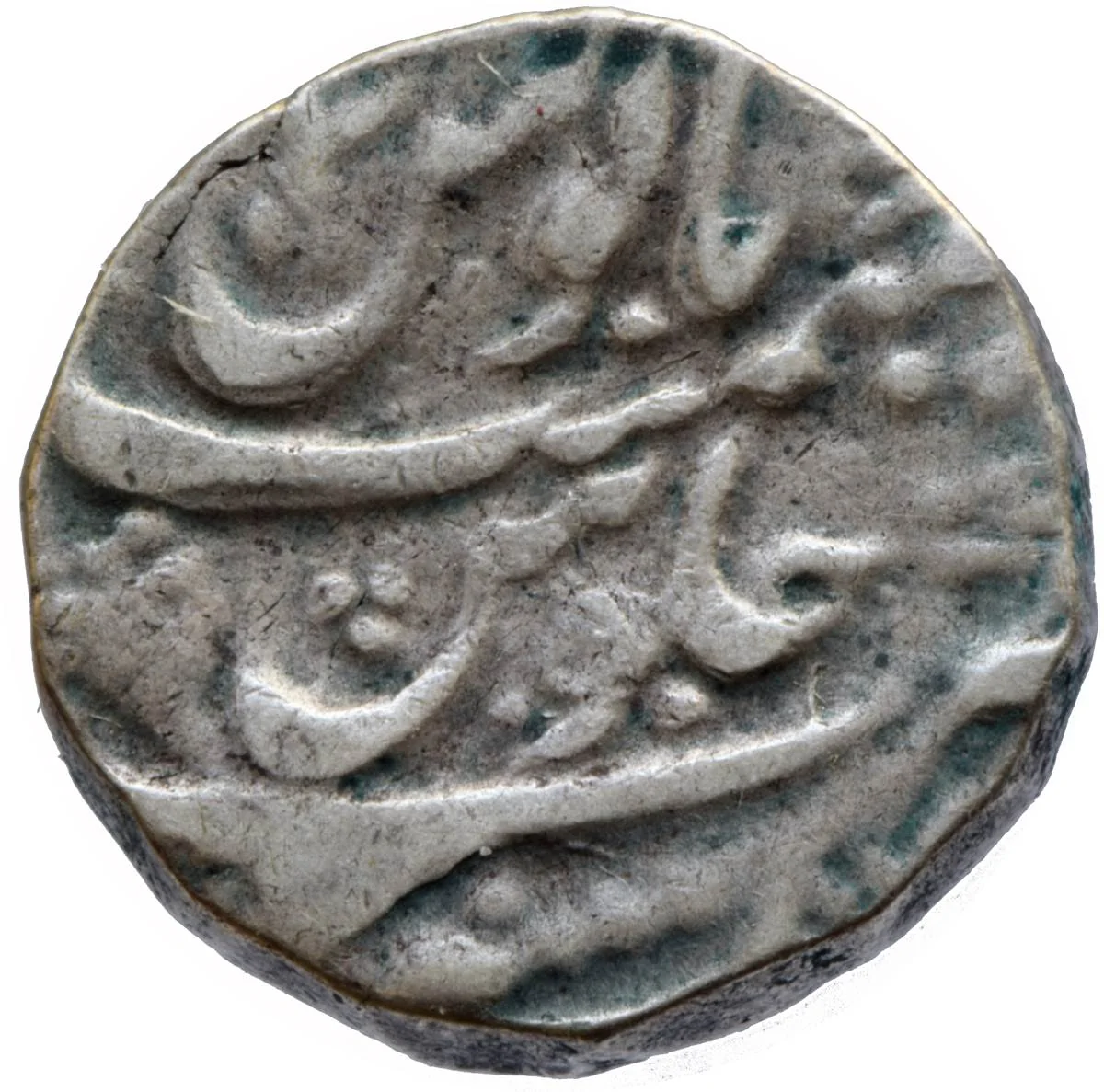
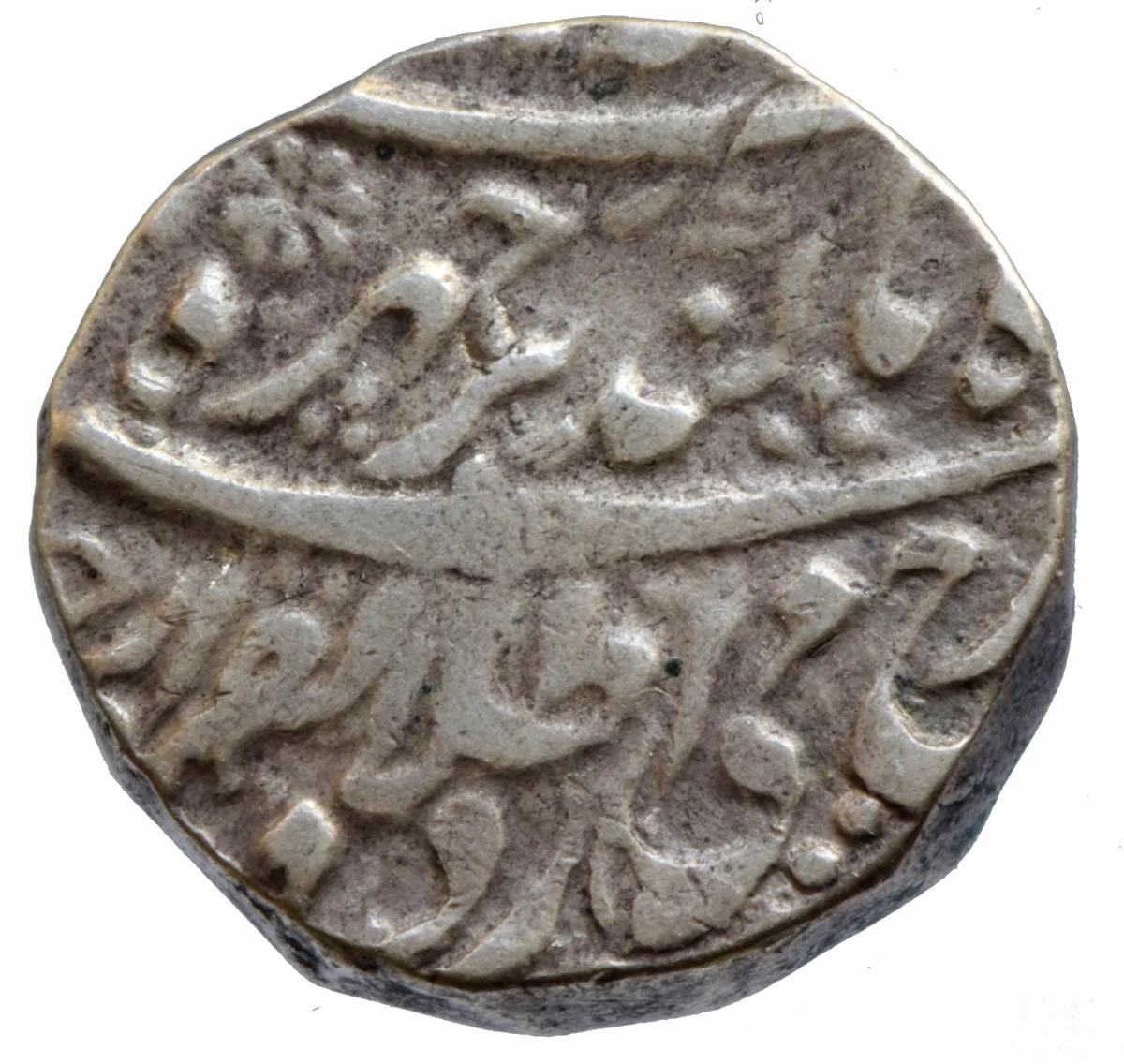
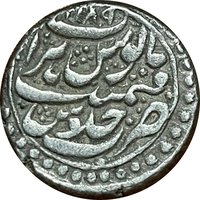
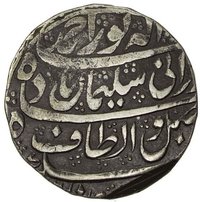
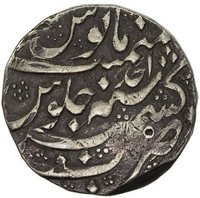
1 Rupee – Afghanistan
Afghanistan
Context
Material
References
KM: #Click to copy to clipboard238
Numista: #188218
Value
Bullion value: $32.86
Mintings
| Year | Mint Mark | Mintage | Quality | Collection |
|---|---|---|---|---|
| 1772 | — | — | ||
| 1773 | — | — | ||
| 1774 | — | — | ||
| 1776 | — | — | ||
| 1778 | — | — | ||
| 1779 | — | — | ||
| 1780 | — | — | ||
| 1781 | — | — | ||
| 1781 | — | — | ||
| 1782 | — | — | ||
| 1783 | — | — | ||
| 1784 | — | — | ||
| 1786 | — | — |
Historical background
In 1772, the currency situation in Afghanistan was characterized by a complex and fragmented system, reflecting the political decentralization of the region. The Durrani Empire, founded by Ahmad Shah Durrani in 1747, was the dominant power, but its control over various provinces and principalities was often nominal. Consequently, while the empire issued its own coinage, a multitude of regional and local mints operated with significant autonomy. The primary currency was the silver rupee, but its weight, purity, and design could vary considerably depending on where it was struck, leading to a lack of standardization that complicated trade.
The monetary system was fundamentally silver-based, with gold coins (mohurs) and copper coins (dams or fulus) playing secondary roles for larger transactions and small-scale local trade, respectively. The most authoritative coins were those minted in the empire's capital cities, such as Kandahar and Kabul, bearing the name and titles of Ahmad Shah Durrani's successor, Timur Shah (who had ascended in 1772 upon his father's death). However, the coins of Herat, Peshawar, and other regional centers often circulated at different values. This period also saw the continued circulation of older Mughal, Safavid, and even Central Asian coins, which were valued for their metal content, adding another layer of complexity to the exchange system.
This fragmented currency landscape was a direct result of the empire's tribal confederacy structure and the reliance on local khans and governors for administration. The lack of a uniform currency posed challenges for long-distance merchants and state revenue collection, as transactions required constant evaluation and assay. Ultimately, the monetary situation in 1772 mirrored the political reality: a patchwork of local authority under a loosely centralized monarchy, where economic unity was secondary to maintaining the loyalties of powerful regional factions.
The monetary system was fundamentally silver-based, with gold coins (mohurs) and copper coins (dams or fulus) playing secondary roles for larger transactions and small-scale local trade, respectively. The most authoritative coins were those minted in the empire's capital cities, such as Kandahar and Kabul, bearing the name and titles of Ahmad Shah Durrani's successor, Timur Shah (who had ascended in 1772 upon his father's death). However, the coins of Herat, Peshawar, and other regional centers often circulated at different values. This period also saw the continued circulation of older Mughal, Safavid, and even Central Asian coins, which were valued for their metal content, adding another layer of complexity to the exchange system.
This fragmented currency landscape was a direct result of the empire's tribal confederacy structure and the reliance on local khans and governors for administration. The lack of a uniform currency posed challenges for long-distance merchants and state revenue collection, as transactions required constant evaluation and assay. Ultimately, the monetary situation in 1772 mirrored the political reality: a patchwork of local authority under a loosely centralized monarchy, where economic unity was secondary to maintaining the loyalties of powerful regional factions.
💎 Extremely Rare