

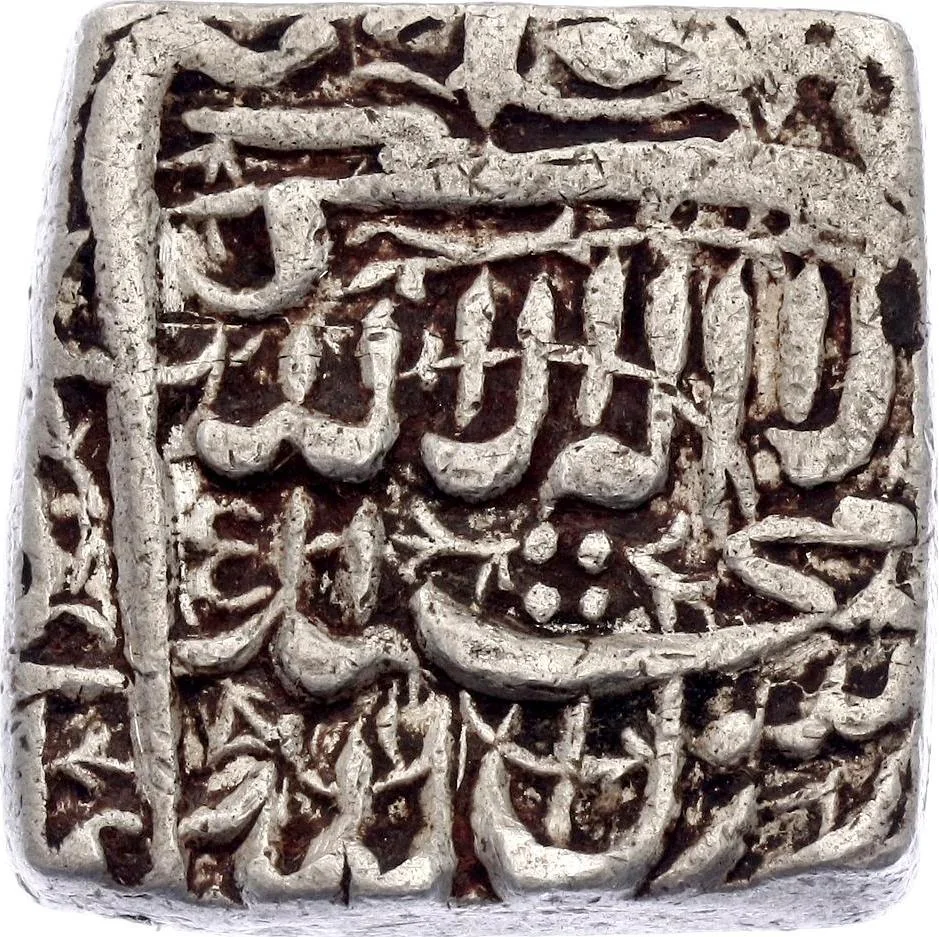
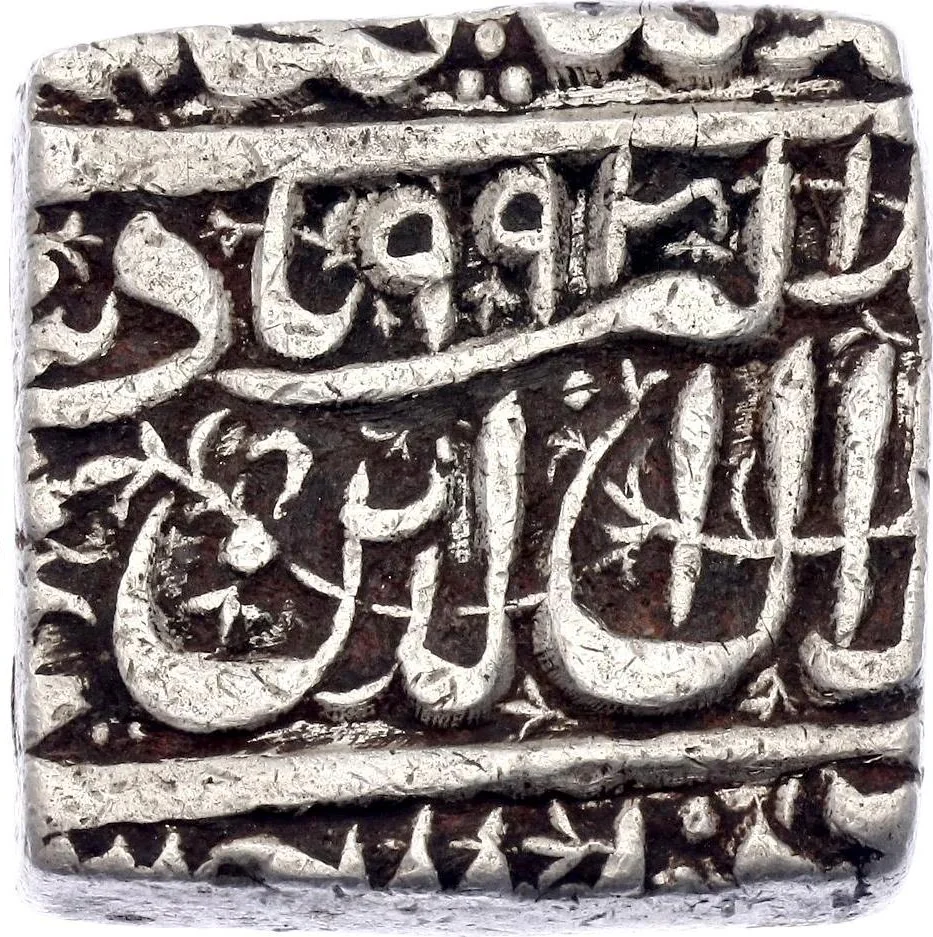
1 Rupee – Mughal Empire
India
Context
Years: 1579–1593
Country: India 
Issuer: Mughal Empire
Ruler: Akbar
Currency:
(1540—1842)
Demonetized: Yes
Material
Weight: 11.44 g
Silver weight: 11.44 g
Thickness: 4.4 mm
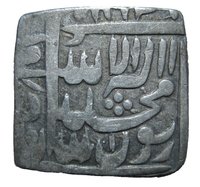
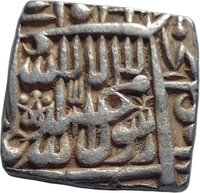
Shape: Irregular square
Composition: Silver
Magnetic: No
References
KM: #Click to copy to clipboard82.1
Numista: #18788
Value
Bullion value: $33.05
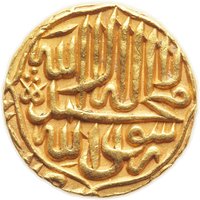
Obverse
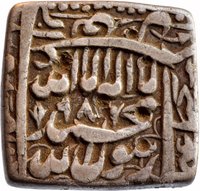
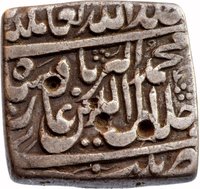
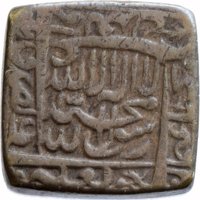
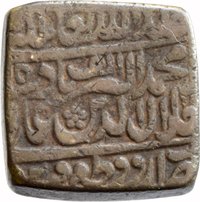
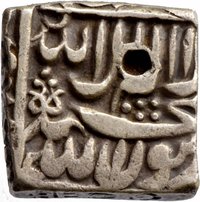
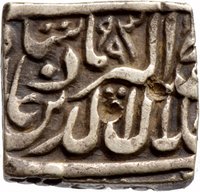
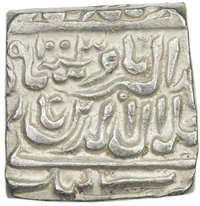
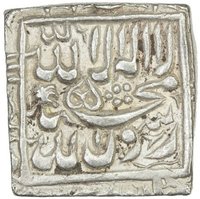
Description:
Akbar I (r. 1556–1605)
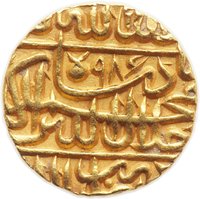
Reverse
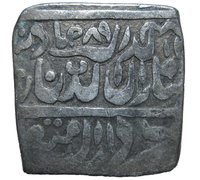
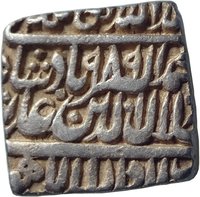
Inscription:
٩٩٢
Edge
Rough
Mintings
| Year | Mint Mark | Mintage | Quality | Collection |
|---|---|---|---|---|
| 1579 | — | — | ||
| 1580 | — | — | ||
| 1581 | — | — | ||
| 1582 | — | — | ||
| 1583 | — | — | ||
| 1584 | — | — | ||
| 1585 | — | — | ||
| 1586 | — | — | ||
| 1587 | — | — | ||
| 1588 | — | — | ||
| 1589 | — | — | ||
| 1590 | — | — | ||
| 1591 | — | — | ||
| 1592 | — | — | ||
| 1593 | — | — |
Historical background
In 1579, the Mughal Empire's currency system was robust and standardized, reflecting the administrative consolidation achieved under Emperor Akbar (r. 1556–1605). The foundation was the silver rupee (or rupya), a high-purity coin that served as the primary unit of account and medium for large transactions and revenue collection. It was complemented by a tri-metallic system: the gold mohur for high-value trade and hoarding, and a range of copper dams (1 rupee = 40 dams) for everyday local commerce. This system, centrally controlled from the imperial mints (dar al-zarb), provided economic stability and facilitated the integration of the empire's vast territories.
Akbar had recently undertaken significant monetary reforms, moving away from the earlier Sher Shah Suri's standard to introduce his own imperial coinage. These coins, minted in major cities like Lahore, Delhi, and Ahmedabad, bore elaborate Persian inscriptions, often including religious formulas and the names of the Rashidun Caliphs, reflecting Akbar's evolving ideological stance. The year 1579 is particularly notable as it marked the issuance of the "Ilahi" rupee, part of Akbar's broader Din-i-Ilahi syncretic religious project. This coin replaced the traditional Islamic calendar date with the Ilahi era date, symbolizing the emperor's assertion of temporal and spiritual authority.
The currency situation was generally stable, supporting expansive economic activity. The uniform coinage enabled efficient revenue administration, funded Akbar's military campaigns and architectural projects, and lubricated both inland trade and burgeoning commerce with European traders arriving via the Indian Ocean. However, the system's health was inherently tied to the steady influx of precious metals, primarily silver from the New World entering through trade, and to the strength of central authority to maintain mint standards and prevent debasement across the empire.
Akbar had recently undertaken significant monetary reforms, moving away from the earlier Sher Shah Suri's standard to introduce his own imperial coinage. These coins, minted in major cities like Lahore, Delhi, and Ahmedabad, bore elaborate Persian inscriptions, often including religious formulas and the names of the Rashidun Caliphs, reflecting Akbar's evolving ideological stance. The year 1579 is particularly notable as it marked the issuance of the "Ilahi" rupee, part of Akbar's broader Din-i-Ilahi syncretic religious project. This coin replaced the traditional Islamic calendar date with the Ilahi era date, symbolizing the emperor's assertion of temporal and spiritual authority.
The currency situation was generally stable, supporting expansive economic activity. The uniform coinage enabled efficient revenue administration, funded Akbar's military campaigns and architectural projects, and lubricated both inland trade and burgeoning commerce with European traders arriving via the Indian Ocean. However, the system's health was inherently tied to the steady influx of precious metals, primarily silver from the New World entering through trade, and to the strength of central authority to maintain mint standards and prevent debasement across the empire.
⭐ Somewhat Rare