

10 Bahts (Rama VII) – Thailand
Non-circulating coins
Commemoration: 100th Anniversary of Rama VII
Series: 100th Anniversary of Rama VII
Thailand
Context
Year: 1993
Thai Year: 2536
Issuer: Thailand 
Ruler: Bhumibol Adulyadej
Currency:
(since 1897)
Total mintage: 810,000
Material
Diameter: 32 mm
Weight: 15 g
Shape: Round
Composition: Copper-nickel
Technique: Milled
Alignment: Medal alignment

flip
References
Y: #Click to copy to clipboard289
Numista: #12273
Value
Exchange value: 10 THB = $0.32
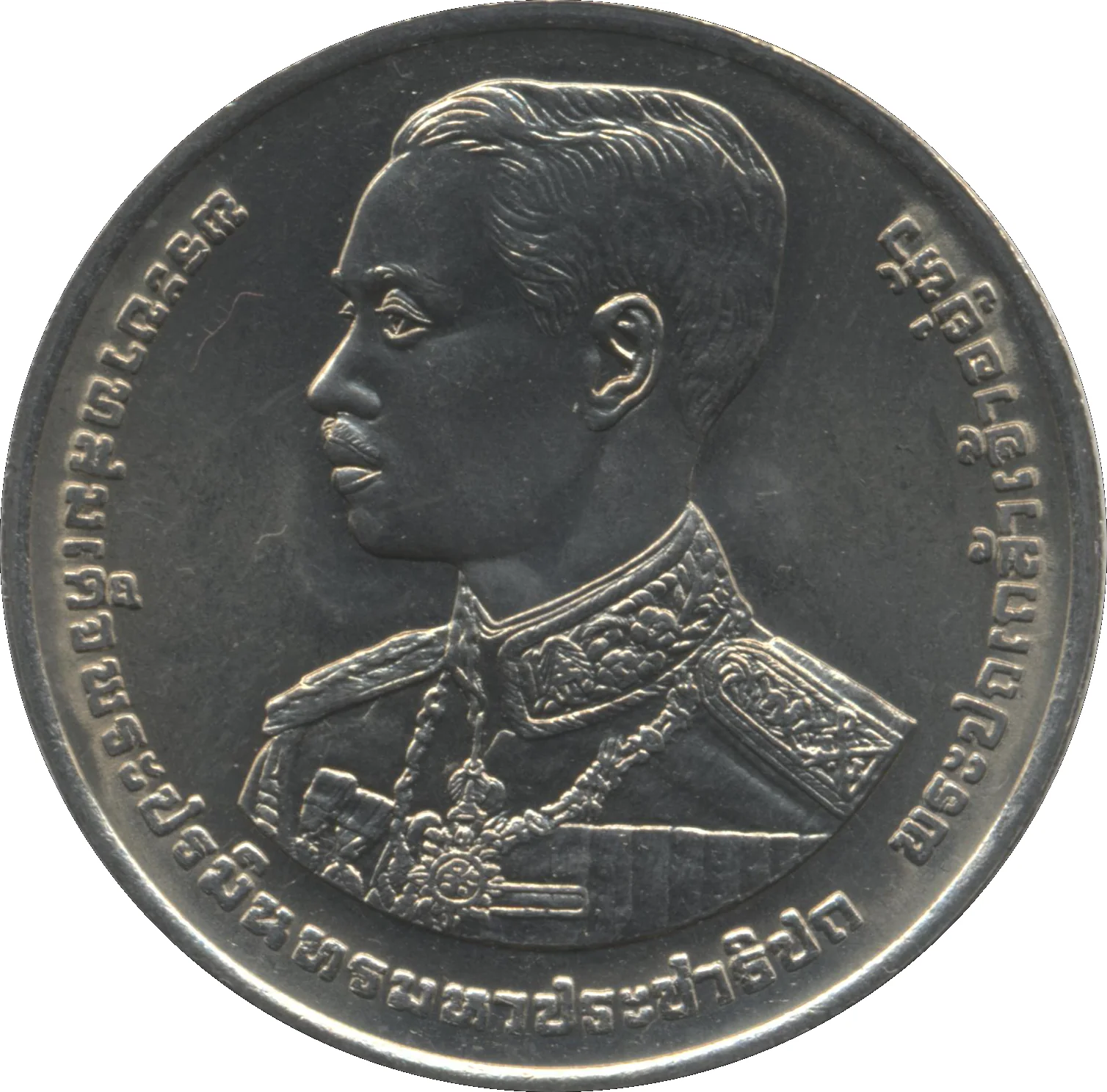
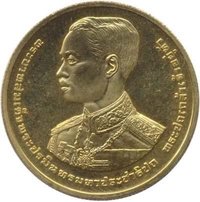
Obverse
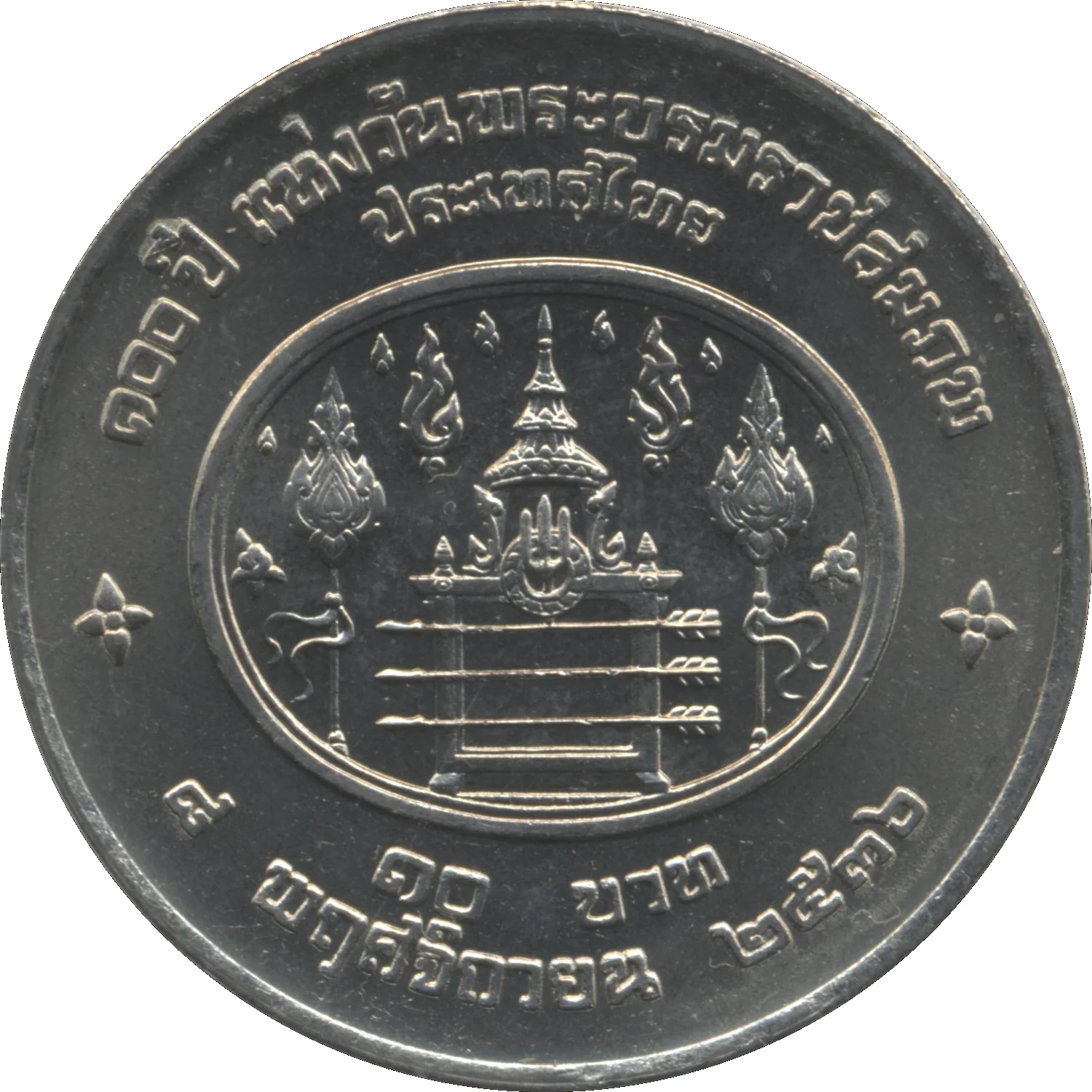
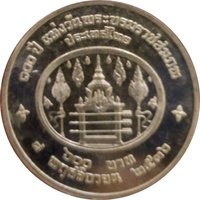
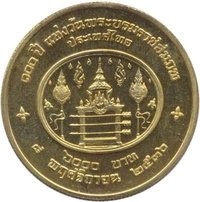
Reverse
Description:
Rana VII's privy seal: a crowned Trishula-in-Chakra with three left-pointing arrows, flanked by Bangsaeks and encircled by inscriptions.
Inscription:
๑๐๐ ปี แห่งวันพระบรมราชสมภพ
ประเทศไทย
๑๐ บาท
๘ พฤศจิกายน ๒๕๓๖
ประเทศไทย
๑๐ บาท
๘ พฤศจิกายน ๒๕๓๖
Translation:
100th Anniversary of the Royal Birth
Thailand
10 Baht
8 November 1993
Thailand
10 Baht
8 November 1993
Script: Thai
Language: Thai
Edge
Reeded
Categories
| Event> Birth anniversary |
| Person> Monarch |
Mintings
| Year | Mint Mark | Mintage | Quality | Collection |
|---|---|---|---|---|
| 1993 | — | 800,000 | ||
| 1993 | — | 10,000 | Proof |
Historical background
In 1993, Thailand's currency, the baht, was operating under a tightly managed exchange rate regime, pegged to a basket of currencies dominated by the US dollar. This policy, maintained by the Bank of Thailand, was a cornerstone of the country's economic strategy, providing stability for a decade of remarkable export-led growth and attracting substantial foreign investment. The peg was widely credited with fostering a climate of confidence, which fueled a booming economy and made Thailand a celebrated "Asian Tiger."
However, beneath this apparent stability, significant pressures were building. The baht's fixed exchange rate, combined with high domestic interest rates, encouraged massive short-term capital inflows, particularly into the booming property and stock markets. This led to concerns of asset bubbles and inflationary pressures. Furthermore, Thailand's current account deficit was widening alarmingly, as export growth began to slow due to rising competition from China and a strengthening US dollar, to which the baht was effectively tied. This made Thai goods more expensive internationally, eroding the country's competitiveness.
Consequently, 1993 represented a pivotal calm before the storm. While the currency peg remained officially secure and the economy was still growing, astute observers noted the growing imbalances. The Bank of Thailand introduced a limited offshore market, the Bangkok International Banking Facility (BIBF), in an attempt to manage these flows and internationalize the baht. Yet, these measures proved insufficient to address the fundamental misalignment, setting the stage for the speculative attacks that would culminate in the devastating Asian Financial Crisis of 1997, which forced the baht to be floated.
However, beneath this apparent stability, significant pressures were building. The baht's fixed exchange rate, combined with high domestic interest rates, encouraged massive short-term capital inflows, particularly into the booming property and stock markets. This led to concerns of asset bubbles and inflationary pressures. Furthermore, Thailand's current account deficit was widening alarmingly, as export growth began to slow due to rising competition from China and a strengthening US dollar, to which the baht was effectively tied. This made Thai goods more expensive internationally, eroding the country's competitiveness.
Consequently, 1993 represented a pivotal calm before the storm. While the currency peg remained officially secure and the economy was still growing, astute observers noted the growing imbalances. The Bank of Thailand introduced a limited offshore market, the Bangkok International Banking Facility (BIBF), in an attempt to manage these flows and internationalize the baht. Yet, these measures proved insufficient to address the fundamental misalignment, setting the stage for the speculative attacks that would culminate in the devastating Asian Financial Crisis of 1997, which forced the baht to be floated.
🌟 Uncommon