

1 ducat – Denmark
Add to wishlist
Denmark
Context
Year: 1758
Issuer: Denmark
Ruler: Frederick V
Currency:
(1625—1813)
Demonetized: Yes
Total mintage: 1,001
Material
References
KM: #
Numista: #186748
Value
Bullion value: $529.17
Obverse
Description:
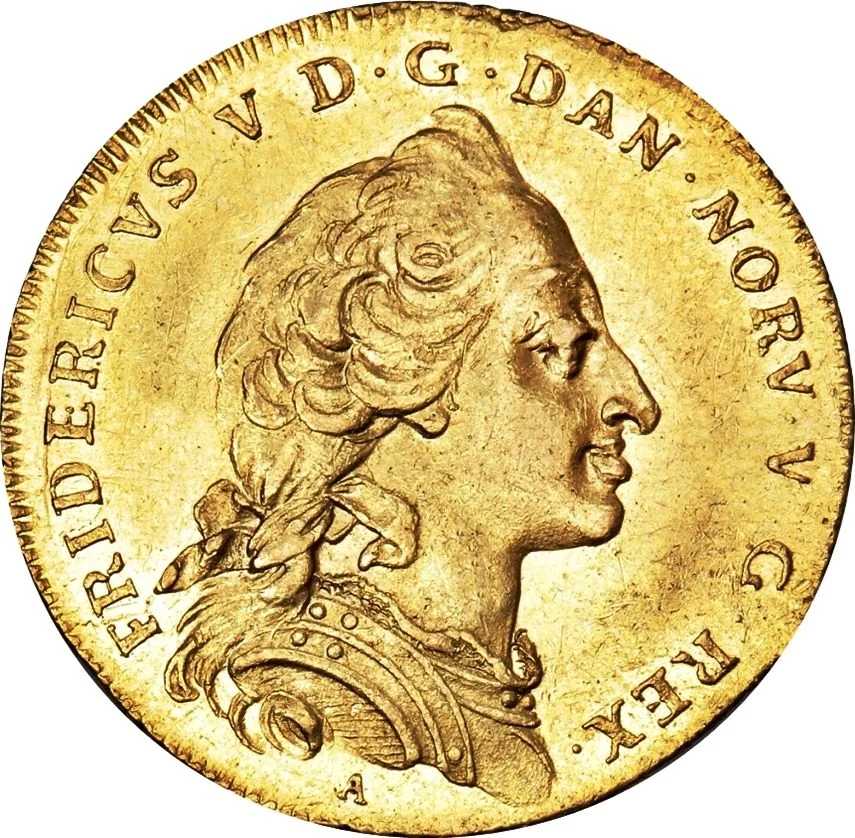
Armored bust of King Frederik V, facing right, with ribbon-tied hair.
Inscription:
FRIDERICVS V D • G • DAN • NORV • V G • REX •
A
A
Script: Latin
Engraver: Magnus Gustavus Arbien
Reverse
Description:
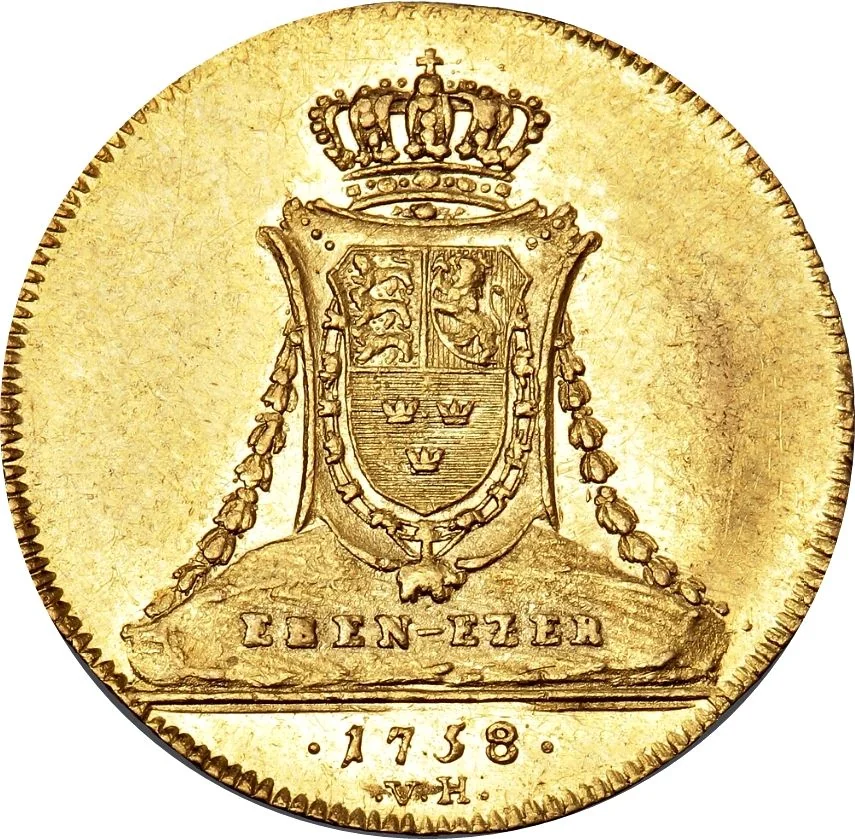
Danish, Norwegian, and Swedish arms, encircled by the Elephant Order. A crowned cartouche with garlands, above the sacred Eben-Ezer stone.
Inscription:
EBEN - EZER
_________
• 1758 •
• V • H •
_________
• 1758 •
• V • H •
Script: Latin
Engraver: Magnus Gustavus Arbien
Edge
Mints
| Name | Mark |
|---|---|
| Royal Danish Mint | — |
Mintings
| Year | Mint Mark | Mintage | Quality | Collection |
|---|---|---|---|---|
| 1758 | — | 1,001 |
Historical background
In 1758, Denmark-Norway operated under a silver-based monetary system, but the period was marked by significant currency instability and complexity. The primary unit was the rigsdaler, subdivided into marks and skilling. However, a critical problem was the coexistence of two parallel standards: the kurant rigsdaler (used for domestic bookkeeping and transactions) and the species rigsdaler (a higher-value coin containing actual silver). The exchange rate between these two was not fixed and fluctuated based on the silver content and market confidence, creating confusion for trade and public finances.
This instability was largely a legacy of earlier in the 18th century, when costly wars, particularly the Great Northern War, had forced the state to repeatedly devalue the kurant currency by reducing its silver content to fund expenditures. By 1758, the public's trust in the paper notes and lower-value coins was fragile. Furthermore, a chronic shortage of high-quality species coins in circulation hampered both everyday commerce and international trade, as foreign merchants demanded payment in reliable, full-bodied silver.
The situation placed considerable pressure on the government and the central bank, Den Københavnske Assignations-, Veksel- og Laanebank (founded in 1736). Authorities were engaged in an ongoing struggle to manage the money supply, curb inflation, and restore monetary order. Thus, the currency landscape in 1758 was one of transition and tension, defined by the state's efforts to stabilize a system weakened by past fiscal pressures while facilitating a growing economy.
This instability was largely a legacy of earlier in the 18th century, when costly wars, particularly the Great Northern War, had forced the state to repeatedly devalue the kurant currency by reducing its silver content to fund expenditures. By 1758, the public's trust in the paper notes and lower-value coins was fragile. Furthermore, a chronic shortage of high-quality species coins in circulation hampered both everyday commerce and international trade, as foreign merchants demanded payment in reliable, full-bodied silver.
The situation placed considerable pressure on the government and the central bank, Den Københavnske Assignations-, Veksel- og Laanebank (founded in 1736). Authorities were engaged in an ongoing struggle to manage the money supply, curb inflation, and restore monetary order. Thus, the currency landscape in 1758 was one of transition and tension, defined by the state's efforts to stabilize a system weakened by past fiscal pressures while facilitating a growing economy.
✨ Legendary