Logo Title
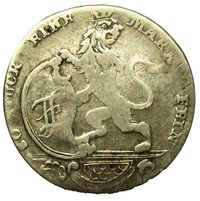
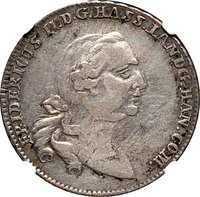
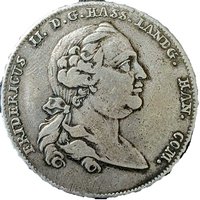
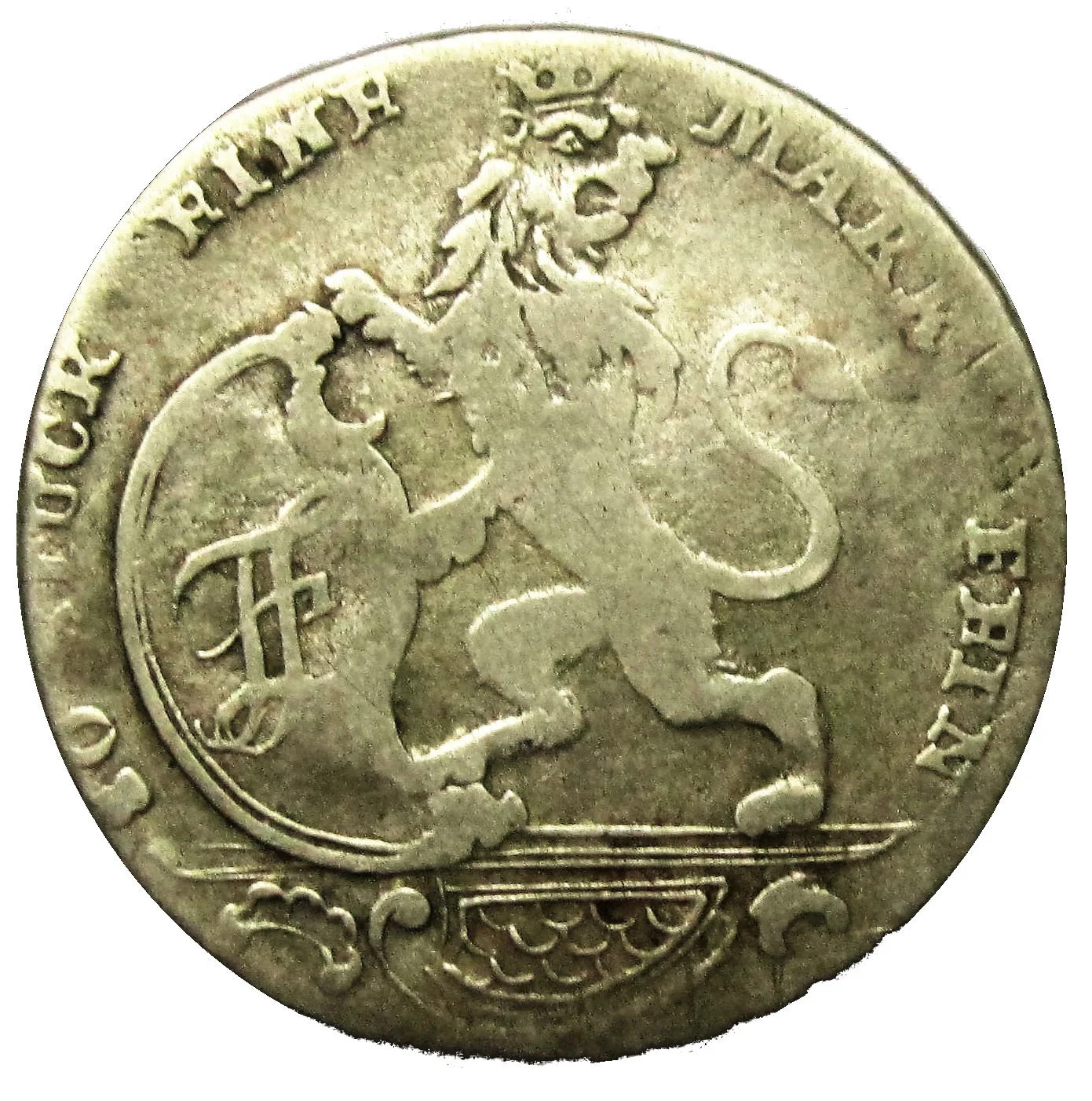
obverse
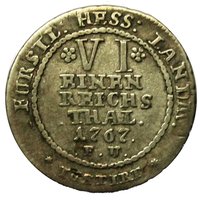
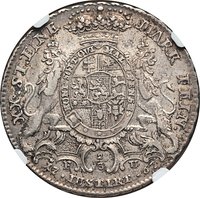
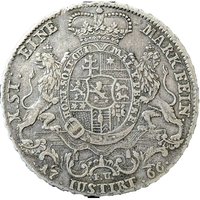
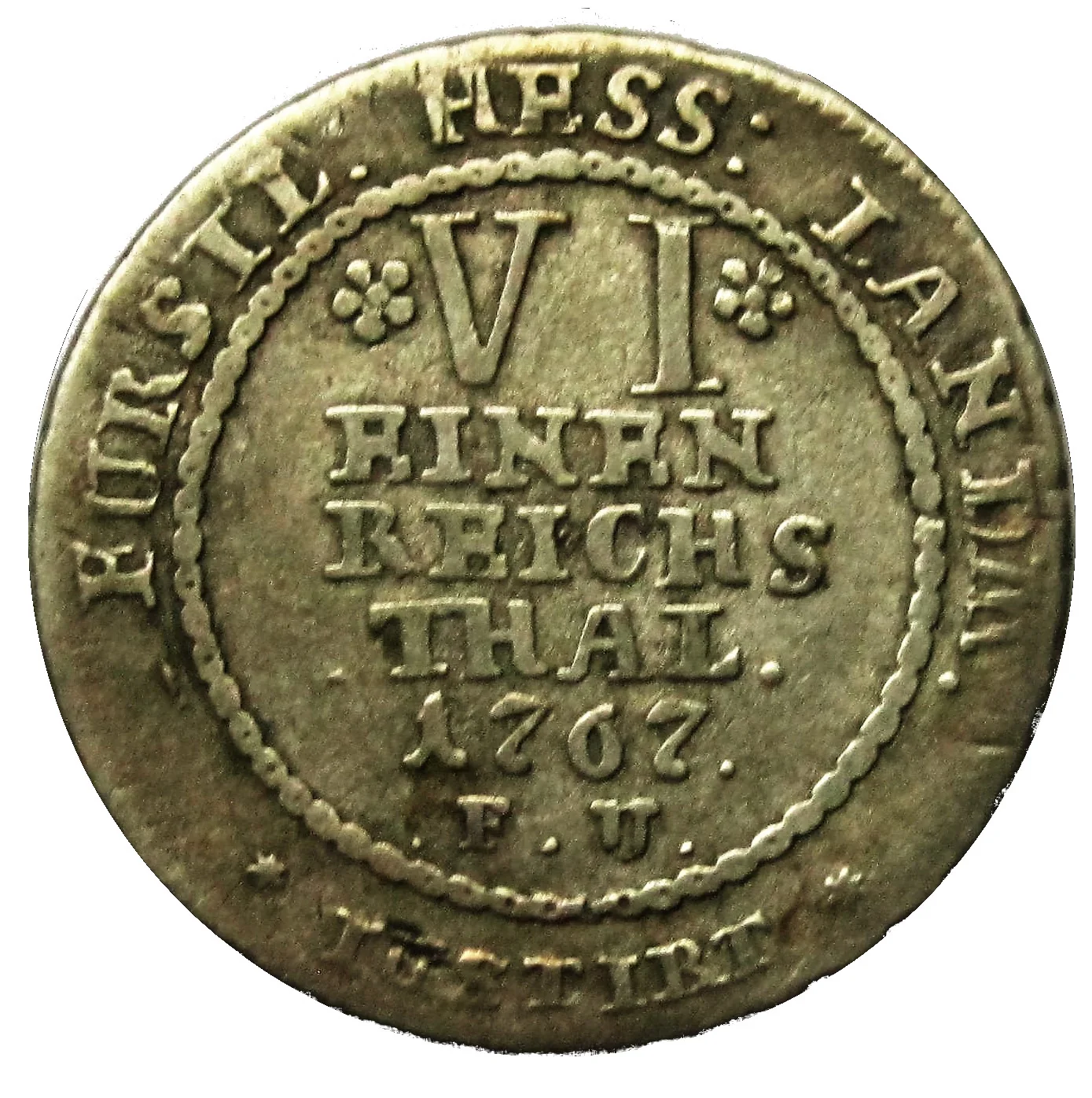
reverse
M. Sander
Context
Years: 1767–1768
Currency:
Demonetized: Yes
Material
Diameter: 26 mm
Weight: 5.6 g
Silver weight: 5.60 g
Shape: Round
Composition: Silver
Magnetic: No
Alignment: Medal alignment
Obverse
OBVERSE ↑
flip
Reverse
REVERSE ↑
References
KM: #Click to copy to clipboard486
Numista: #184952
Value
Bullion value: $15.84

Obverse

Description:
Lion with a shield.
Inscription:
80 STÜCK EINE MARK FEIN
Script: Latin

Reverse

Description:
Denomination, date, and mintmaster initials in six central lines.
Inscription:
* VI *

EINEN

REICHS

THAL.


FÜRSTL: HESS: LANDM:

*IUSTIRT*
Script: Latin

Edge

Mints

NameMark
Kassel

Mintings

YearMint MarkMintageQualityCollection
1767
1768

Historical background

In 1767, the Landgraviate of Hesse-Cassel found itself navigating a complex and challenging currency situation, a legacy of the mid-century European wars. The state, under Landgrave Frederick II, had profited immensely from hiring out its well-trained soldiers as mercenaries, most notably to the British during the Seven Years' War. This influx of foreign subsidies, particularly British gold and silver, filled the state's coffers but also disrupted the local monetary system. The co-existence of these high-value foreign coins with a multitude of debased domestic and regional currencies created confusion, facilitated fraud, and hindered transparent commerce.

The core of the problem was a fragmented and unreliable monetary standard. Alongside the desirable Reichsthaler, a wide variety of coins from across the Holy Roman Empire and beyond circulated at fluctuating values. This proliferation included significantly debased Kipper und Wipper coinage from earlier decades, as well as small change shortages that plagued daily transactions. The disparity between the official mint parity and the market value of precious metals encouraged the export or melting down of good coin, leaving poorer money in circulation—a classic example of Gresham's Law.

Recognizing that monetary chaos was an impediment to economic stability and the state's fiscal administration, Frederick II's government was actively moving toward a major reform. The year 1767 was a pivotal point of transition, laying the groundwork for the introduction of a new, standardized silver currency in 1768. This reform aimed to replace the chaotic mix with a stable, unified Hessian currency tied firmly to the Cologne Mark silver standard, thereby consolidating the state's financial gains and fostering greater economic coherence within the landgraviate.

Series: 1767 Landgraviate of Hesse-Cassel circulation coins

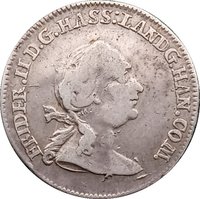
⅙ Thaler obverse
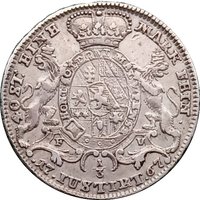
⅙ Thaler reverse
⅙ Thaler
1767-1768
⅓ Thaler obverse
⅓ Thaler reverse
⅓ Thaler
1767-1771
⅔ Reichsthaler obverse
⅔ Reichsthaler reverse
⅔ Reichsthaler
1767
Legendary