

1 Thaler – Brunswick-Lüneburg-Calenberg
Germany
Context
Years: 1675–1676
Country: Germany 
Issuer: Brunswick-Lüneburg-Calenberg
Ruler: John Frederick
Currency:
Demonetized: Yes
References
KM: #Click to copy to clipboard149.2
Numista: #182787
Obverse
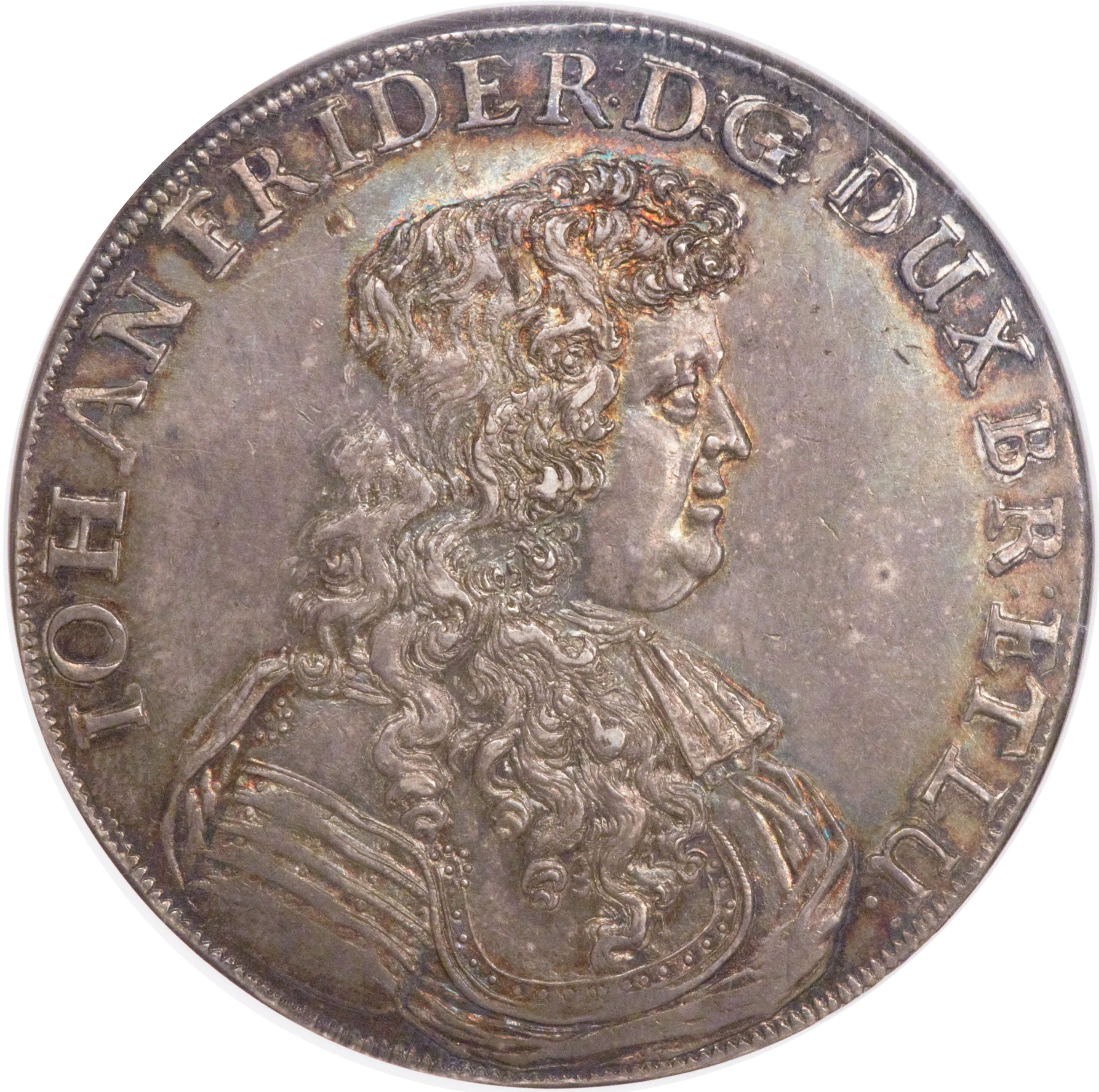
Description:
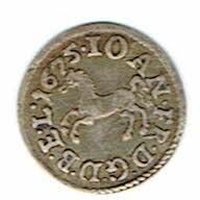
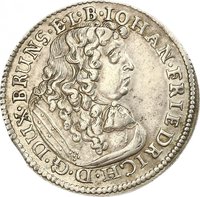
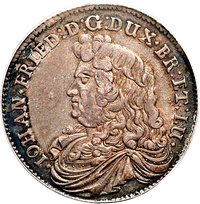
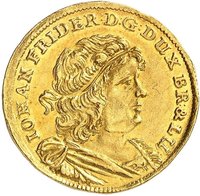
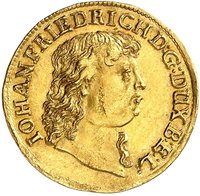
Long-haired bust right.
Inscription:
IOHAN FRIDER : D : G : DUX BR : ET LU.
Script: Latin
Reverse
Edge
Mintings
| Year | Mint Mark | Mintage | Quality | Collection |
|---|---|---|---|---|
| 1675 | — | — | ||
| 1676 | — | — |
Historical background
In 1675, the Duchy of Brunswick-Lüneburg, specifically the Principality of Calenberg under Duke Johann Friedrich, was entangled in the complex and debilitating monetary chaos common across the Holy Roman Empire. The region operated within a fragmented system where multiple authorities—the Emperor, the Imperial Circles, and individual princes—minted coins, leading to a proliferation of currencies of varying quality. The primary accounting unit was the Reichsthaler, a stable silver coin, but everyday commerce relied heavily on smaller Groschen and Pfennig denominations. The critical problem was the chronic shortage of these small coins, which were essential for local trade and wages, creating a persistent liquidity crisis for the common population.
This situation was severely exacerbated by the Franco-Dutch War (1672-1678) and the related Swedish-Brandenburg conflict, which saw Duke Johann Friedrich allied with France. The war caused massive fiscal strain, leading to the deliberate debasement of coinage. Minting inferior, low-weight coins (known as Kippermünze) from overvalued metals provided a short-term windfall for the princely treasury to fund military expenses but had catastrophic long-term effects. As these debased coins flooded the market, they drove out the older, full-value silver coins (Gresham's Law), destroying public trust and causing rampant inflation. Prices in stable Reichsthaler soared when quoted in the rapidly depreciating local currency.
Consequently, by 1675, Calenberg was experiencing a full-scale monetary breakdown. The coexistence of old "good" money and new "bad" money paralyzed commerce, as merchants and peasants alike hoarded sound currency and refused the debased issues. This not only caused severe economic hardship but also undermined the ducal authority and the integrity of the financial system. The crisis would ultimately contribute to the push for reform, leading Calenberg's successor, Elector Ernest Augustus, to pursue more standardized monetary policies in the following decades, though in 1675 the situation remained one of profound instability and distress.
This situation was severely exacerbated by the Franco-Dutch War (1672-1678) and the related Swedish-Brandenburg conflict, which saw Duke Johann Friedrich allied with France. The war caused massive fiscal strain, leading to the deliberate debasement of coinage. Minting inferior, low-weight coins (known as Kippermünze) from overvalued metals provided a short-term windfall for the princely treasury to fund military expenses but had catastrophic long-term effects. As these debased coins flooded the market, they drove out the older, full-value silver coins (Gresham's Law), destroying public trust and causing rampant inflation. Prices in stable Reichsthaler soared when quoted in the rapidly depreciating local currency.
Consequently, by 1675, Calenberg was experiencing a full-scale monetary breakdown. The coexistence of old "good" money and new "bad" money paralyzed commerce, as merchants and peasants alike hoarded sound currency and refused the debased issues. This not only caused severe economic hardship but also undermined the ducal authority and the integrity of the financial system. The crisis would ultimately contribute to the push for reform, leading Calenberg's successor, Elector Ernest Augustus, to pursue more standardized monetary policies in the following decades, though in 1675 the situation remained one of profound instability and distress.
✨ Legendary