

8 Daler SM – Sweden
Sweden
Context
Years: 1681–1682
Issuer: Sweden 
Ruler: Charles XI
Subdivision: 8 Daler SM = 8⁄3 Riksdaler
Demonetized: Yes
Material
References
KM: #Click to copy to clipboardPM24.2
Numista: #182380
Obverse
Description:
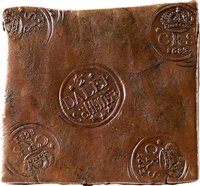
Crown above date within circular legend.
Inscription:
CAROLUS·XI·D:G:SVE:GOT:WAND:REX·
Reverse
Description:
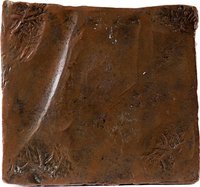
Centre stamp: Value above ★★★
Inscription:
*8*
DALER
Sölff:Mnt
DALER
Sölff:Mnt
Edge
Mints
| Name | Mark |
|---|---|
| Avesta | — |
Mintings
| Year | Mint Mark | Mintage | Quality | Collection |
|---|---|---|---|---|
| 1681 | — | — | ||
| 1682 | — | — |
Historical background
In 1681, Sweden was navigating a complex and challenging monetary situation, largely a legacy of the Thirty Years' War. The kingdom had emerged as a great power, but its economy was strained by decades of conflict and the need to maintain a large military. To finance these ambitions, successive governments, particularly under Queen Christina, had heavily debased the coinage. This involved reducing the silver content in coins like the riksdaler and öre, leading to a proliferation of coins of varying intrinsic values and causing severe inflation and a loss of public trust in the currency.
The situation was characterized by a chaotic dual system. There was the officially minted, but debased, current coin (myntmynt) used in everyday domestic trade, and the older, higher-quality silver coin (smältmynt) which was hoarded or used for foreign trade. This created a dysfunctional economy where prices were unstable and transactions were complicated. The state's finances suffered as tax revenues were collected in the poor currency, while many obligations, like paying foreign mercenaries, required sound silver.
Recognizing the crisis, the Swedish government under the regency of King Charles XI had already begun a serious monetary reform. The pivotal year of 1681 saw the implementation of policies from the 1680 myntplacat (coinage ordinance). This act aimed to restore stability by calling in the old, debased coins and reminting them to a higher and uniform silver standard. While the process would take years, 1681 was a critical turning point, marking the deliberate move away from inflationary finance and toward a stable, silver-based monetary system to underpin Sweden's fiscal and economic recovery.
The situation was characterized by a chaotic dual system. There was the officially minted, but debased, current coin (myntmynt) used in everyday domestic trade, and the older, higher-quality silver coin (smältmynt) which was hoarded or used for foreign trade. This created a dysfunctional economy where prices were unstable and transactions were complicated. The state's finances suffered as tax revenues were collected in the poor currency, while many obligations, like paying foreign mercenaries, required sound silver.
Recognizing the crisis, the Swedish government under the regency of King Charles XI had already begun a serious monetary reform. The pivotal year of 1681 saw the implementation of policies from the 1680 myntplacat (coinage ordinance). This act aimed to restore stability by calling in the old, debased coins and reminting them to a higher and uniform silver standard. While the process would take years, 1681 was a critical turning point, marking the deliberate move away from inflationary finance and toward a stable, silver-based monetary system to underpin Sweden's fiscal and economic recovery.
✨ Legendary