

1 Quadrupla – Papal States
Circulating commemorative coins
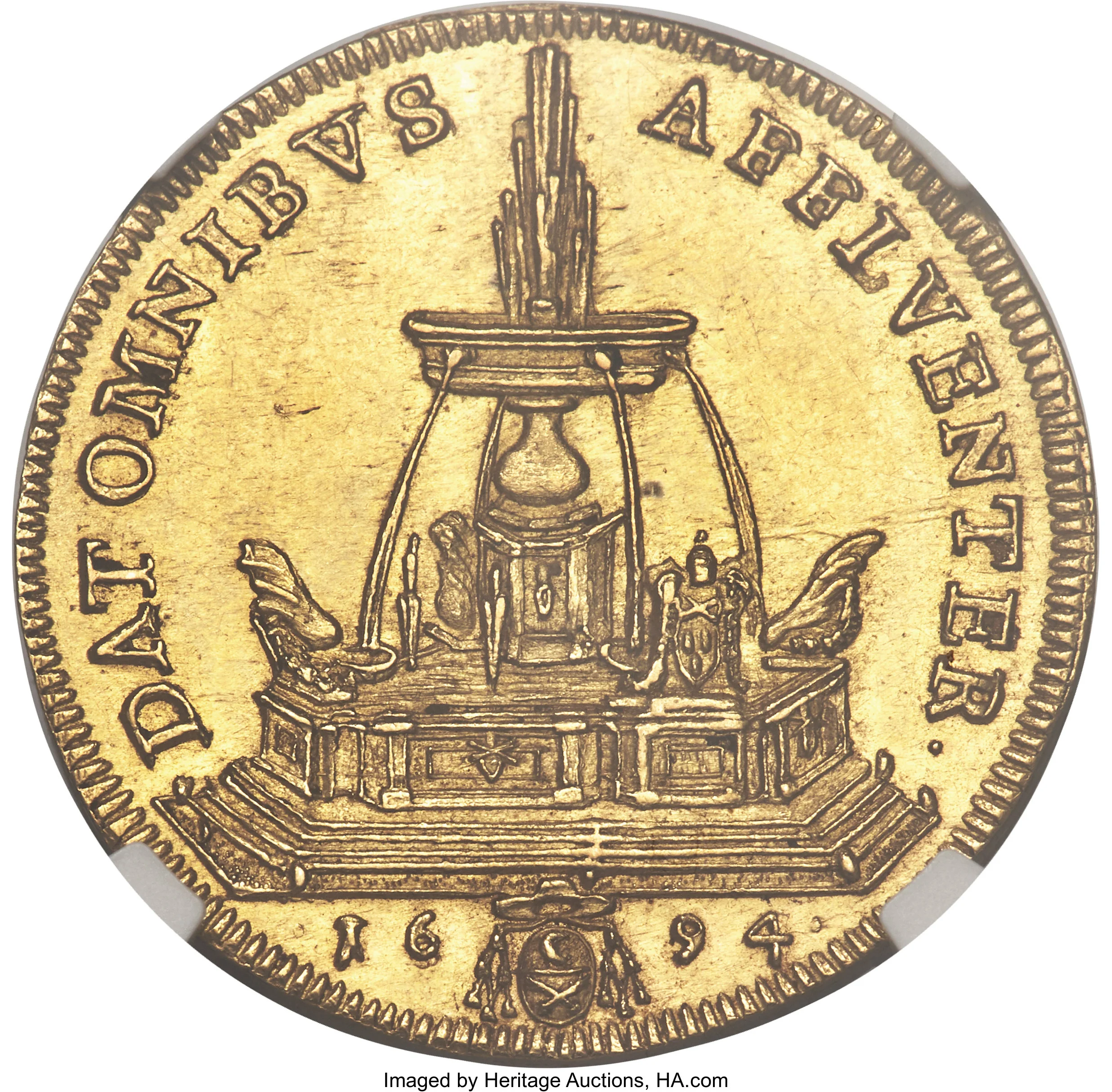
Commemoration: The rebuilding of the Fountain of Santa Maria in Trastevere,
Vatican City
Context
Year: 1694
Country: Vatican City 
Issuer: Papal States
Ruler: Innocent XII
Currency:
(1534—1835)
Demonetized: Yes
References
KM: #Click to copy to clipboard617
Numista: #182140
Value
Bullion value: $2207.37
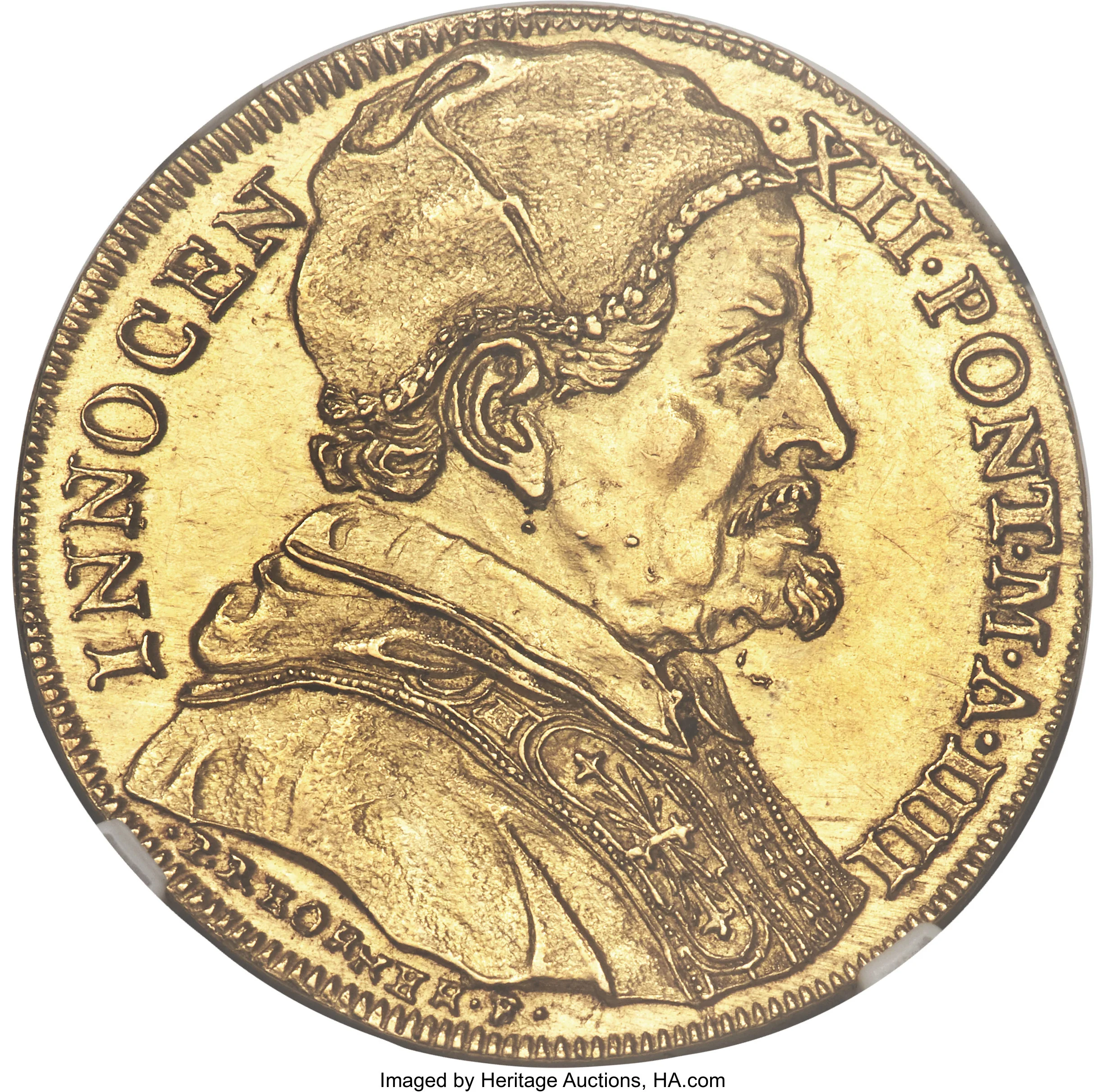
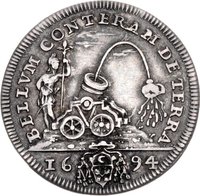
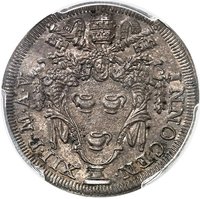
Obverse
Inscription:
INNOCEN · XII · PONT · M · A · IIII
· P · P . BORNER · F ·
· P · P . BORNER · F ·
Script: Latin
Engraver: Peter Paul Borner
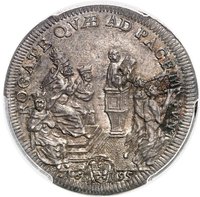
Reverse
Edge
Mintings
| Year | Mint Mark | Mintage | Quality | Collection |
|---|---|---|---|---|
| 1694 | — | — |
Historical background
In 1694, the Papal States under Pope Innocent XII faced a severe and protracted monetary crisis, rooted in decades of fiscal mismanagement and the costly foreign policies of his predecessors. The treasury was critically depleted from financing wars, most notably against the Ottoman Empire, and maintaining the grandeur of the Baroque papacy. This dire financial strait forced the pontificate to engage in repeated debasements of the coinage, reducing the silver content in coins like the grosso and giulio to generate short-term revenue, which severely eroded public trust in the currency and triggered rampant inflation.
The situation was exacerbated by a chaotic monetary system where the value and legitimacy of coins were in constant flux. Alongside officially debased papal coinage, a multitude of older, purer coins from previous reigns and foreign currencies (especially Spanish silver) circulated, leading to Gresham's Law in practice: "bad money drove out good." People hoarded older, higher-value coins, further destabilizing daily commerce. This environment of uncertainty crippled trade, burdened the poor with higher prices for basic goods, and revealed the stark weakness of the Papal States' economic structures, which relied heavily on taxes from its subjects and remittances from abroad.
Pope Innocent XII's response in this specific year was part of a broader, more conservative reform effort aimed at austerity and moral governance. While his most famous reforms targeted nepotism and curial expenses, addressing the currency crisis directly was a monumental challenge. The fundamental solution—restoring sound coinage—required a fiscal stability that the state could not immediately achieve. Therefore, the monetary situation of 1694 stands as a defining symptom of the broader political and economic decline of the Papal States in the late 17th century, caught between its historic spiritual prestige and its earthly financial frailties.
The situation was exacerbated by a chaotic monetary system where the value and legitimacy of coins were in constant flux. Alongside officially debased papal coinage, a multitude of older, purer coins from previous reigns and foreign currencies (especially Spanish silver) circulated, leading to Gresham's Law in practice: "bad money drove out good." People hoarded older, higher-value coins, further destabilizing daily commerce. This environment of uncertainty crippled trade, burdened the poor with higher prices for basic goods, and revealed the stark weakness of the Papal States' economic structures, which relied heavily on taxes from its subjects and remittances from abroad.
Pope Innocent XII's response in this specific year was part of a broader, more conservative reform effort aimed at austerity and moral governance. While his most famous reforms targeted nepotism and curial expenses, addressing the currency crisis directly was a monumental challenge. The fundamental solution—restoring sound coinage—required a fiscal stability that the state could not immediately achieve. Therefore, the monetary situation of 1694 stands as a defining symptom of the broader political and economic decline of the Papal States in the late 17th century, caught between its historic spiritual prestige and its earthly financial frailties.
✨ Legendary