

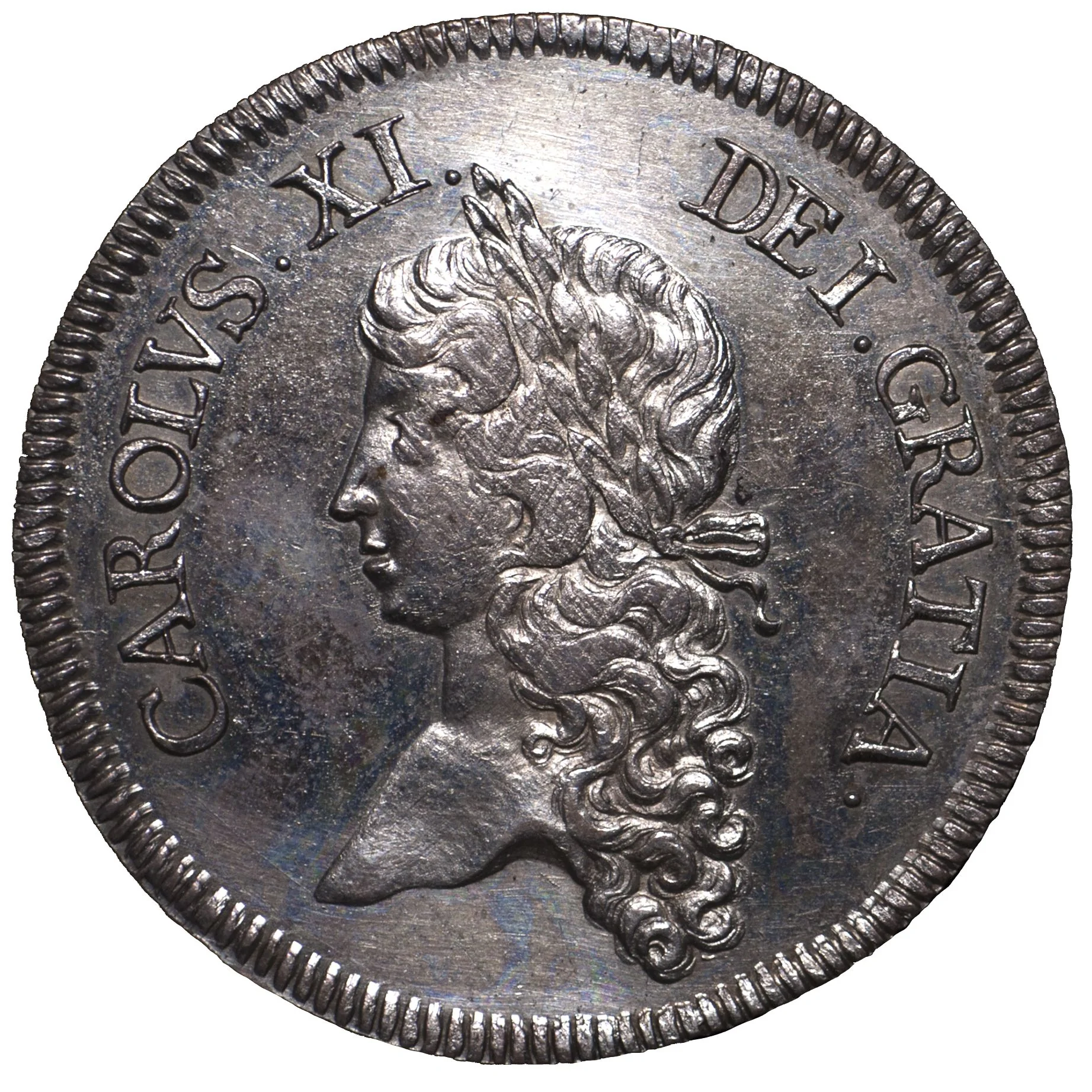
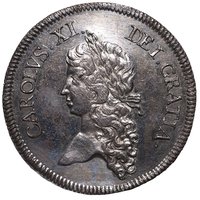
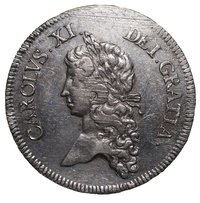
Obverse
Description:
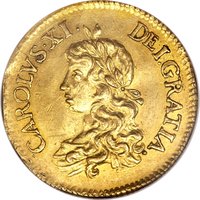
Young laureate bust of Carl XI left within encircling legend.
Inscription:
CAROLVS.XI. DEI.GRATIA·
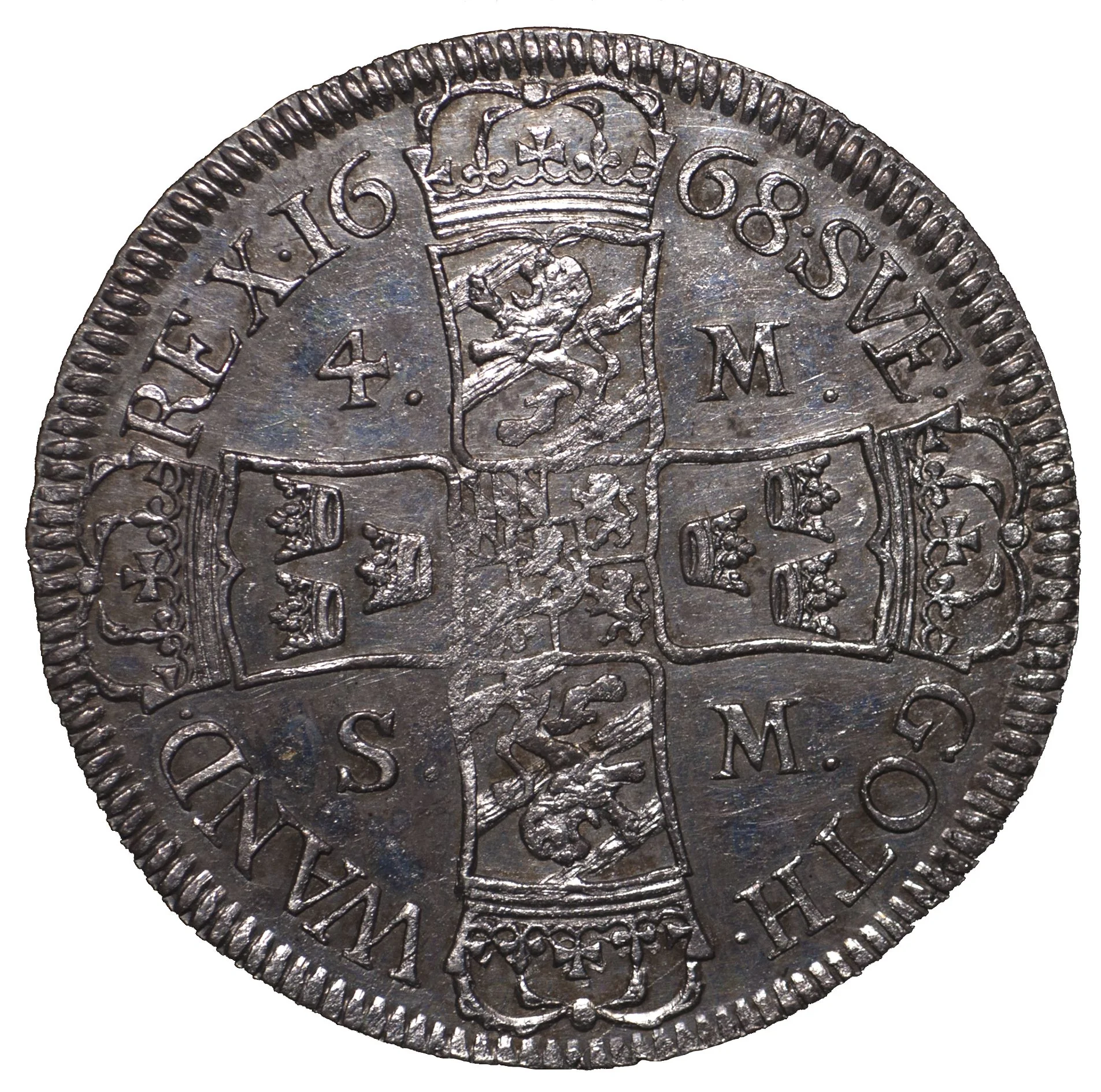
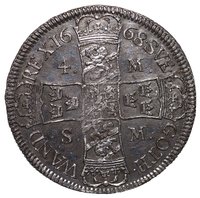
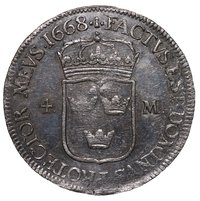
Reverse
Description:
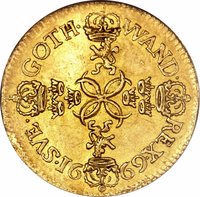
Crowned shields in cross, Swedish crowns dividing the outer legend.
Inscription:
SVE·GOTH·WAND·REX·1668
Edge
Mints
| Name | Mark |
|---|---|
| Stockholm | — |
Mintings
| Year | Mint Mark | Mintage | Quality | Collection |
|---|---|---|---|---|
| 1668 | — | — |
Historical background
In 1668, Sweden was navigating a complex and precarious monetary situation, a direct legacy of the Thirty Years' War (1618-1648). To finance its extensive military campaigns, the state had heavily debased the currency, notably the silver daler. By reducing the silver content in coins while maintaining their face value, the Crown generated short-term revenue but triggered severe inflation and a collapse in public trust. This period, known as the "copper era," saw the rise of bulky copper plate money (plåtmynt)—some weighing over 20 kilograms—as a fiduciary currency, creating an impractical and unstable monetary system plagued by multiple circulating forms of metal with fluctuating values.
The crisis culminated in the 1660s, prompting decisive action. Under the regency government for the young King Charles XI, Chancellor Magnus Gabriel De la Gardie and his advisors recognized that monetary stability was essential for economic recovery and state credibility. Their solution was the founding of Stockholms Banco in 1656, which in 1668 was restructured and placed under the direct control of the parliament (Riksdagen), becoming Sveriges Riksbank—the oldest surviving central bank in the world. This transformation was the pivotal event of 1668, designed to restore order.
The newly chartered Riksbank's primary mission was to replace the chaotic and devalued coinage with reliable, state-backed credit in the form of paper notes, which were easier to handle than copper plates. While the full stabilization of the currency would take decades, the establishment of the Riksbank in 1668 marked the critical turning point. It represented a shift from short-term fiscal expediency toward long-term monetary policy, laying the institutional foundation for managing the currency, controlling inflation, and restoring both domestic and international confidence in Sweden's financial system.
The crisis culminated in the 1660s, prompting decisive action. Under the regency government for the young King Charles XI, Chancellor Magnus Gabriel De la Gardie and his advisors recognized that monetary stability was essential for economic recovery and state credibility. Their solution was the founding of Stockholms Banco in 1656, which in 1668 was restructured and placed under the direct control of the parliament (Riksdagen), becoming Sveriges Riksbank—the oldest surviving central bank in the world. This transformation was the pivotal event of 1668, designed to restore order.
The newly chartered Riksbank's primary mission was to replace the chaotic and devalued coinage with reliable, state-backed credit in the form of paper notes, which were easier to handle than copper plates. While the full stabilization of the currency would take decades, the establishment of the Riksbank in 1668 marked the critical turning point. It represented a shift from short-term fiscal expediency toward long-term monetary policy, laying the institutional foundation for managing the currency, controlling inflation, and restoring both domestic and international confidence in Sweden's financial system.
Series: 1668 Sweden circulation coins
✨ Legendary