

8 Mark – Sweden
Sweden
Context

Material
Diameter: 47 mm
Weight: 31.35 g
Silver weight: 28.90 g
Shape: Round
Composition: 92.2% Silver
Standard: Silver ounce
Magnetic: No
References
KM: #Click to copy to clipboard259
Numista: #181926
Value
Bullion value: $82.68
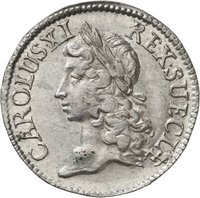
Obverse
Description:
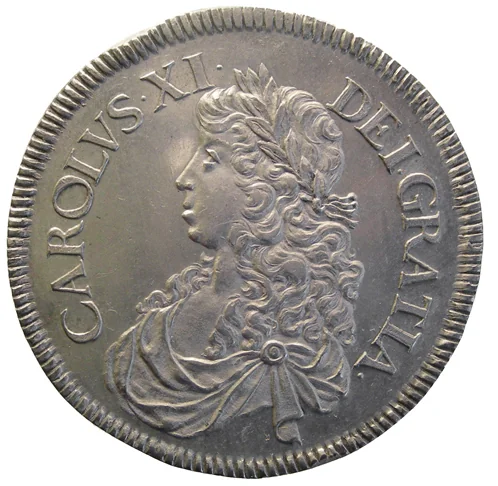
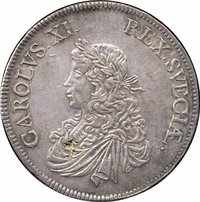
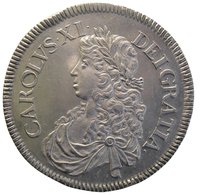
Bust of Carl XI with long curls, encircled by divided legend.
Inscription:
CAROLVS·XI·DEI·GRATIA·
Script: Latin
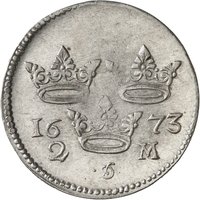
Reverse
Description:
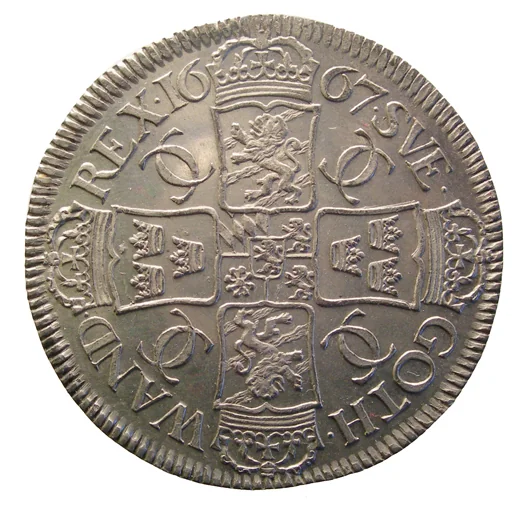
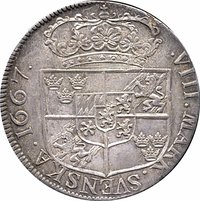
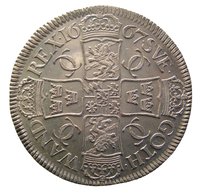
Interlocking C's and crowned shields in a cross, encircled by legend.
Inscription:
SVE·GOTH·WAND·REX·1667
Script: Latin
Edge
Mints
| Name | Mark |
|---|---|
| Stockholm | — |
Mintings
| Year | Mint Mark | Mintage | Quality | Collection |
|---|---|---|---|---|
| 1667 | — | — |
Historical background
In 1667, Sweden was navigating a complex and deteriorating currency situation, largely a legacy of its aggressive foreign policy during the Thirty Years' War (1618-1648). To finance its military ambitions, the state had heavily debased its silver coinage, the daler, by reducing its precious metal content while maintaining its face value. This practice, combined with the widespread circulation of lower-quality foreign coins and crude copper "plate money" (plåtmynt), led to a severe crisis of confidence. The result was a dysfunctional bimetallic system where the intrinsic value of copper coins fluctuated wildly against the debased silver, causing price instability and hampering both domestic commerce and international trade.
The situation reached a critical point in the 1660s, prompting action from the newly established regency government ruling in the name of the young King Charles XI. In 1665, the government attempted a drastic monetary reform known as the myntrealisation. This policy aimed to recalibrate the currency by officially lowering the face value of all coins to match their actual metal content, a painful but necessary deflationary measure. By 1667, the process was ongoing, creating a period of significant economic adjustment and short-term hardship as debts and prices were recalibrated.
Therefore, the currency background in 1667 is one of transition and austerity. The state was actively grappling with the consequences of past fiscal irresponsibility, trying to restore stability and trust in the monetary system through the painful realisation. This financial restructuring occurred amidst a broader context of national recovery following the wars, setting the stage for the coming "reduction" of crown lands and the eventual establishment of an absolute monarchy under Charles XI, who would prioritize fiscal discipline and state solvency.
The situation reached a critical point in the 1660s, prompting action from the newly established regency government ruling in the name of the young King Charles XI. In 1665, the government attempted a drastic monetary reform known as the myntrealisation. This policy aimed to recalibrate the currency by officially lowering the face value of all coins to match their actual metal content, a painful but necessary deflationary measure. By 1667, the process was ongoing, creating a period of significant economic adjustment and short-term hardship as debts and prices were recalibrated.
Therefore, the currency background in 1667 is one of transition and austerity. The state was actively grappling with the consequences of past fiscal irresponsibility, trying to restore stability and trust in the monetary system through the painful realisation. This financial restructuring occurred amidst a broader context of national recovery following the wars, setting the stage for the coming "reduction" of crown lands and the eventual establishment of an absolute monarchy under Charles XI, who would prioritize fiscal discipline and state solvency.
✨ Legendary