

½ Angel – England
United Kingdom
Context
Years: 1612–1619
Country: United Kingdom 
Issuer: England 
Ruler: James I
Currency:
(1158—1970)
Demonetized: Yes
References
KM: #Click to copy to clipboard43
Numista: #181451
Value
Bullion value: $364.55
Obverse
Description:
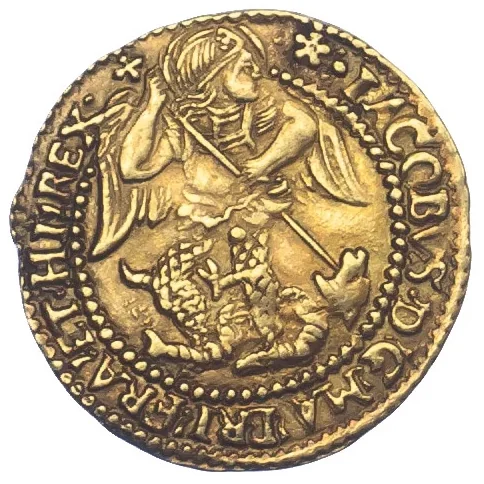
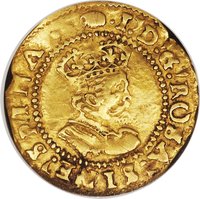
St. Michael slaying dragon, right, breaking inner circle, mint mark precedes legend.
Inscription:
·IACOBVS· D’. G’. MA’. BRI’. FRA’. ET. HI’. REX·
Script: Latin
Reverse
Description:
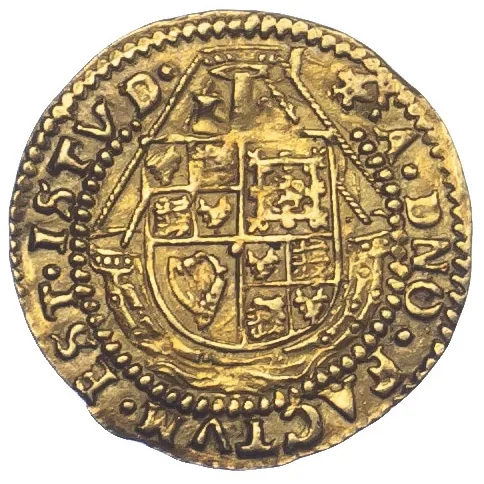
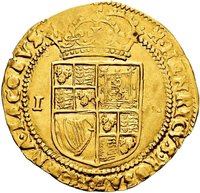
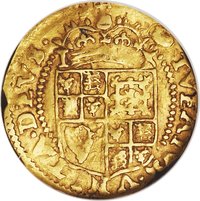
Ship sailing, shield on hull, mast flanked by I and rose, mint mark precedes legend.
Inscription:
A · DNO · FACTVM · EST · ISTVD ·
Script: Latin
Edge
Categories
| Mythology> Fantastic animal |
| Transportation> Watercraft |
| Symbol> Crown |
| Symbols> Coat of Arms |
Mintings
| Year | Mint Mark | Mintage | Quality | Collection |
|---|---|---|---|---|
| — | — | — | ||
| 1619 | — | — |
Historical background
In 1612, England operated under a bimetallic currency system based on the pound sterling, the shilling, and the penny. The primary coins in circulation were silver shillings, sixpences, and gold sovereigns (worth 20 shillings) and crowns. However, the currency was under significant strain. A critical problem was the chronic shortage of small-denomination coins for everyday trade, which hampered commerce and led to widespread clipping (shaving precious metal from coin edges) and counterfeiting of the coins that did exist. The state of the coinage was a persistent concern for both the government and the merchant class.
This instability was exacerbated by the "Great Debasement" under Henry VIII a century earlier, which had eroded trust in the coinage, and by the ongoing economic reality that the official mint price for gold and silver often failed to match their higher market value in Europe. This discrepancy encouraged the melting down and export of full-weight English coins, leaving a circulation increasingly composed of worn and inferior pieces. King James I had attempted reforms, introducing new gold coins like the Unite and the Rose Ryal after his accession in 1603, but these did not solve the fundamental structural issues.
Consequently, the monetary system in 1612 was fragmented and inefficient. While the government recognised the problems, comprehensive recoinage was considered too expensive and logistically daunting. The situation created a thriving black market for money-changing and placed a burden on ordinary people. It was a period of transition, awaiting the more systematic reforms that would later come under the stewardship of Sir Isaac Newton as Warden of the Mint, but in 1612, England’s currency remained a source of economic friction and royal anxiety.
This instability was exacerbated by the "Great Debasement" under Henry VIII a century earlier, which had eroded trust in the coinage, and by the ongoing economic reality that the official mint price for gold and silver often failed to match their higher market value in Europe. This discrepancy encouraged the melting down and export of full-weight English coins, leaving a circulation increasingly composed of worn and inferior pieces. King James I had attempted reforms, introducing new gold coins like the Unite and the Rose Ryal after his accession in 1603, but these did not solve the fundamental structural issues.
Consequently, the monetary system in 1612 was fragmented and inefficient. While the government recognised the problems, comprehensive recoinage was considered too expensive and logistically daunting. The situation created a thriving black market for money-changing and placed a burden on ordinary people. It was a period of transition, awaiting the more systematic reforms that would later come under the stewardship of Sir Isaac Newton as Warden of the Mint, but in 1612, England’s currency remained a source of economic friction and royal anxiety.
✨ Legendary