

2 Mark – Denmark
Denmark
Context

Material
References
KM: #Click to copy to clipboard329
Numista: #181337
Value
Bullion value: $20.30
Obverse
Description:
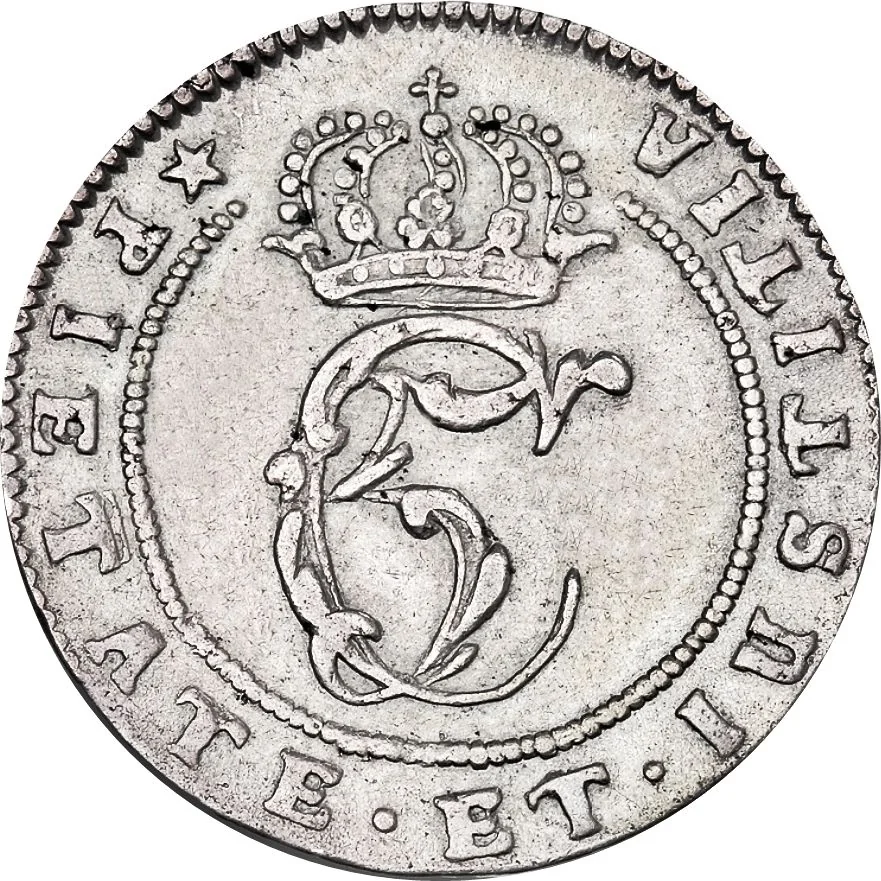
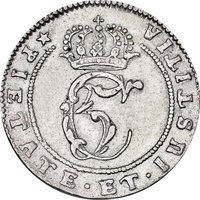
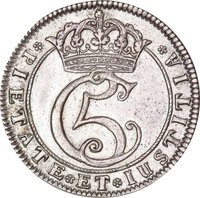
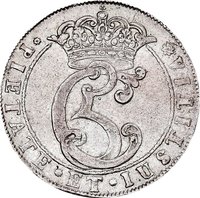
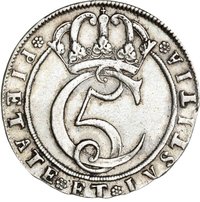
King's monogram in baroque style with ornate tips, centered in a beaded circle. His motto encircles the rim outside, reading counter-clockwise from the upper left.
Inscription:
C5
* PIETATE · ET · IUSTITIA
* PIETATE · ET · IUSTITIA
Script: Latin
Reverse
Description:
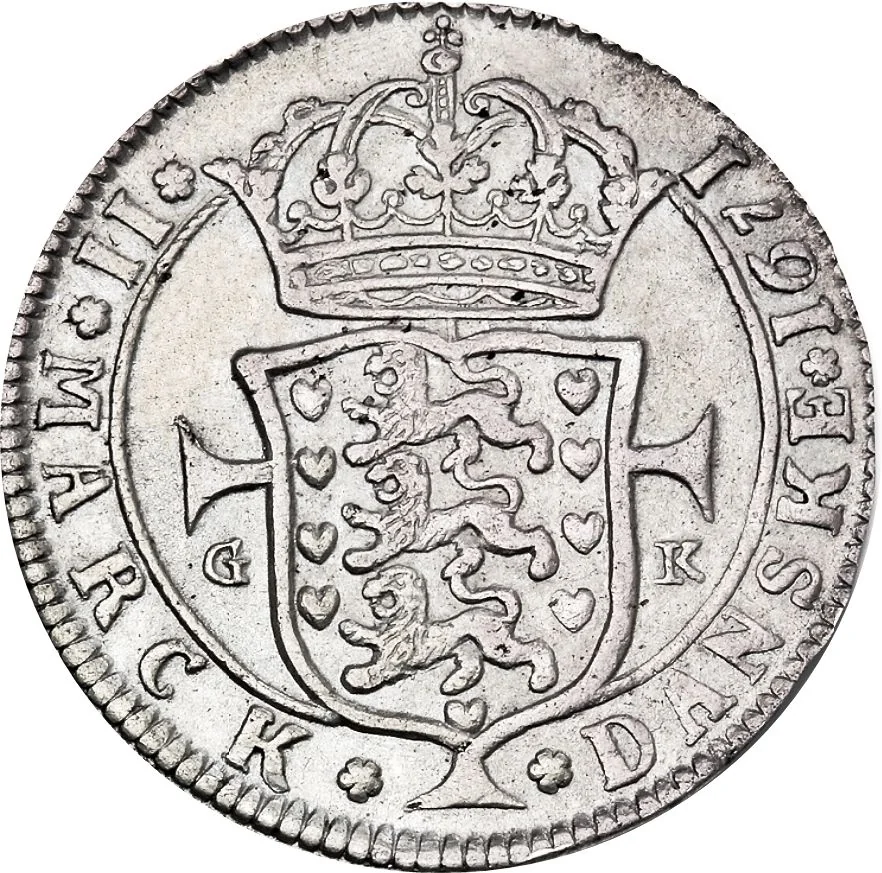
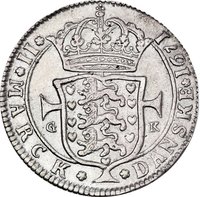
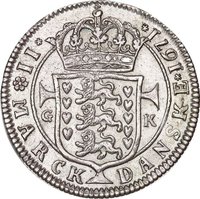
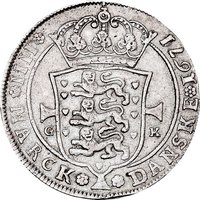
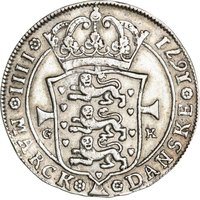
Crowned shield of Denmark over cross divides mintmark. Shield inside beaded circle; value in outer legend with date.
Inscription:
* II * MARCK * | * DANSKE * 1671
GK
GK
Script: Latin
Engraver: Gotfred Krüger
Edge
Mints
| Name | Mark |
|---|---|
| Copenhagen | GK |
Mintings
| Year | Mint Mark | Mintage | Quality | Collection |
|---|---|---|---|---|
| 1671 | GK | — |
Historical background
In 1671, Denmark operated under a complex and strained monetary system, a legacy of the costly wars of the mid-17th century. The state treasury was depleted, and the currency, the rigsdaler, suffered from severe debasement. Earlier kings had repeatedly reduced the silver content of coins to fund military campaigns, leading to a proliferation of older, purer coins being hoarded or melted down while newer, inferior coins circulated. This created a chaotic situation with multiple types of coins of the same denomination but different intrinsic values, undermining both domestic trade and international commerce.
The primary response to this crisis was the Currency Regulation of 1671 (Myntreglementet af 1671), enacted under King Christian V. This sweeping reform aimed to standardize the monetary system by introducing a new, unified rigsdaler divided into 96 rigsbank skilling. Crucially, the regulation tied the currency to a fixed silver standard, decreeing that one rigsdaler should contain a specified weight of fine silver. This move was intended to restore public confidence, eliminate confusion, and stabilize the economy by moving away from the arbitrary valuation of coins.
Despite its ambitious goals, the 1671 regulation faced significant practical challenges. The state lacked the silver reserves to recall and replace all old coins immediately, meaning that inferior older coins remained in circulation alongside the new ones for years. Furthermore, the rigid official exchange rates often conflicted with market values, particularly in border regions like Schleswig-Holstein where different currencies circulated. Consequently, while the regulation laid the essential foundation for a modern, standardized monetary system in Denmark, full stabilization and public trust would only be achieved through further reforms in the following decades.
The primary response to this crisis was the Currency Regulation of 1671 (Myntreglementet af 1671), enacted under King Christian V. This sweeping reform aimed to standardize the monetary system by introducing a new, unified rigsdaler divided into 96 rigsbank skilling. Crucially, the regulation tied the currency to a fixed silver standard, decreeing that one rigsdaler should contain a specified weight of fine silver. This move was intended to restore public confidence, eliminate confusion, and stabilize the economy by moving away from the arbitrary valuation of coins.
Despite its ambitious goals, the 1671 regulation faced significant practical challenges. The state lacked the silver reserves to recall and replace all old coins immediately, meaning that inferior older coins remained in circulation alongside the new ones for years. Furthermore, the rigid official exchange rates often conflicted with market values, particularly in border regions like Schleswig-Holstein where different currencies circulated. Consequently, while the regulation laid the essential foundation for a modern, standardized monetary system in Denmark, full stabilization and public trust would only be achieved through further reforms in the following decades.
Series: 1671 Denmark circulation coins
✨ Legendary