

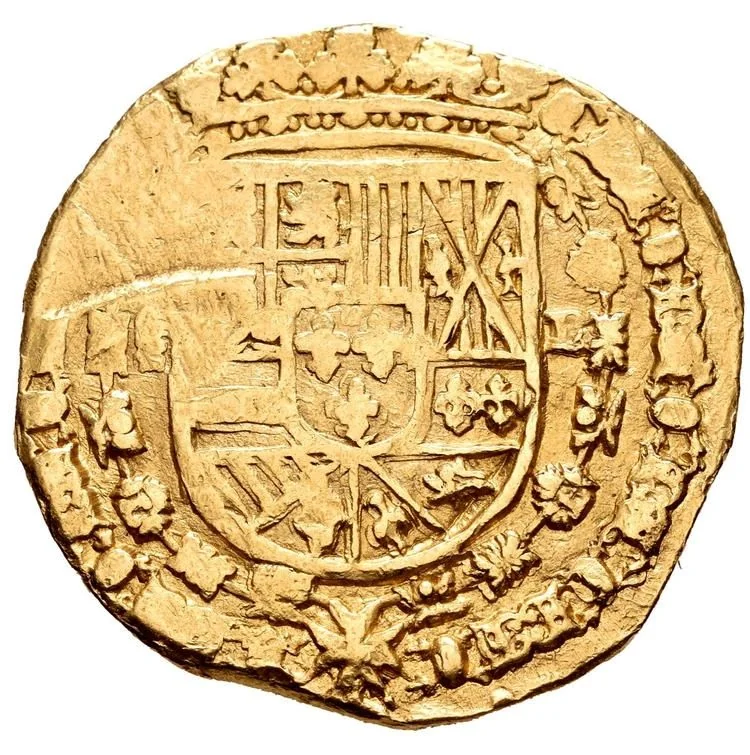
Obverse
Description:
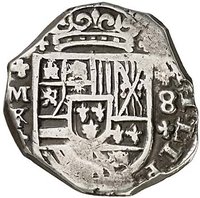
Crowned Spanish coat of arms encircled by the Golden Fleece collar.
Inscription:
PHILIPPVS · V · DEI · GRAT ·
M BR
M BR
Script: Latin
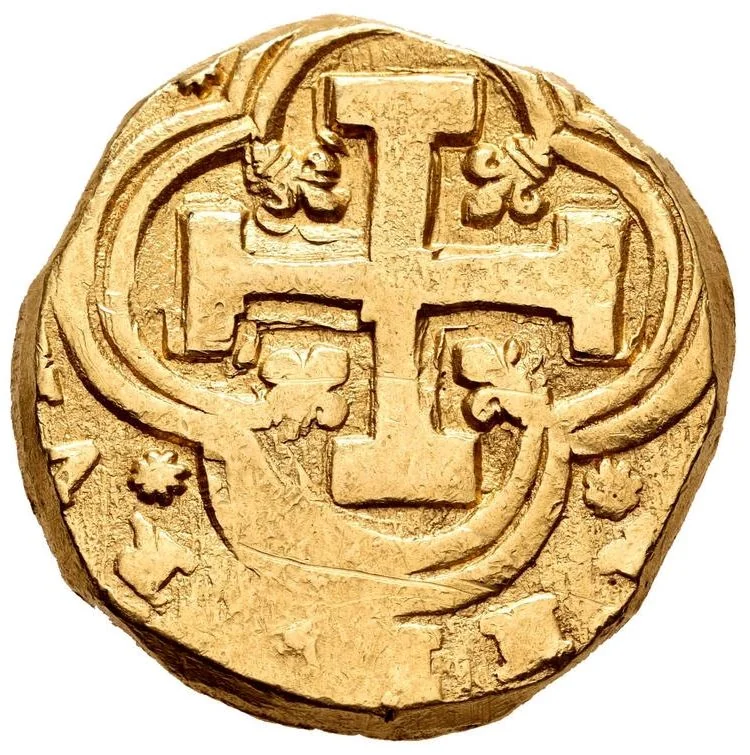
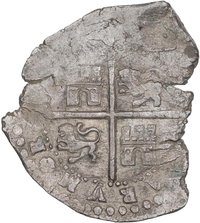
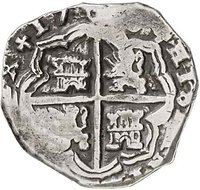
Reverse
Edge
Categories
| Symbols> Coat of Arms |
| Symbol> Cross |
Mints
| Name | Mark |
|---|---|
| Royal Mint of Madrid | M |
Mintings
| Year | Mint Mark | Mintage | Quality | Collection |
|---|---|---|---|---|
| 1703 | MBR | — | ||
| 1706 | MY | — | ||
| 1707 | MF | — |
Historical background
In 1703, Spain found itself in a precarious monetary situation, deeply entangled in the ongoing War of the Spanish Succession (1701-1714). The conflict over the vacant Spanish throne between the Bourbon claimant, Philip V (grandson of Louis XIV of France), and the Habsburg claimant, Archduke Charles of Austria, had plunged the empire into a costly European war. To finance the immense military expenditures, the royal treasury, already strained from decades of economic decline and the previous Habsburg dynasty's debts, resorted to severe fiscal measures. These included repeated debasements of the coinage, where the silver content of coins like the real was reduced to create more money from the same amount of precious metal, leading to inflation and a loss of public confidence in the currency.
The monetary landscape was chaotic and fragmented. Alongside the official, debased royal coinage, a plethora of older coins from different reigns remained in circulation, each with varying intrinsic values. Furthermore, the war had effectively split Spain into zones of control, with the Bourbons holding the interior and Castile, while the rival Habsburg coalition backed by England and the Dutch Republic controlled Catalonia and parts of the east. This political division exacerbated the monetary disorder, as different authorities issued their own currency and credit instruments to fund their war efforts, creating distinct monetary zones within the kingdom.
This instability had severe consequences for the Spanish economy. Domestic trade was hampered by uncertainty over the true value of coins, and international merchants demanded a premium for transactions, further isolating Spain from European commerce. The relentless minting of debased coinage, while a short-term expedient for the crown, was eroding the foundations of the once-powerful Spanish financial system. Thus, in 1703, the currency situation was not merely an economic issue but a direct reflection of the kingdom's political fragility and its desperate struggle for survival, setting the stage for the Bourbon monetary reforms that would follow their eventual victory in the war.
The monetary landscape was chaotic and fragmented. Alongside the official, debased royal coinage, a plethora of older coins from different reigns remained in circulation, each with varying intrinsic values. Furthermore, the war had effectively split Spain into zones of control, with the Bourbons holding the interior and Castile, while the rival Habsburg coalition backed by England and the Dutch Republic controlled Catalonia and parts of the east. This political division exacerbated the monetary disorder, as different authorities issued their own currency and credit instruments to fund their war efforts, creating distinct monetary zones within the kingdom.
This instability had severe consequences for the Spanish economy. Domestic trade was hampered by uncertainty over the true value of coins, and international merchants demanded a premium for transactions, further isolating Spain from European commerce. The relentless minting of debased coinage, while a short-term expedient for the crown, was eroding the foundations of the once-powerful Spanish financial system. Thus, in 1703, the currency situation was not merely an economic issue but a direct reflection of the kingdom's political fragility and its desperate struggle for survival, setting the stage for the Bourbon monetary reforms that would follow their eventual victory in the war.
✨ Legendary