

8 Reales – Spain
Spain
Material
Weight: 27 g
Silver weight: 25.14 g
Shape: Irregular round
Composition: 93.1% Silver
Magnetic: No
Technique: Hammered
References
KM: #Click to copy to clipboard238
Numista: #107045
Value
Bullion value: $71.44
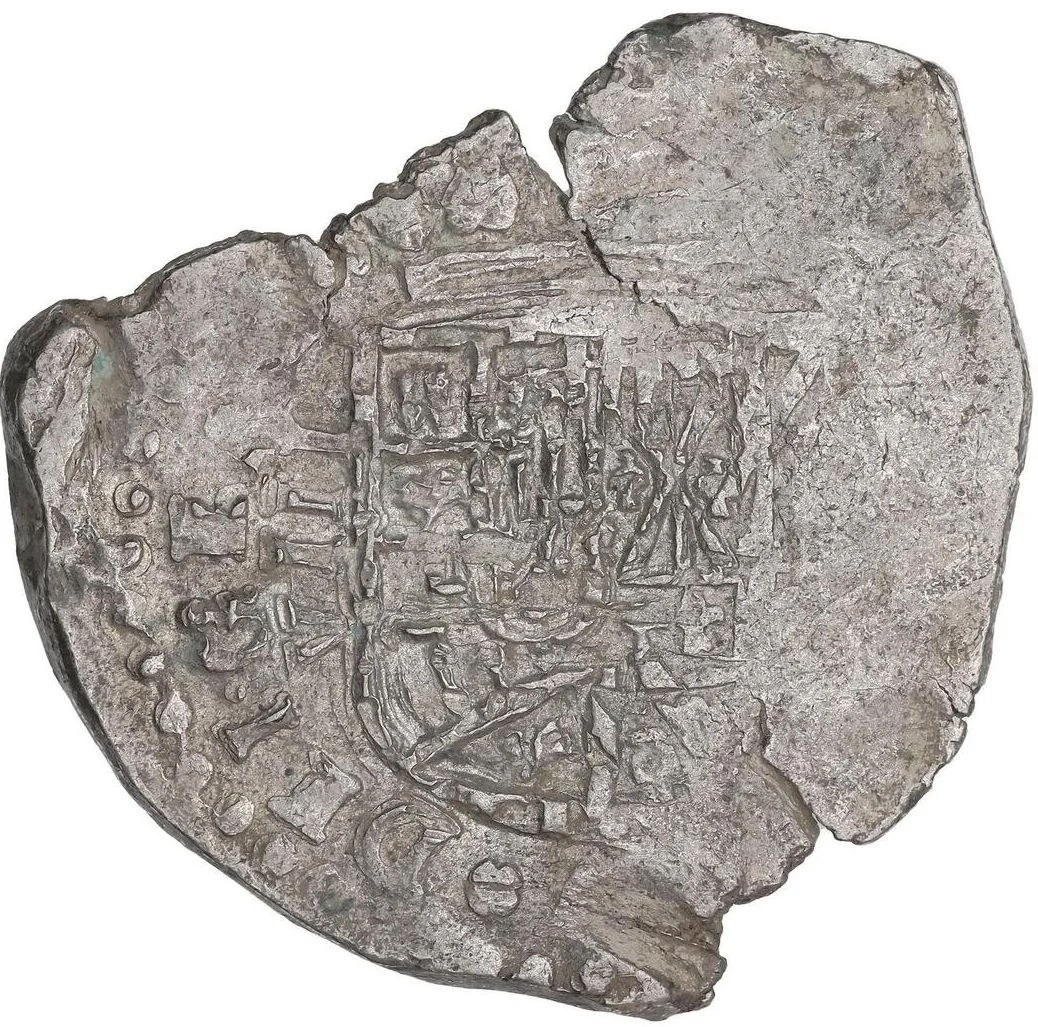
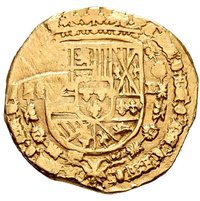
Obverse
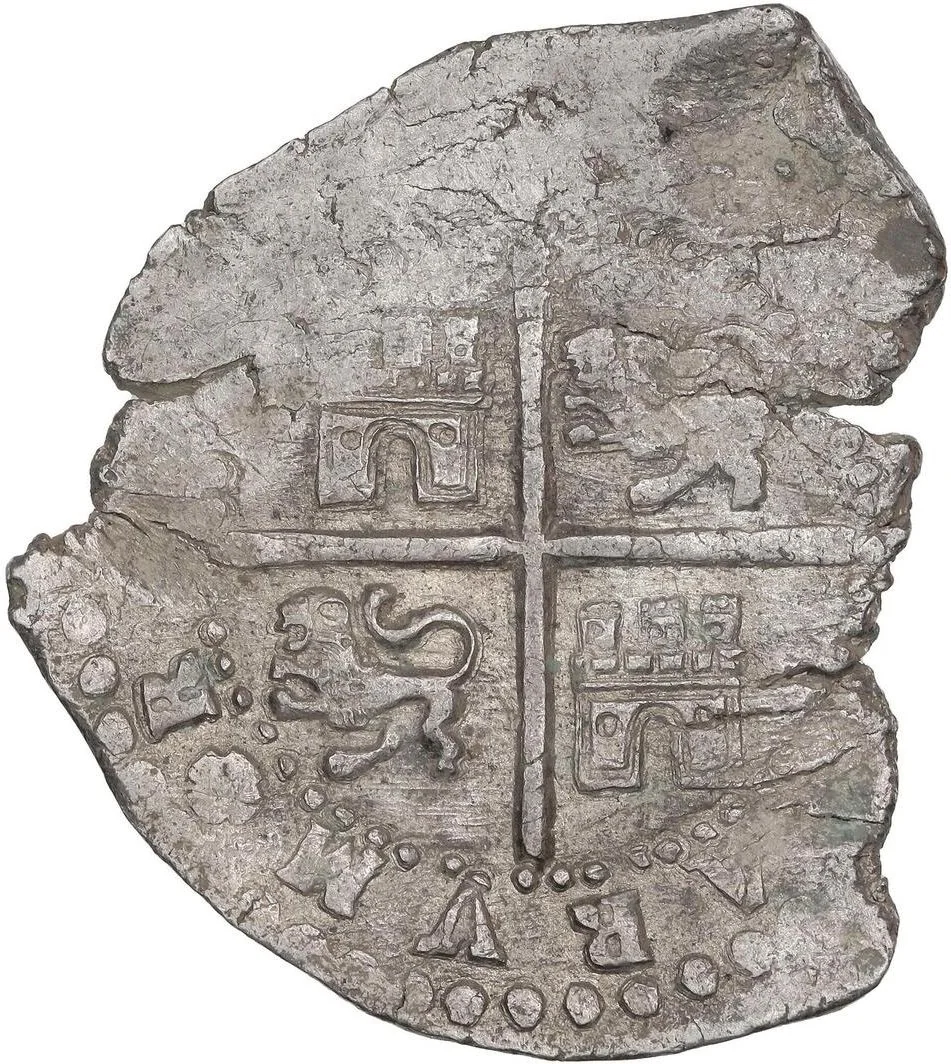
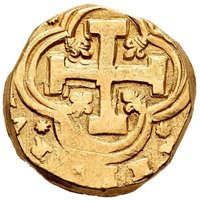
Reverse
Description:
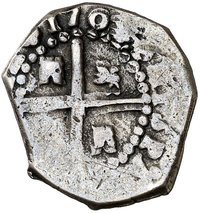
Cross between castles, lions in corners, pellet border.
Inscription:
❀ HISPANIARVM ❀ REX ❀ 1704
Script: Latin
Edge
Plain
Categories
| Animal> Feline |
| Building> Castle or fortification |
| Symbols> Coat of Arms |
| Symbol> Cross |
Mints
| Name | Mark |
|---|---|
| Royal Mint of Seville | S |
Mintings
| Year | Mint Mark | Mintage | Quality | Collection |
|---|---|---|---|---|
| 1702 | SM | — | ||
| 1704 | SM | — | ||
| 1704 | SP | — |
Historical background
In 1702, Spain found itself in a precarious and complex monetary situation, deeply entangled with the impending War of the Spanish Succession (1701-1714). The death of the childless King Charles II in 1700 had bequeathed the entire Spanish Empire to Philip of Anjou, grandson of Louis XIV of France, a move contested by a Grand Alliance of European powers supporting the Habsburg Archduke Charles. This dynastic crisis triggered a continental war that placed immense strain on the Spanish treasury. The state, already weakened by decades of economic stagnation, costly wars, and a declining influx of silver from the Americas, was forced to finance military mobilization, leading to severe fiscal pressure and a reliance on deficit spending.
The currency system itself was in a state of disorder and debasement. The Spanish real and its larger denomination, the escudo, were theoretically based on a bimetallic standard of silver and gold. However, a long history of reducing the silver content in the coinage to fund state expenditures had eroded public confidence. The widespread circulation of clipped, worn, and counterfeit coins, particularly the ubiquitous vellón (a low-value copper or billon coin), created a chaotic monetary environment. Different regions within Spain’s kingdoms often valued coins differently, and the influx of foreign coins from allied and enemy nations further complicated transactions, leading to frequent price fluctuations and commercial uncertainty.
Consequently, 1702 was a year of monetary crisis on the cusp of deeper turmoil. King Philip V, attempting to assert control and fund his war effort, resorted to traditional but damaging measures. These included further manipulations of the coinage, such as issuing new copper vellón with arbitrarily assigned values far above their intrinsic metal worth. This practice, effectively a form of inflation, disrupted trade, discouraged savings, and placed a heavy burden on the populace. Thus, the currency situation reflected the broader Spanish state: an empire with vast nominal resources but crippled by internal weakness, caught in a European conflict that would determine its future and further devastate its economy.
The currency system itself was in a state of disorder and debasement. The Spanish real and its larger denomination, the escudo, were theoretically based on a bimetallic standard of silver and gold. However, a long history of reducing the silver content in the coinage to fund state expenditures had eroded public confidence. The widespread circulation of clipped, worn, and counterfeit coins, particularly the ubiquitous vellón (a low-value copper or billon coin), created a chaotic monetary environment. Different regions within Spain’s kingdoms often valued coins differently, and the influx of foreign coins from allied and enemy nations further complicated transactions, leading to frequent price fluctuations and commercial uncertainty.
Consequently, 1702 was a year of monetary crisis on the cusp of deeper turmoil. King Philip V, attempting to assert control and fund his war effort, resorted to traditional but damaging measures. These included further manipulations of the coinage, such as issuing new copper vellón with arbitrarily assigned values far above their intrinsic metal worth. This practice, effectively a form of inflation, disrupted trade, discouraged savings, and placed a heavy burden on the populace. Thus, the currency situation reflected the broader Spanish state: an empire with vast nominal resources but crippled by internal weakness, caught in a European conflict that would determine its future and further devastate its economy.
✨ Legendary