

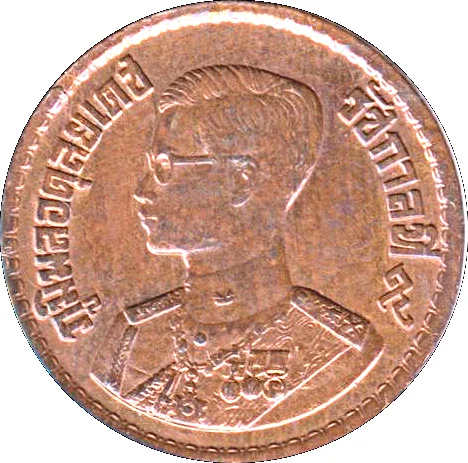
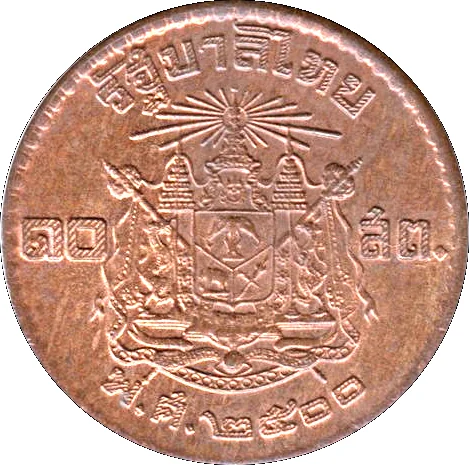
10 Satangs – Thailand
Thailand
Context
Year: 1957
Thai Year: 2500
Issuer: Thailand 
Ruler: Bhumibol Adulyadej
Currency:
(since 1897)
Demonetized: Yes
Total mintage: 13,365,000
Material
References
Y: #Click to copy to clipboard79a
Numista: #12254
Value
Exchange value: 0.10 THB = $0.00
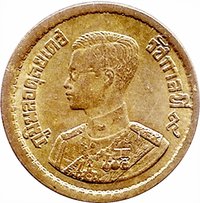
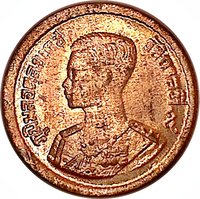
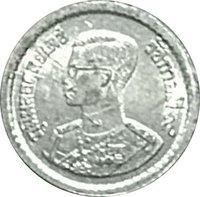
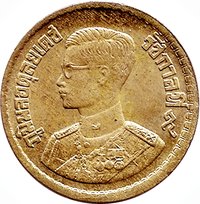
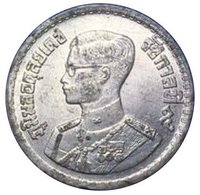
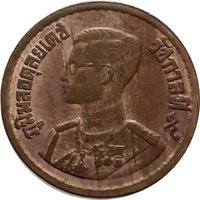
Obverse
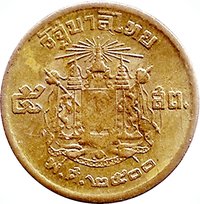
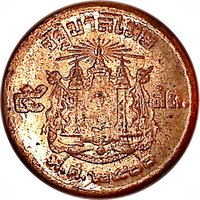
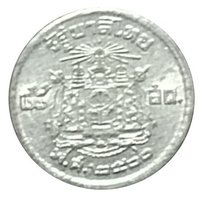
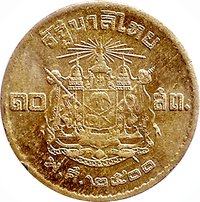
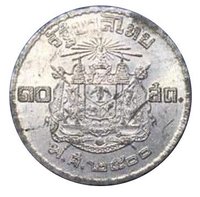
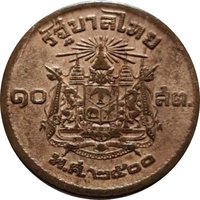
Reverse
Edge
Plain
Mints
| Name | Mark |
|---|---|
| Bangkok | — |
Mintings
| Year | Mint Mark | Mintage | Quality | Collection |
|---|---|---|---|---|
| 1957 | — | 13,365,000 |
Historical background
In 1957, Thailand's currency situation was characterized by a complex dual-exchange rate system and significant economic instability following a period of post-war recovery. The official exchange rate was fixed at approximately 20-21 Thai baht to 1 US dollar, established under the Bretton Woods system. However, due to balance of payments pressures, inflation, and a thriving black market, a separate and much weaker "free market" rate existed in parallel, creating a substantial gap that encouraged capital flight and corruption.
This unstable monetary environment was both a symptom and a cause of broader economic troubles. The government, led by Prime Minister Plaek Phibunsongkhram, faced mounting budget deficits, declining prices for key exports like rice and rubber, and dwindling foreign exchange reserves. The artificial strength of the official baht overvalued the currency, hurting export competitiveness and creating chronic trade deficits. These economic pressures contributed to severe political discontent.
The currency crisis culminated in late 1957, becoming a pivotal factor in the military coup led by Field Marshal Sarit Thanarat in September. The new regime identified currency reform as an immediate priority, viewing the dual-rate system as economically destructive and a symbol of the previous government's mismanagement. By the end of the year, the Sarit government had moved decisively to unify the exchange rates, devalue the baht to align with market realities, and seek stabilization loans from international institutions like the IMF, setting the stage for a new era of economic policy focused on development and closer ties with the West.
This unstable monetary environment was both a symptom and a cause of broader economic troubles. The government, led by Prime Minister Plaek Phibunsongkhram, faced mounting budget deficits, declining prices for key exports like rice and rubber, and dwindling foreign exchange reserves. The artificial strength of the official baht overvalued the currency, hurting export competitiveness and creating chronic trade deficits. These economic pressures contributed to severe political discontent.
The currency crisis culminated in late 1957, becoming a pivotal factor in the military coup led by Field Marshal Sarit Thanarat in September. The new regime identified currency reform as an immediate priority, viewing the dual-rate system as economically destructive and a symbol of the previous government's mismanagement. By the end of the year, the Sarit government had moved decisively to unify the exchange rates, devalue the baht to align with market realities, and seek stabilization loans from international institutions like the IMF, setting the stage for a new era of economic policy focused on development and closer ties with the West.
Series: 1957 Thailand circulation coins
🌱 Common