

8 Daler SM – Sweden
Sweden

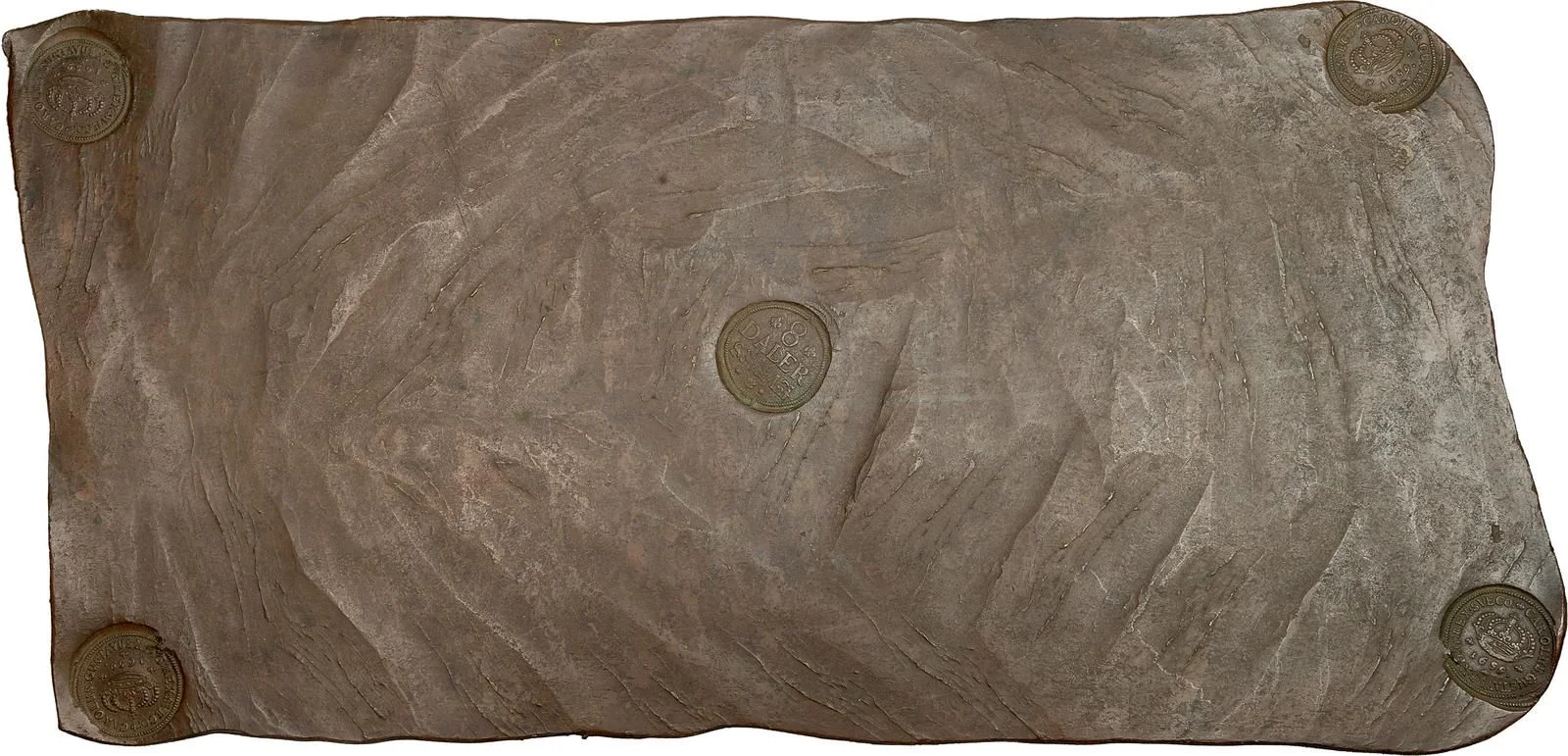
Obverse
Description:
Five stamps on field.
Inscription:
Center stamp:
*8*
DALER
Sölff:Mnt
Corner stamp:
CAROLUS·GUSTAVUS·X·D:G:REX·SVECO:
1659.
*8*
DALER
Sölff:Mnt
Corner stamp:
CAROLUS·GUSTAVUS·X·D:G:REX·SVECO:
1659.
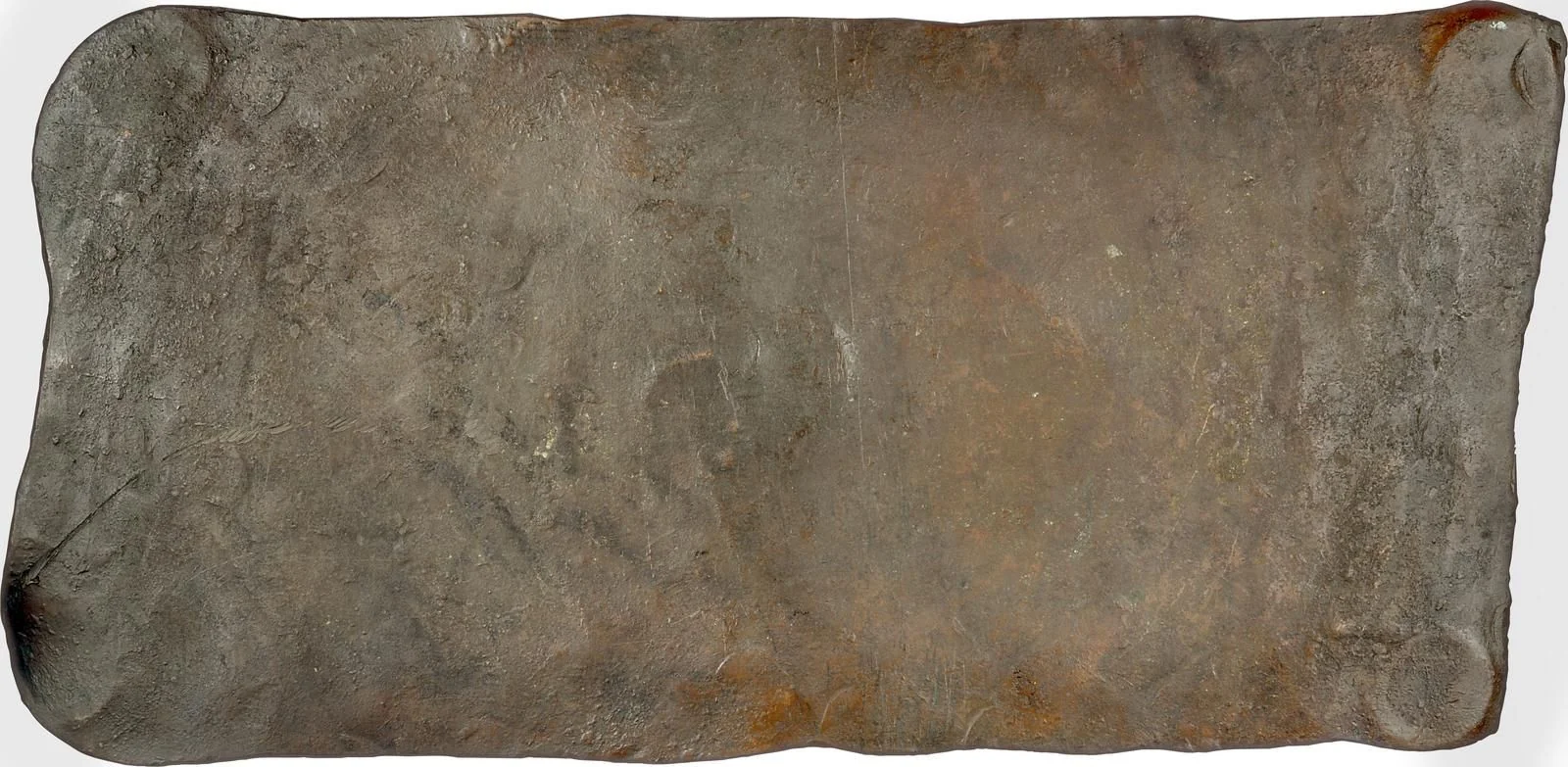
Reverse
Edge
Mints
| Name | Mark |
|---|---|
| Avesta | — |
Mintings
| Year | Mint Mark | Mintage | Quality | Collection |
|---|---|---|---|---|
| 1656 | — | — | ||
| 1657 | — | — | ||
| 1658 | — | — | ||
| 1659 | — | — |
Historical background
In 1656, Sweden was in the midst of the "Great Reduction" under King Charles X Gustav, a period defined by severe monetary instability and state financial crisis. The kingdom's currency, based on silver, had been dramatically debased for decades to finance its involvement in the Thirty Years' War and subsequent conflicts. By the 1650s, the silver content in coins like the daler had plummeted, leading to rampant inflation, a collapse in public trust, and a chaotic circulation of both domestic and foreign coins of uncertain value.
This monetary chaos was compounded by the government's issuance of kreditivsedlar (credit notes) in 1656, a primitive form of paper money intended to solve a liquidity crisis. These notes, issued by Stockholm's Palmstruchska Bank (the precursor to the Riksbank), were initially backed by copper plate money—large, cumbersome copper slabs used as currency due to Sweden's rich copper deposits. However, the notes quickly began to circulate beyond their metallic guarantee, creating one of Europe's earliest experiments with fiduciary currency.
The situation was unsustainable. The combination of debased coinage, experimental paper money, and the immense costs of ongoing war with Poland-Lithuania placed the Swedish economy under tremendous strain. Within a few years, the over-issuance of credit notes would lead to a bank run and the eventual imprisonment of the bank's founder, Johan Palmstruch. Thus, 1656 represents a pivotal and turbulent year, caught between the legacy of wartime coin debasement and a risky, premature venture into paper money that would end in failure.
This monetary chaos was compounded by the government's issuance of kreditivsedlar (credit notes) in 1656, a primitive form of paper money intended to solve a liquidity crisis. These notes, issued by Stockholm's Palmstruchska Bank (the precursor to the Riksbank), were initially backed by copper plate money—large, cumbersome copper slabs used as currency due to Sweden's rich copper deposits. However, the notes quickly began to circulate beyond their metallic guarantee, creating one of Europe's earliest experiments with fiduciary currency.
The situation was unsustainable. The combination of debased coinage, experimental paper money, and the immense costs of ongoing war with Poland-Lithuania placed the Swedish economy under tremendous strain. Within a few years, the over-issuance of credit notes would lead to a bank run and the eventual imprisonment of the bank's founder, Johan Palmstruch. Thus, 1656 represents a pivotal and turbulent year, caught between the legacy of wartime coin debasement and a risky, premature venture into paper money that would end in failure.

✨ Legendary