

½ Thaler – Hungary
Hungary
Context
Years: 1732–1740
Issuer: Hungary 
Ruler: Charles III
Currency:
(1526—1754)
Demonetized: Yes
Total mintage: 68,000
Material
References
KM: #Click to copy to clipboard313
Numista: #18064
Obverse
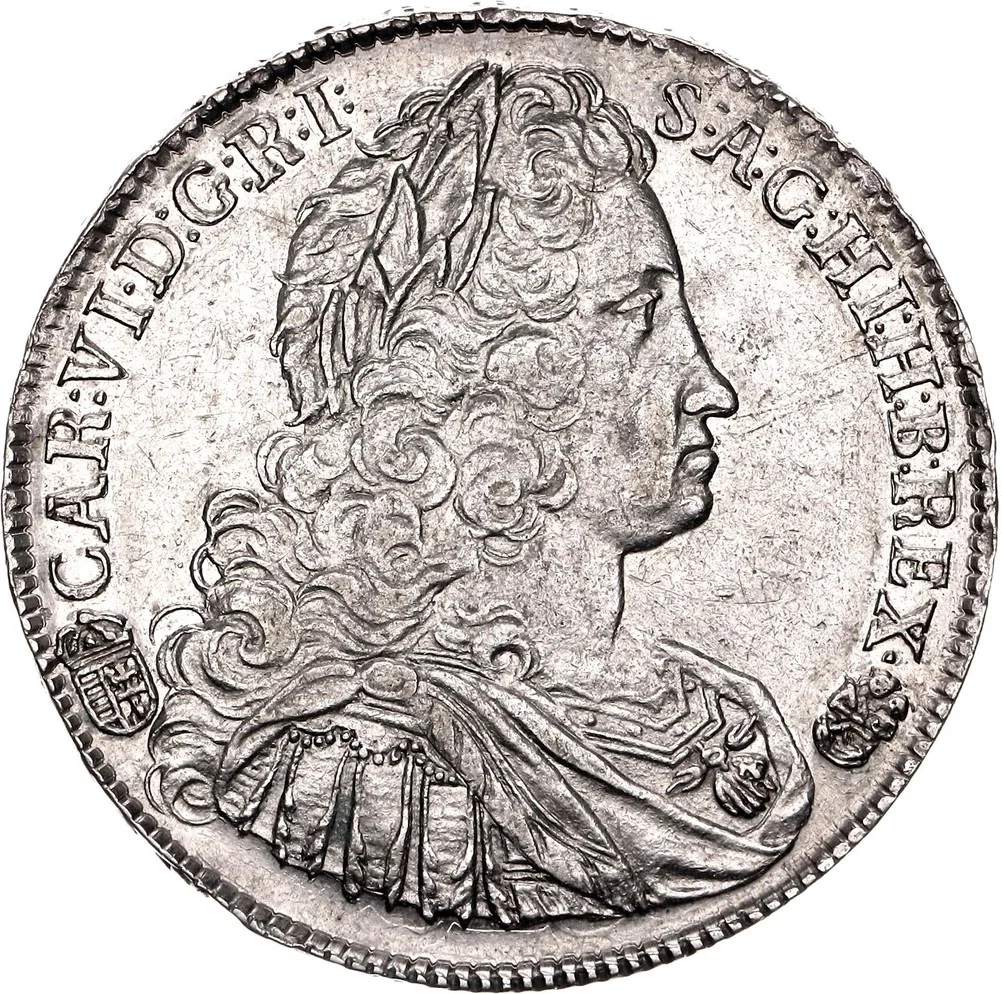
Description:
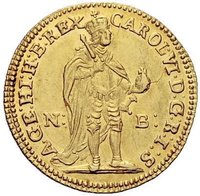
Curly-wigged laureate bust in simplified dress, breaking top and bottom inscriptions. Uncircled legend begins left, flanked by crowned Hungarian shield and Madonna-and-child stamp.
Inscription:
CAR · VI · D · G · R · I · S · A · G · HI · H · BO · REX ·
Script: Latin
Reverse
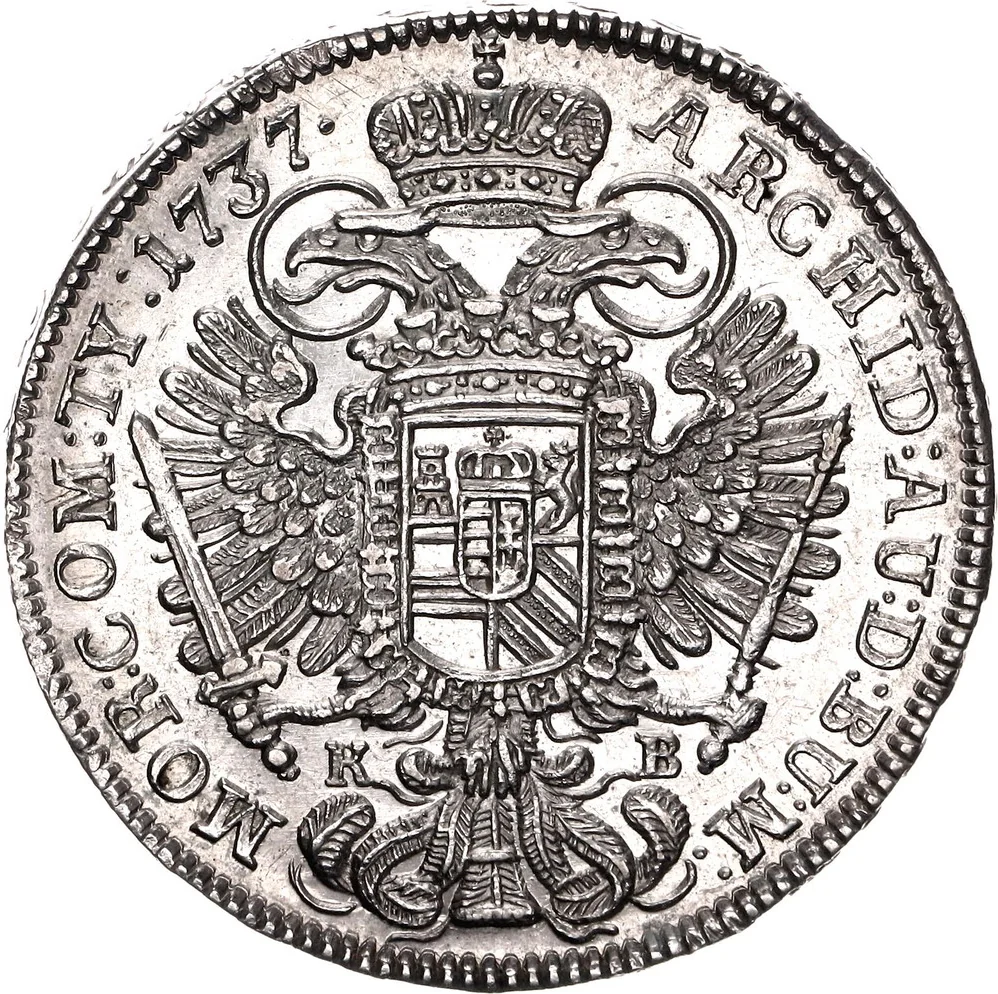
Description:
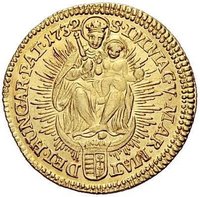
Imperial eagle with KB mintmark split by tail, no orb between heads. On chest, U-shaped cartouche with crowned fourfold imperial arms. Central crowned Hungarian shield. Inscription without pearls, date at end.
Inscription:
ARCHID · AV · D · BV · M · MOR · COM · TY · 1712 ·
K B
K B
Script: Latin
Edge
Inscripted
Legend:
CONSTATER CONTINET ORBEM
Mints
| Name | Mark |
|---|---|
| Kremnica | KB |
Mintings
| Year | Mint Mark | Mintage | Quality | Collection |
|---|---|---|---|---|
| 1732 | K | — | ||
| 1733 | K | — | ||
| 1734 | K | — | ||
| 1735 | K | — | ||
| 1736 | K | — | ||
| 1737 | K | — | ||
| 1738 | K | — | ||
| 1739 | K | 12,000 | ||
| 1740 | K | 56,000 |
Historical background
In 1732, the currency situation in the Kingdom of Hungary, then part of the Habsburg Monarchy, was characterized by instability and complexity stemming from the aftermath of the Rákóczi War of Independence (1703-1711). The war had severely disrupted the economy and the monetary system. To finance the conflict, both the Habsburg court and Prince Rákóczi’s rebels had issued debased coinage and excessive amounts of low-quality money, notably the so-called kriegsgeld (war money). This led to a severe devaluation and a loss of public trust in the currency, with older, high-quality coins being hoarded and disappearing from circulation.
The primary unit of account was the Hungarian forint (gulden), but the actual circulating medium was a confusing mixture of domestic and foreign coins. These included silver thalers from various German states, Dutch ducats, and the debased copper and silver coins minted during the war. The Habsburg authorities, seeking to reassert control and stabilize the economy, faced the difficult task of standardizing the coinage and restoring its intrinsic value. This was part of a broader effort to centralize fiscal policy from Vienna, often against the wishes of the Hungarian Diet, which guarded its traditional rights, including those over taxation and mining (a key source of precious metals).
Consequently, 1732 fell within a period of slow and contentious monetary reform. The government aimed to withdraw the degraded coinage and introduce new, full-value coins from the mints at Körmöcbánya (present-day Kremnica, Slovakia) and Nagybánya (present-day Baia Mare, Romania). However, progress was hampered by a shortage of silver, the political negotiations with the Hungarian estates, and the lingering effects of the earlier inflation. Thus, the currency situation remained in a transitional state, with a dual challenge of restoring both physical coinage and public confidence in the monetary system.
The primary unit of account was the Hungarian forint (gulden), but the actual circulating medium was a confusing mixture of domestic and foreign coins. These included silver thalers from various German states, Dutch ducats, and the debased copper and silver coins minted during the war. The Habsburg authorities, seeking to reassert control and stabilize the economy, faced the difficult task of standardizing the coinage and restoring its intrinsic value. This was part of a broader effort to centralize fiscal policy from Vienna, often against the wishes of the Hungarian Diet, which guarded its traditional rights, including those over taxation and mining (a key source of precious metals).
Consequently, 1732 fell within a period of slow and contentious monetary reform. The government aimed to withdraw the degraded coinage and introduce new, full-value coins from the mints at Körmöcbánya (present-day Kremnica, Slovakia) and Nagybánya (present-day Baia Mare, Romania). However, progress was hampered by a shortage of silver, the political negotiations with the Hungarian estates, and the lingering effects of the earlier inflation. Thus, the currency situation remained in a transitional state, with a dual challenge of restoring both physical coinage and public confidence in the monetary system.
✨ Legendary