

1 Penny – Isle of Man
Context
Year: 1733
Country: British Crown dependencies
Issuer: Isle of Man 
Currency:
(1709—1839)
Demonetized: Yes
Total mintage: 72,000
Material
References
KM: #Click to copy to clipboard5
Numista: #17885
Obverse
Description:
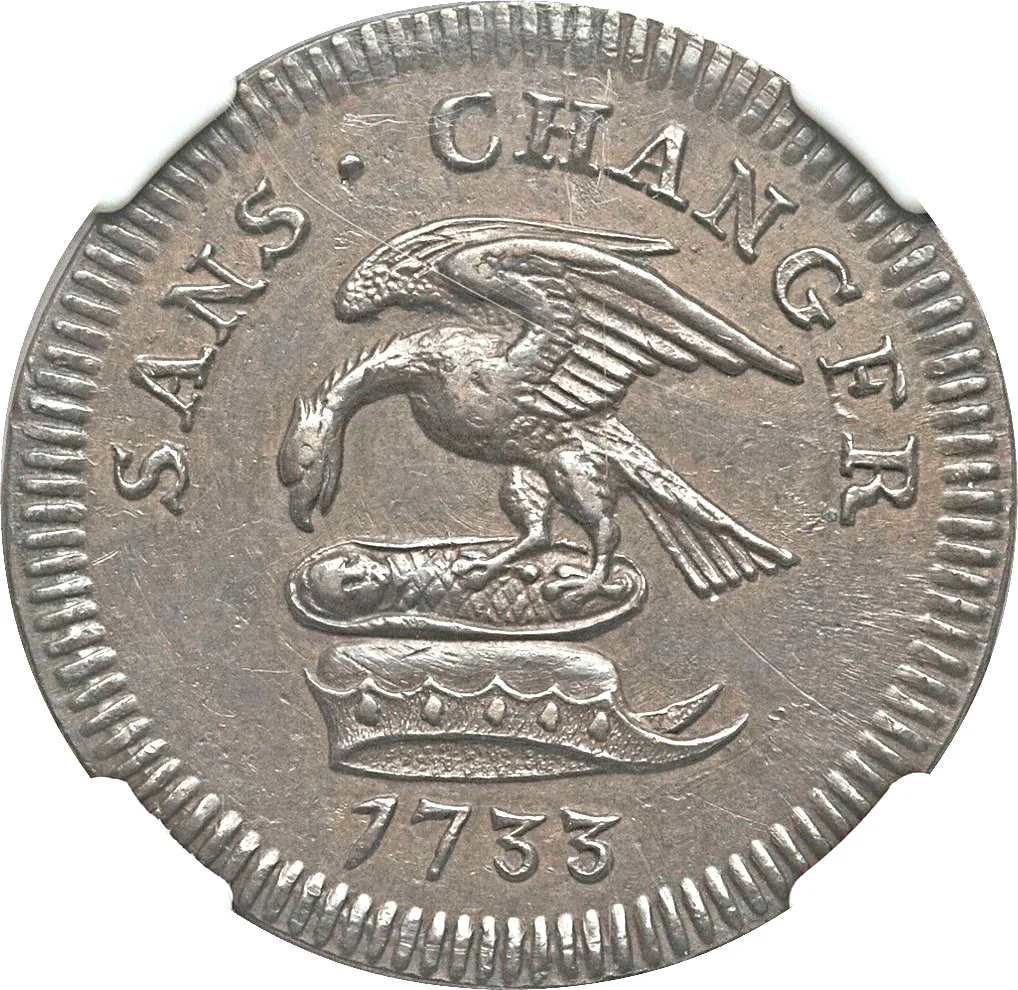
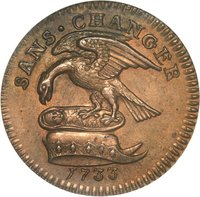
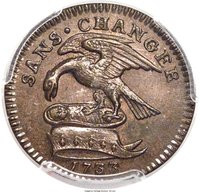
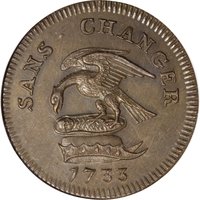
Stanley crest: eagle and child on a cap of maintenance.
Inscription:
SANS · CHANGER
1733
1733
Script: Latin
Reverse
Description:
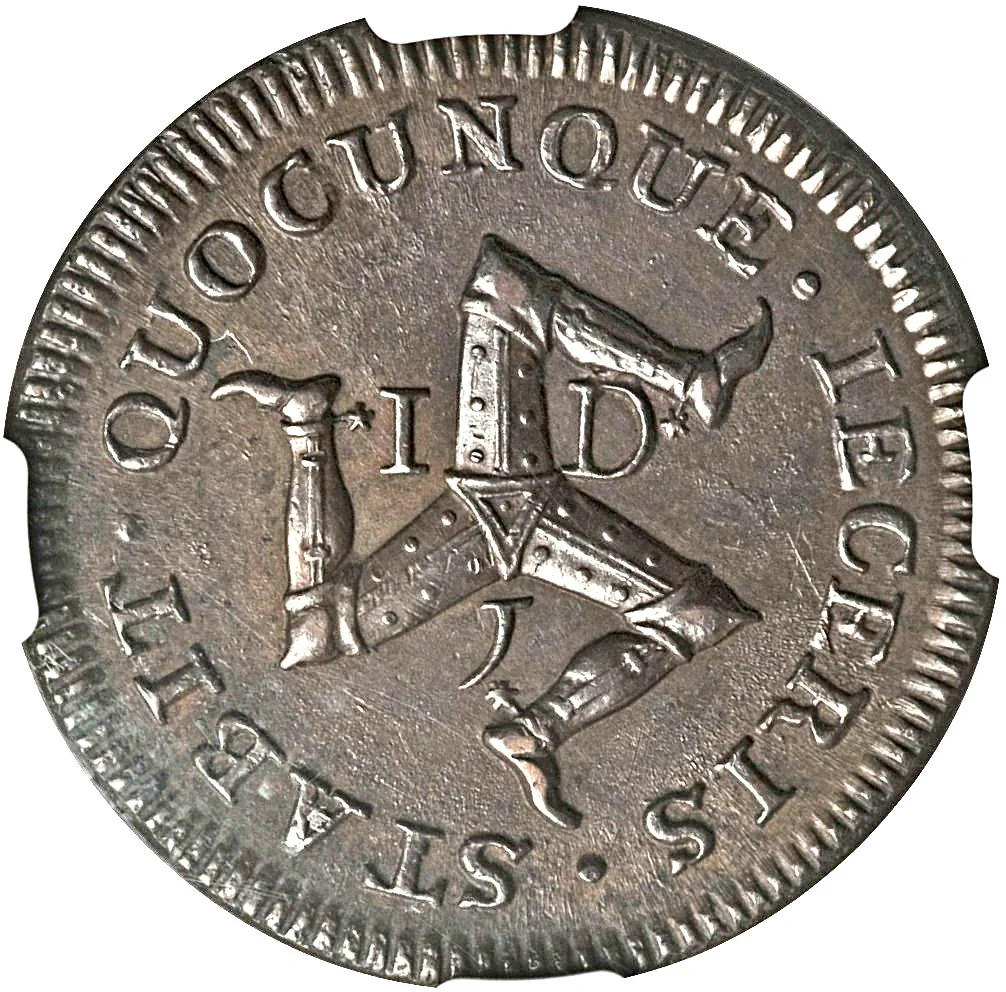
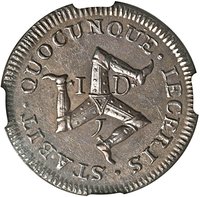
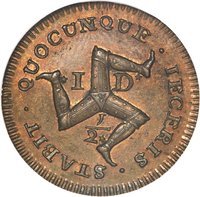
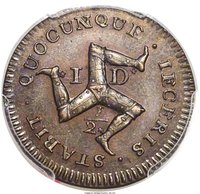
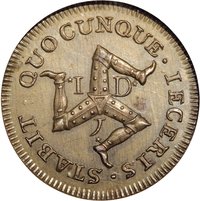
Triskeles ID1 (Iacobus Darbiensis penny). Resembles IDJ but is not.
Inscription:
QUOCUNQUE · IECERIS · STABIT ·
I D 1
I D 1
Script: Latin
Edge
Plain
Categories
| Animal> Bird> Eagle |
| Symbol> Triskelion |
Mintings
| Year | Mint Mark | Mintage | Quality | Collection |
|---|---|---|---|---|
| 1733 | — | 72,000 | ||
| 1733 | — | — | Proof |
Historical background
In 1733, the Isle of Man faced a chronic and debilitating shortage of official coinage, a common problem in many small economies of the period. The island, then a feudal lordship under the Duke of Atholl, did not mint its own coins and relied heavily on a chaotic mix of foreign currencies, primarily English, Irish, and Scottish coins, alongside Spanish pieces of eight and Portuguese gold moidores that entered through trade. This patchwork system was unstable; good-quality coinage, especially English silver, was often exported to settle debts with Britain, leaving the local economy starved of reliable specie for everyday transactions.
The shortage was so severe that it stifled commerce and led to widespread use of inconvenient substitutes. Tradesmen and merchants resorted to barter, while promissory notes and tokens, often issued by local landlords or merchants, circulated unofficially. These makeshift solutions were inefficient and risky, as their value was not guaranteed and they fostered disputes. The situation was exacerbated by the island's unique constitutional position—it was not yet fully integrated into the British fiscal system (which would happen later with the Revestment Act of 1765), leaving it in a monetary limbo without the authority or mechanism to formally regulate its own currency supply.
Consequently, 1733 represents a point of mounting pressure within a longer monetary crisis. While no single reform was enacted that year, the persistent difficulties highlighted the urgent need for a structured solution. This eventually culminated in the issuing of the Manx copper coinage in 1733 by private initiative, with tokens minted in Chester under the authority of the Duke of Atholl, marking a pragmatic but still unofficial step toward addressing the island's acute currency famine and laying the groundwork for more formalized issues later in the century.
The shortage was so severe that it stifled commerce and led to widespread use of inconvenient substitutes. Tradesmen and merchants resorted to barter, while promissory notes and tokens, often issued by local landlords or merchants, circulated unofficially. These makeshift solutions were inefficient and risky, as their value was not guaranteed and they fostered disputes. The situation was exacerbated by the island's unique constitutional position—it was not yet fully integrated into the British fiscal system (which would happen later with the Revestment Act of 1765), leaving it in a monetary limbo without the authority or mechanism to formally regulate its own currency supply.
Consequently, 1733 represents a point of mounting pressure within a longer monetary crisis. While no single reform was enacted that year, the persistent difficulties highlighted the urgent need for a structured solution. This eventually culminated in the issuing of the Manx copper coinage in 1733 by private initiative, with tokens minted in Chester under the authority of the Duke of Atholl, marking a pragmatic but still unofficial step toward addressing the island's acute currency famine and laying the groundwork for more formalized issues later in the century.
⭐ Rare