


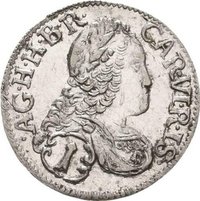
Obverse
Description:
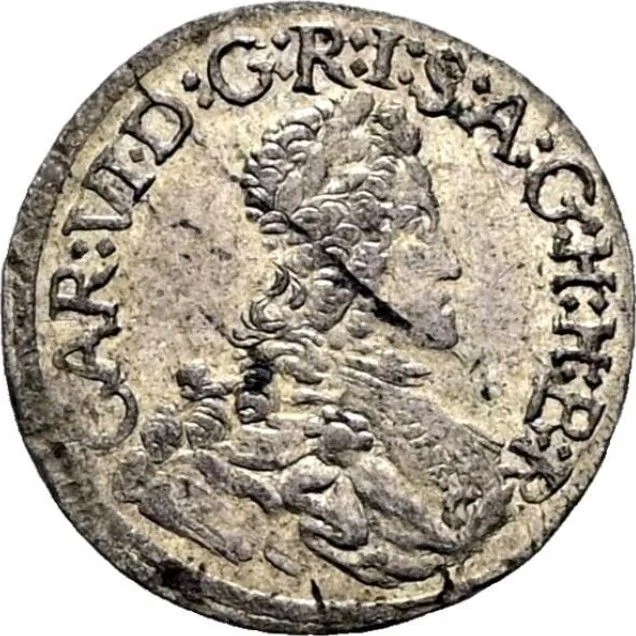
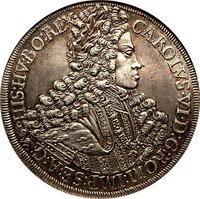
Right-facing bust, legend around.
Inscription:
CAROL VI R I S A G H H B R
Script: Latin
Engraver: Johann Anton König
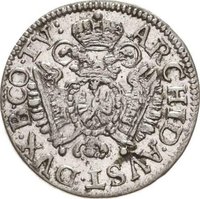
Reverse
Description:
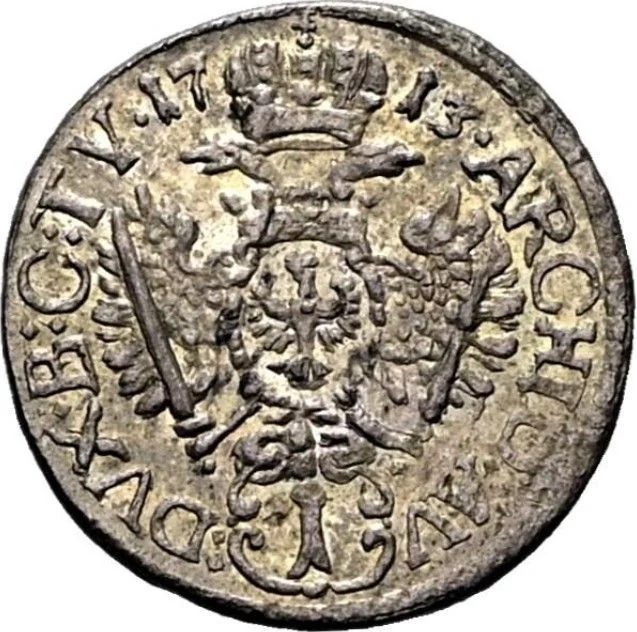
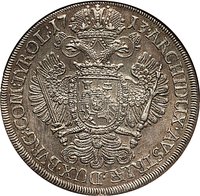
Imperial double-headed eagle with Tyrol shield, value in cartouche below dividing legend.
Inscription:
ARCHID AVST DVX B CO TYR
(1)
(1)
Script: Latin
Engravers: Johann Anton König, Josef Christof König
Edge
Plain
Mints
| Name | Mark |
|---|---|
| Hall | — |
Mintings
| Year | Mint Mark | Mintage | Quality | Collection |
|---|---|---|---|---|
| 1713 | — | — | ||
| 1714 | — | — | ||
| — | — | — | BU |
Historical background
In 1713, the County of Tyrol, a core province of the Habsburg Monarchy, was grappling with a severe and chronic monetary crisis. The region's currency system was fragmented and debased, characterized by a circulation of overvalued, lightweight silver coins known as Landmünze (local currency). These coins, whose nominal value was mandated by the state to be higher than their intrinsic silver content, were created primarily to finance the Habsburgs' enormous debts from the War of the Spanish Succession and earlier conflicts like the Great Turkish War. This practice led to a classic "bad money drives out good" scenario, where full-weight silver Reichsthaler and foreign coins were hoarded or exported, leaving the economy flooded with unstable, depreciating currency.
The situation caused rampant price inflation, commercial disruption, and deep public mistrust. Merchants, particularly in the important trade cities like Innsbruck, struggled with fluctuating exchange rates between the Landmünze and the stable Handelsgeld (trade currency) used for international commerce. The Habsburg government's repeated attempts to rectify the situation through mandates and re-coinages often made matters worse, as new debased issues were simply introduced to extract more seigniorage revenue for the state treasury. This created a vicious cycle of currency devaluation and economic uncertainty that hampered Tyrol's mining and transit trade economies.
Ultimately, the crisis of 1713 was not an isolated event but a acute episode in a longer monetary decline. It underscored the central tension between the fiscal needs of the imperial war machine and the economic stability of its territories. While a major currency reform would eventually be attempted under Empress Maria Theresa in the 1740s, the period around 1713 remained one of significant financial instability, where the value of money in a Tyrolean's pocket was unreliable and subject to the distant pressures of imperial policy and debt.
The situation caused rampant price inflation, commercial disruption, and deep public mistrust. Merchants, particularly in the important trade cities like Innsbruck, struggled with fluctuating exchange rates between the Landmünze and the stable Handelsgeld (trade currency) used for international commerce. The Habsburg government's repeated attempts to rectify the situation through mandates and re-coinages often made matters worse, as new debased issues were simply introduced to extract more seigniorage revenue for the state treasury. This created a vicious cycle of currency devaluation and economic uncertainty that hampered Tyrol's mining and transit trade economies.
Ultimately, the crisis of 1713 was not an isolated event but a acute episode in a longer monetary decline. It underscored the central tension between the fiscal needs of the imperial war machine and the economic stability of its territories. While a major currency reform would eventually be attempted under Empress Maria Theresa in the 1740s, the period around 1713 remained one of significant financial instability, where the value of money in a Tyrolean's pocket was unreliable and subject to the distant pressures of imperial policy and debt.
💎 Very Rare