

Obverse
Description:
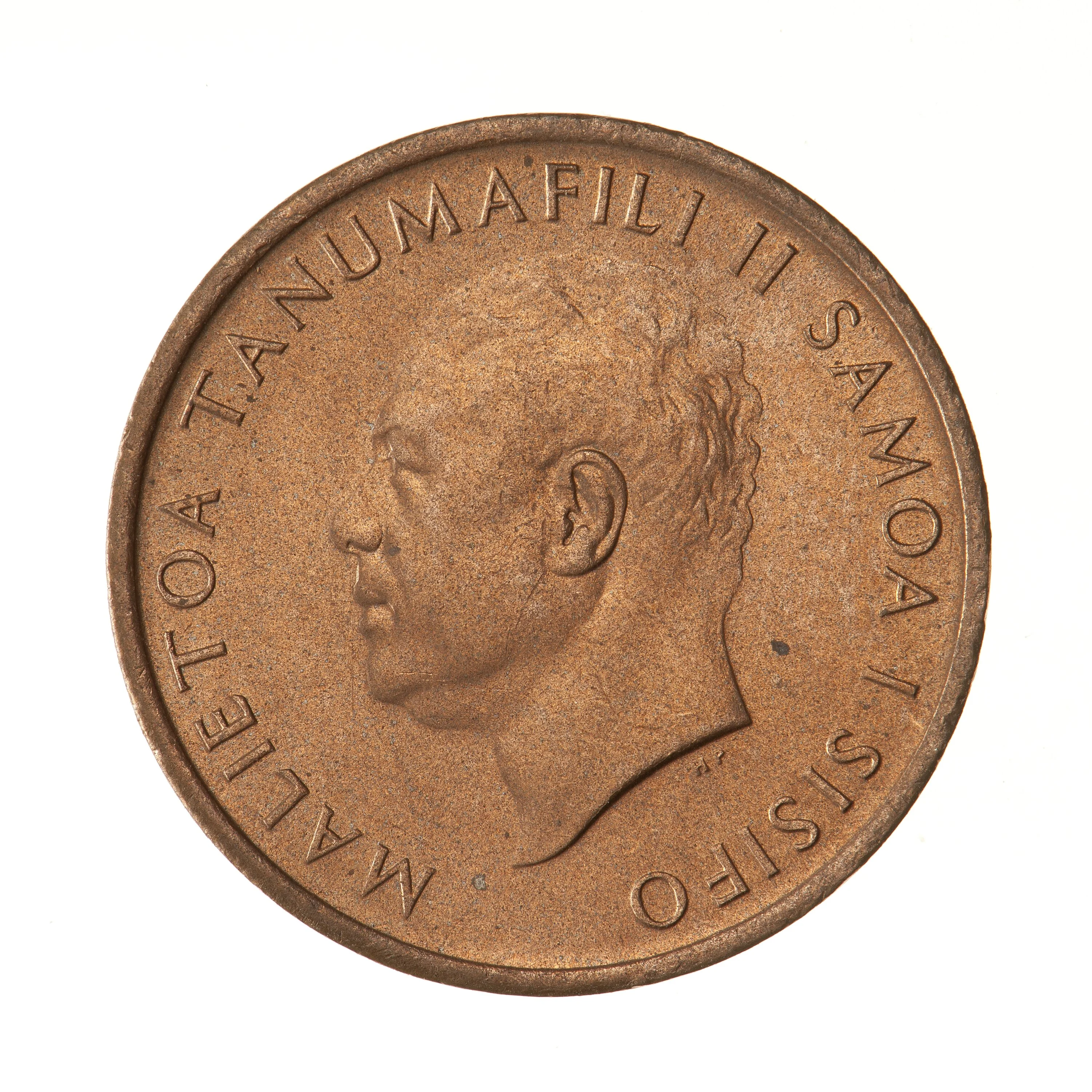
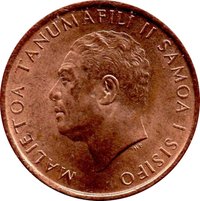
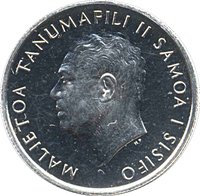
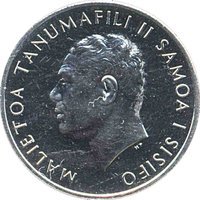
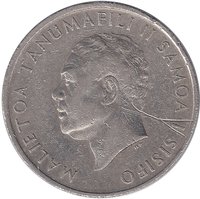
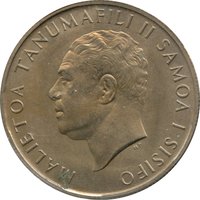
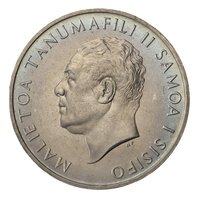
Portrait of Malietoa Tanumafili II in left profile.
Inscription:
MALIETOA TANUMAFILI II SAMOA I SISIFO
HP
HP
Translation:
Malietoa Tanumafili II Western Samoa
Script: Latin
Designer: Thomas Humphrey Paget
Reverse
Description:
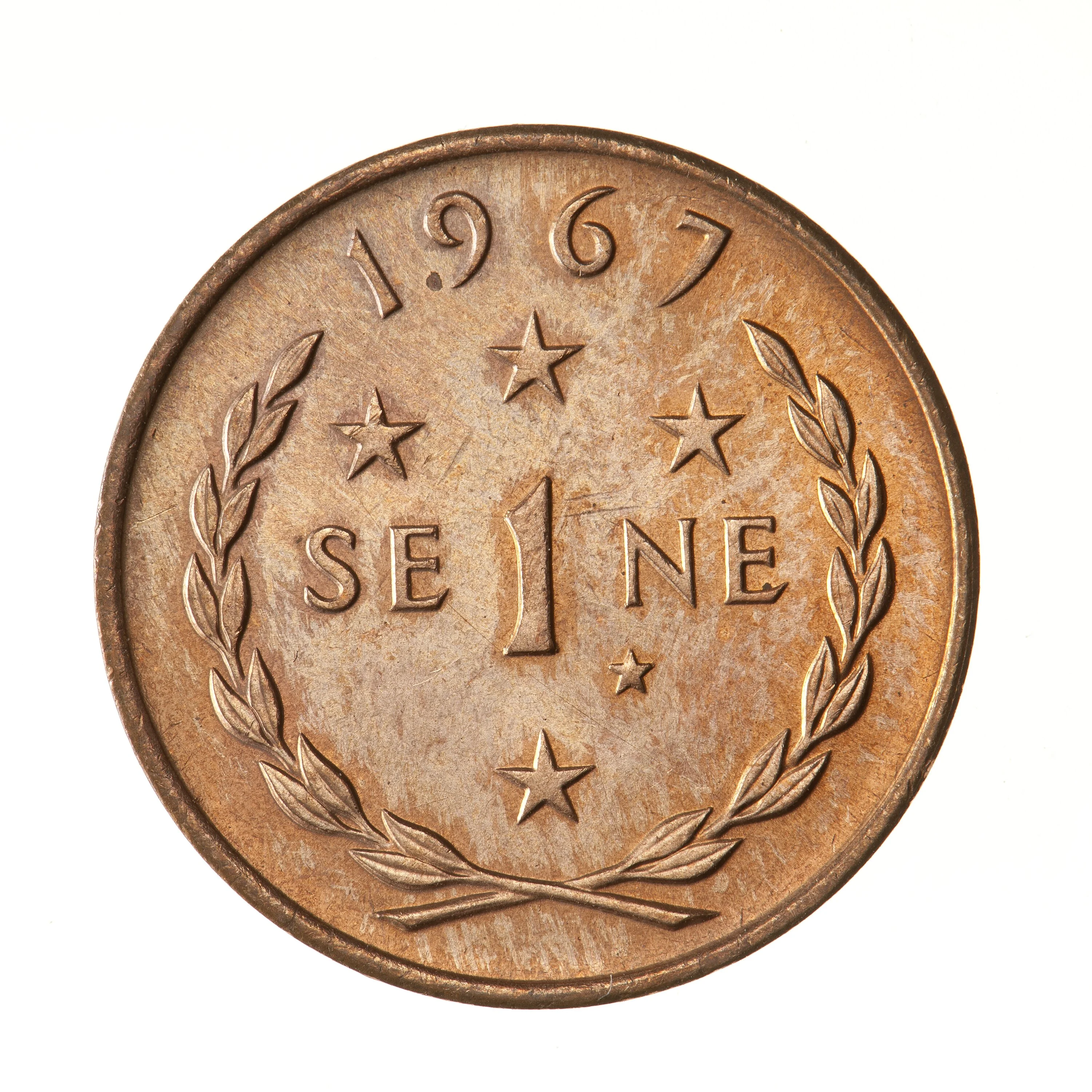
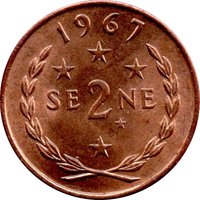
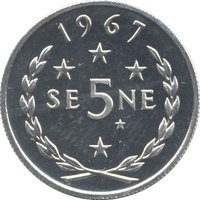
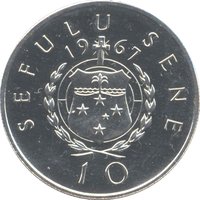
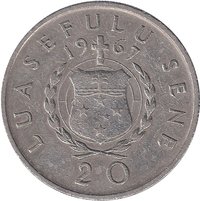
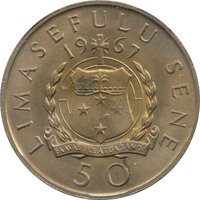
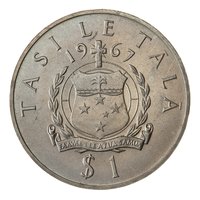
Southern Cross encircles denomination within wreath, date above.
Inscription:
1967
SE 1 NE
SE 1 NE
Script: Latin
Edge
Plain
Categories
| Symbol> Wreath |
| Person> Politician |
| Space |
Mints
| Name | Mark |
|---|---|
| Royal Mint (Tower Hill) | — |
Mintings
| Year | Mint Mark | Mintage | Quality | Collection |
|---|---|---|---|---|
| 1967 | — | 15,000 | Proof | |
| 1967 | — | 500,000 |
Historical background
In 1967, Samoa (officially Western Samoa until 1997) was navigating its first years of political independence, having gained sovereignty from New Zealand in 1962. This period was defined by a significant monetary transition as the country moved to establish its own distinct financial identity. Since 1914, the currency in circulation had been the Western Samoan pound, which was pegged at par with and directly interchangeable with the New Zealand pound, reflecting the enduring colonial economic ties.
The key development of 1967 was the decimalisation of the currency and the introduction of a new national unit, the tala. This change, implemented on 10 July 1967, replaced the pound-shilling-pence system with a decimal system where one tala was divided into 100 sene. The transition was coordinated with New Zealand's own decimalisation changeover, which had occurred just months earlier in July 1967 when the New Zealand dollar replaced the New Zealand pound. This synchronisation was crucial for maintaining stability, as the new Samoan tala was pegged at parity with the New Zealand dollar, ensuring continuity in trade and financial relations.
Thus, the 1967 currency situation was less about economic crisis and more about symbolic nation-building and practical modernisation. The introduction of the tala and sene was a deliberate step in asserting Samoa's post-colonial economic sovereignty, while the maintained peg to the New Zealand dollar provided necessary stability. This careful balance allowed the newly independent state to project monetary independence to its citizens while safeguarding its economy within the familiar and supportive framework of its most important economic partner.
The key development of 1967 was the decimalisation of the currency and the introduction of a new national unit, the tala. This change, implemented on 10 July 1967, replaced the pound-shilling-pence system with a decimal system where one tala was divided into 100 sene. The transition was coordinated with New Zealand's own decimalisation changeover, which had occurred just months earlier in July 1967 when the New Zealand dollar replaced the New Zealand pound. This synchronisation was crucial for maintaining stability, as the new Samoan tala was pegged at parity with the New Zealand dollar, ensuring continuity in trade and financial relations.
Thus, the 1967 currency situation was less about economic crisis and more about symbolic nation-building and practical modernisation. The introduction of the tala and sene was a deliberate step in asserting Samoa's post-colonial economic sovereignty, while the maintained peg to the New Zealand dollar provided necessary stability. This careful balance allowed the newly independent state to project monetary independence to its citizens while safeguarding its economy within the familiar and supportive framework of its most important economic partner.
Series: 1967 Samoa circulation coins
🌱 Common