

1 riksdaler – Sweden
Add to wishlist
Sweden
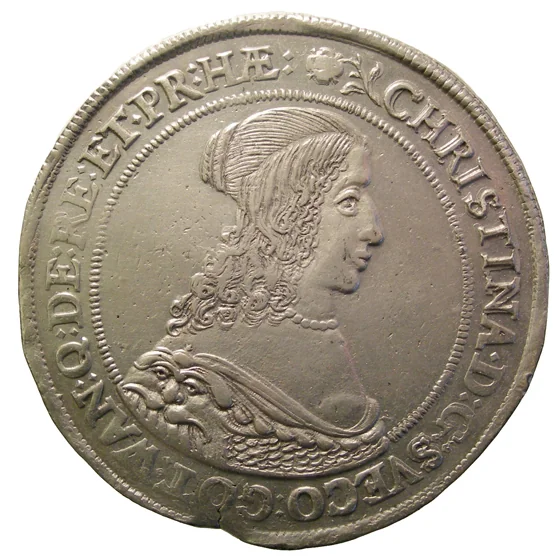
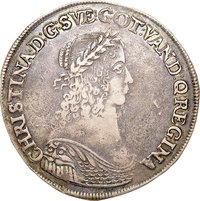
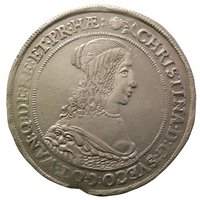
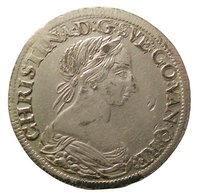
Obverse
Description:
Laureate queen facing right within circular legend.
Inscription:
CHRISTINA·D:G:SVECO:GOT:WAN:Q:DE:RE:ET·PR:HÆ
Script: Latin
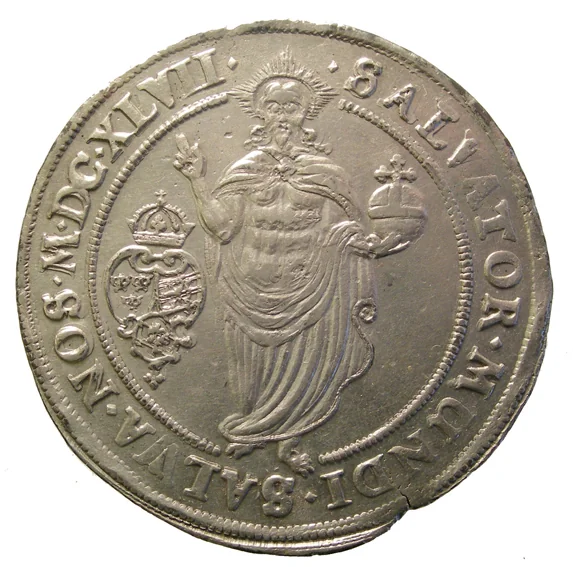
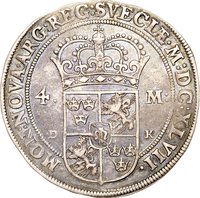
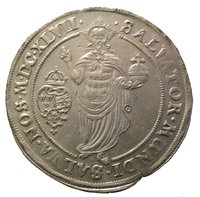
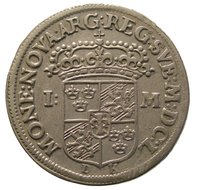
Reverse
Description:
Risen Christ holds orb, crowned triple arms to left. Mintmark near head or feet.
Inscription:
SALVATOR·MUNDI·SALVA·NOS·M·DC·XLVII
Script: Latin
Edge
Mints
| Name | Mark |
|---|---|
| Stockholm | — |
Mintings
| Year | Mint Mark | Mintage | Quality | Collection |
|---|---|---|---|---|
| 1647 | — | — |
Historical background
In 1647, Sweden was in the midst of the Thirty Years' War (1618–1648), a conflict that had dramatically expanded its territorial holdings and geopolitical influence but had also placed an immense strain on its economy. The state's primary financial strategy was one of heavy extraction, relying on war indemnities, loot, and control of Baltic trade tolls to fund its military machine. However, this was insufficient, leading to chronic budget deficits. The response was the relentless minting of copper coinage, a policy formalized earlier in the century, which created a complex and unstable bimetallic system alongside silver.
The currency situation was defined by the myntrealisation of 1624, which established a fixed exchange rate between large, cumbersome copper daler coins and silver daler coins. Crucially, Sweden possessed rich copper deposits, making copper a strategic monetary metal. By 1647, the system was under severe pressure. To generate short-term revenue, the government, under the regency of Queen Christina, frequently debased the coinage by reducing the copper content in plates or altering the official exchange rates. This practice, combined with the high cost of sustaining armies abroad, led to inflation, a loss of public confidence, and widespread economic distortion.
Consequently, the year 1647 fell within a period of significant monetary experimentation and turmoil. The heavy copper plates (plåtmynt) were physically awkward for large transactions, let alone daily use, and their value was artificially inflated by government decree. This situation sowed the seeds for the more extreme measures that would follow, including the issuance of Sweden's first paper money in the 1660s. Thus, the currency landscape of 1647 was one of a powerful empire fighting a continental war on a fragile and increasingly manipulated monetary base, setting the stage for future financial innovations and crises.
The currency situation was defined by the myntrealisation of 1624, which established a fixed exchange rate between large, cumbersome copper daler coins and silver daler coins. Crucially, Sweden possessed rich copper deposits, making copper a strategic monetary metal. By 1647, the system was under severe pressure. To generate short-term revenue, the government, under the regency of Queen Christina, frequently debased the coinage by reducing the copper content in plates or altering the official exchange rates. This practice, combined with the high cost of sustaining armies abroad, led to inflation, a loss of public confidence, and widespread economic distortion.
Consequently, the year 1647 fell within a period of significant monetary experimentation and turmoil. The heavy copper plates (plåtmynt) were physically awkward for large transactions, let alone daily use, and their value was artificially inflated by government decree. This situation sowed the seeds for the more extreme measures that would follow, including the issuance of Sweden's first paper money in the 1660s. Thus, the currency landscape of 1647 was one of a powerful empire fighting a continental war on a fragile and increasingly manipulated monetary base, setting the stage for future financial innovations and crises.
✨ Legendary