

10 rials – Iran
Add to wishlist
Iran
Context
Years: 1954–1965
Issuer: Iran
Ruler: Mohammad Reza
Currency:
(since 1932)
Demonetized: Yes
Total mintage: 32,008,000
Material
References
KM: #
Numista: #12220
Value
Exchange value: 10 IRR
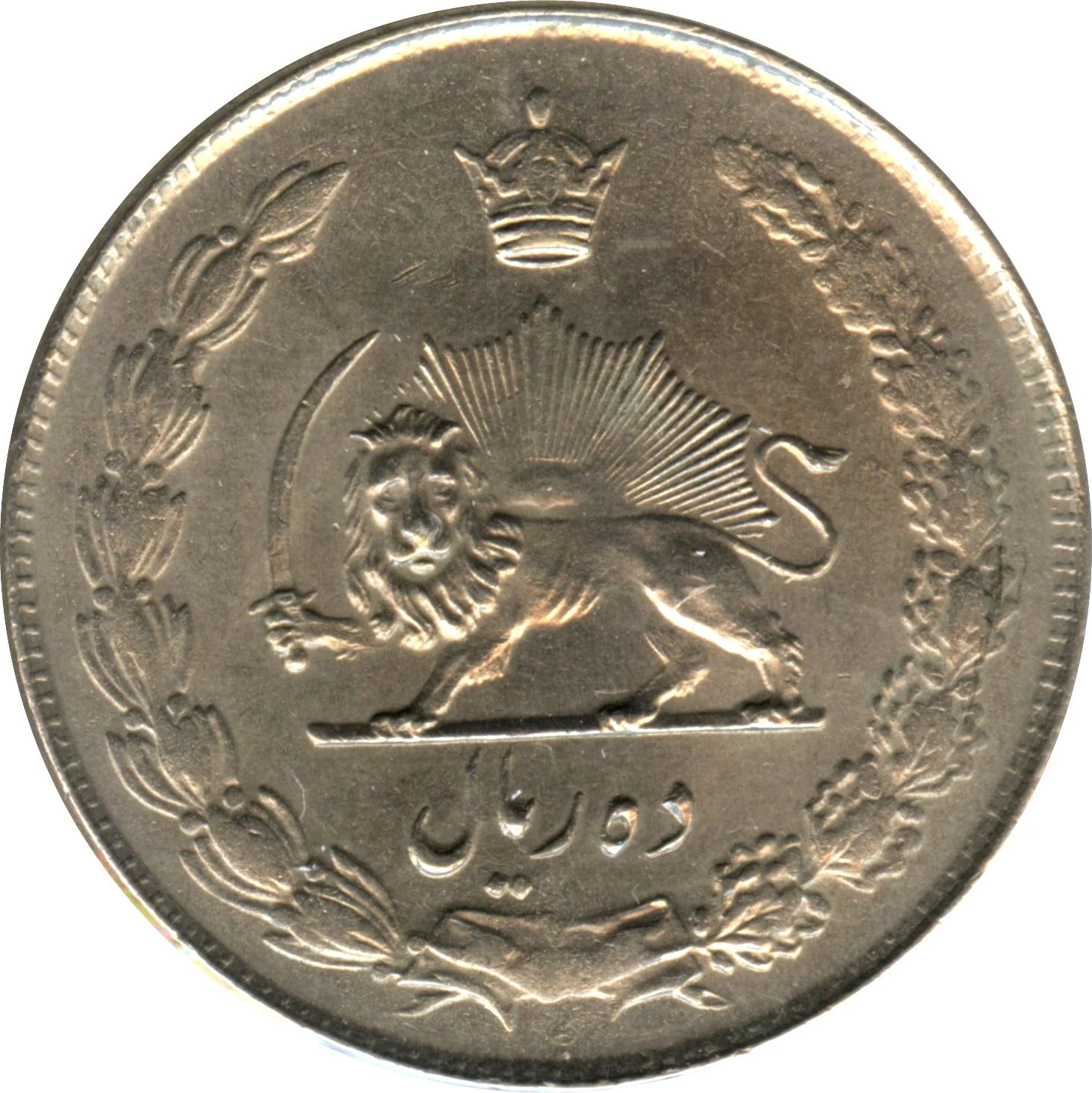
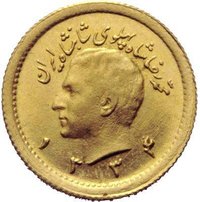
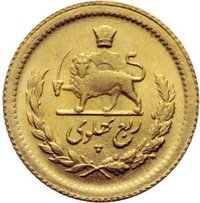
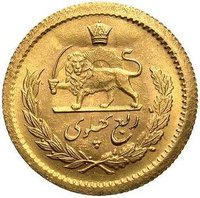
Obverse
Description:
Crowned lion and sun in wreath.
Inscription:
ده ریال
Translation:
Ten Rials
Language: Persian
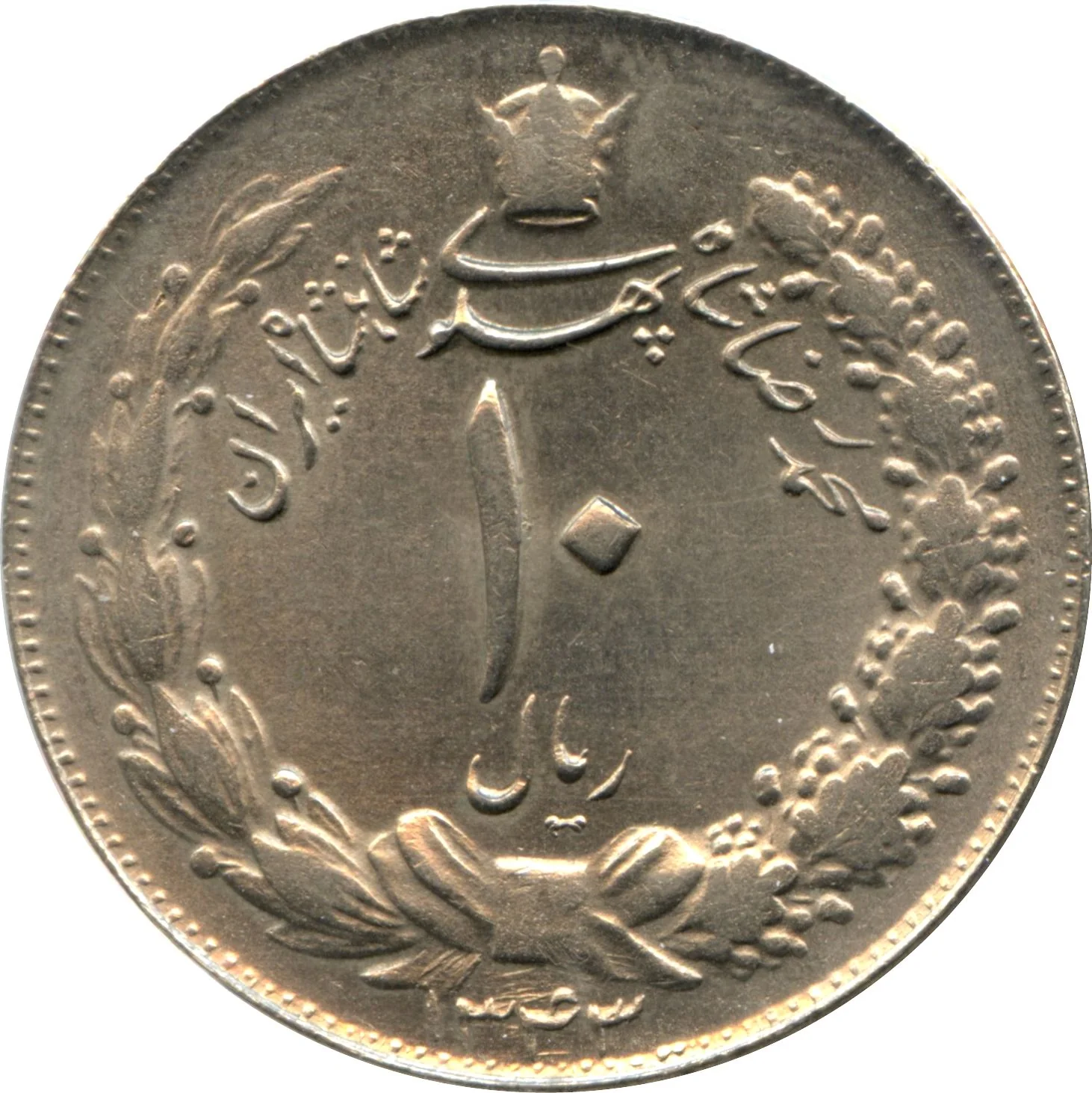
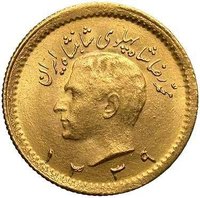
Reverse
Description:
Crowned value, legend in wreath.
Inscription:
محمّدرضا شاه پهلوی شاهنشاه ایران
۱۰
ریال
۱۳۴۳
۱۰
ریال
۱۳۴۳
Translation:
Mohammad Reza Shah Pahlavi, Shahanshah of Iran
10
Rial
1343
10
Rial
1343
Language: Persian
Edge
Reeded
Mints
| Name | Mark |
|---|---|
| Tehran | — |
Mintings
| Year | Mint Mark | Mintage | Quality | Collection |
|---|---|---|---|---|
| 1954 | — | — | ||
| 1956 | — | 6,225,000 | ||
| 1957 | — | 4,415,000 | ||
| 1958 | — | 715,000 | ||
| 1959 | — | 1,210,000 | ||
| 1960 | — | 2,775,000 | ||
| 1961 | — | 3,660,000 | ||
| 1962 | — | 744,000 | ||
| 1963 | — | 3,763,000 | ||
| 1964 | — | 6,874,000 | ||
| 1965 | — | 1,627,000 |
Historical background
Following the 1953 coup that reinstated the Shah, Iran in 1954 was in a period of significant economic and political realignment, heavily influenced by Western powers. The central monetary event of the year was the finalization of the Iranian rial's peg to the U.S. dollar, established at a fixed rate of 75.75 rials to one dollar. This move, orchestrated by the government of Fazlollah Zahedi with guidance from American financial advisors, aimed to impose stability, curb inflation, and facilitate international trade after a period of turmoil. The fixed exchange rate was a cornerstone of a broader stabilization program designed to restore confidence and attract foreign investment, particularly as the country sought to reintegrate into the global economy.
The currency regime was intrinsically linked to the landmark 1954 oil agreement, which resolved the crisis following the nationalization of the Anglo-Iranian Oil Company. This new consortium agreement returned control of Iranian oil production and sales to a Western-led consortium, restarting vital oil revenue flows. These petrodollars, managed through the central bank (Bank Melli Iran), became the critical backing for the fixed rial, providing the foreign exchange reserves needed to maintain the peg. The system effectively anchored Iran's currency to its primary export commodity, creating a dependent but stable monetary foundation.
Consequently, the currency situation in 1954 represented a deliberate shift toward a Western-oriented, dollar-dependent financial system. The stable and strong rial benefited the state, urban elites, and importers, facilitating the purchase of foreign goods and machinery for development projects. However, this formal stability masked underlying pressures, including a growing import bill and an economy increasingly vulnerable to fluctuations in global oil prices. The arrangements of 1954 thus laid a rigid fiscal foundation for the subsequent decades of the Shah's modernization drive, while also embedding long-term vulnerabilities that would surface later.
The currency regime was intrinsically linked to the landmark 1954 oil agreement, which resolved the crisis following the nationalization of the Anglo-Iranian Oil Company. This new consortium agreement returned control of Iranian oil production and sales to a Western-led consortium, restarting vital oil revenue flows. These petrodollars, managed through the central bank (Bank Melli Iran), became the critical backing for the fixed rial, providing the foreign exchange reserves needed to maintain the peg. The system effectively anchored Iran's currency to its primary export commodity, creating a dependent but stable monetary foundation.
Consequently, the currency situation in 1954 represented a deliberate shift toward a Western-oriented, dollar-dependent financial system. The stable and strong rial benefited the state, urban elites, and importers, facilitating the purchase of foreign goods and machinery for development projects. However, this formal stability masked underlying pressures, including a growing import bill and an economy increasingly vulnerable to fluctuations in global oil prices. The arrangements of 1954 thus laid a rigid fiscal foundation for the subsequent decades of the Shah's modernization drive, while also embedding long-term vulnerabilities that would surface later.
🌱 Very Common