

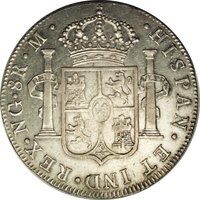
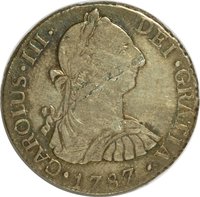
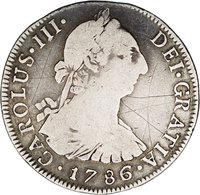
Obverse
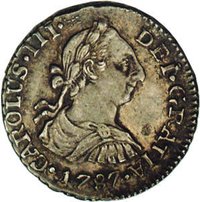
Description:
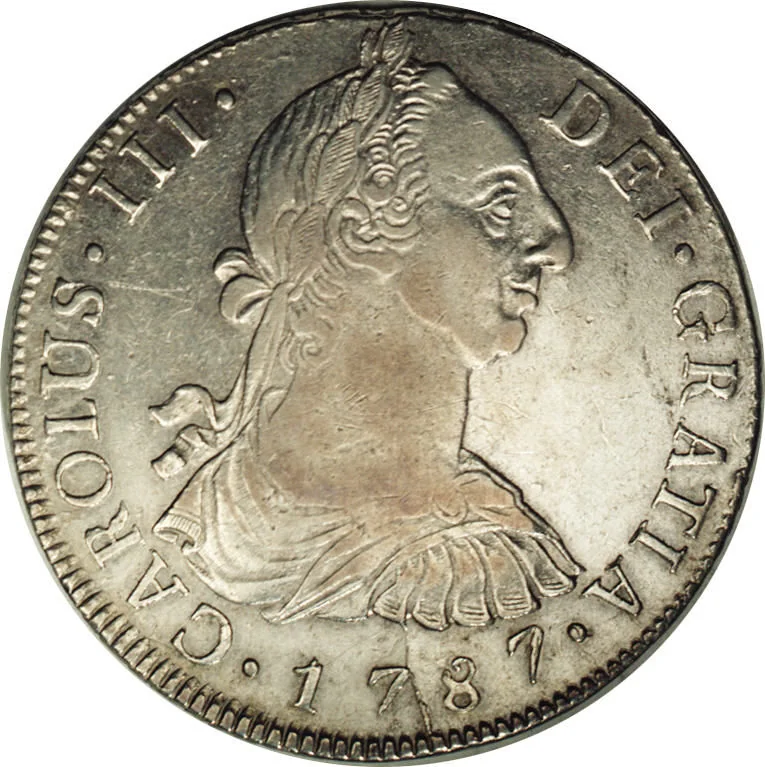
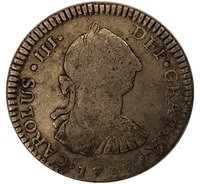
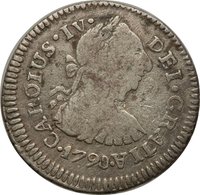
Bust right, legend around, date below.
Inscription:
CAROLUS • III • DEI • GRATIA
• 1787 •
• 1787 •
Script: Latin
Engraver: Tomás Francisco Prieto Martin
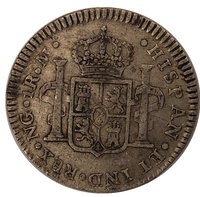
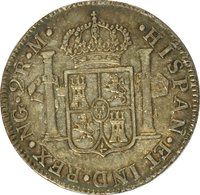
Reverse
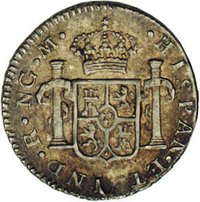
Description:
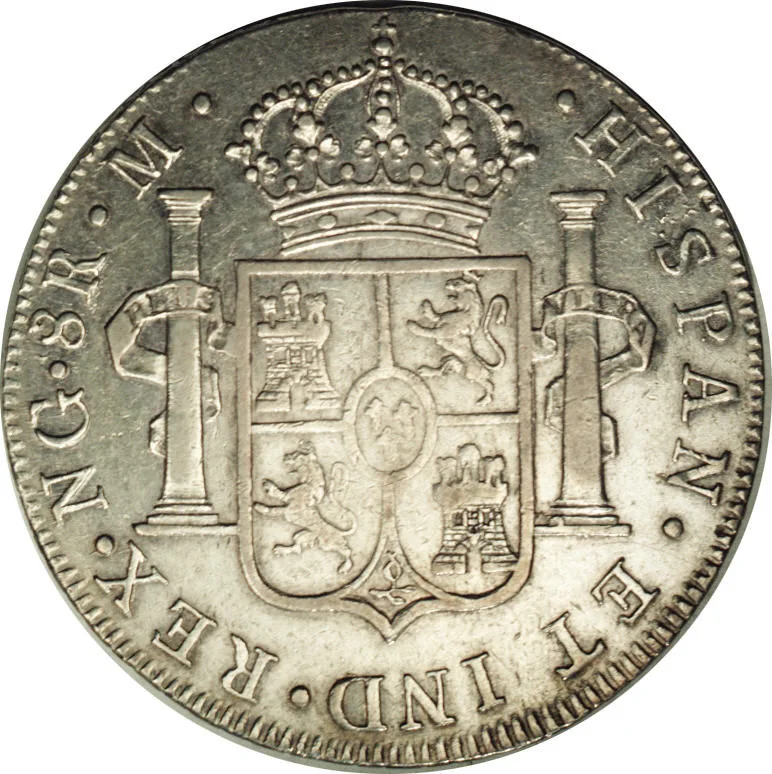
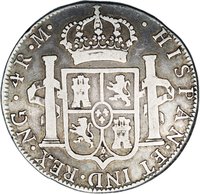
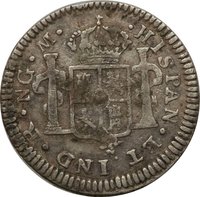
Crowned shield between pillars, encircled by legend.
Inscription:
• HISPAN • ET IND • REX • NG • 8R • M •
Script: Latin
Edge
Categories
| Symbols> Coat of Arms |
| Person> Monarch |
Mints
| Name | Mark |
|---|---|
| Casa de Moneda de Guatemala | NG |
Historical background
In 1786, Guatemala, as the Captaincy General of Guatemala within the Spanish Empire, operated under a complex and strained monetary system. The official currency was the Spanish colonial real, with eight reales equaling one silver peso (or "piece of eight"). However, the economy suffered from a severe and chronic shortage of specie (coined money). This scarcity was due to the region's limited silver production compared to viceroyalties like New Spain (Mexico) or Peru, combined with mercantilist policies that drained bullion back to Spain. Most high-value transactions relied on credit, barter, or the use of cacao beans as a traditional supplementary currency, particularly in local indigenous markets.
The Spanish Crown attempted to address currency shortages across its empire by establishing royal mints. Notably, the Real Casa de Moneda de Guatemala in Guatemala City began operations in 1733 under a royal decree from Philip V. However, by 1786, its output remained inconsistent and insufficient for the kingdom's needs. The mint primarily produced silver coins, but the lack of readily available precious metals meant it could not satisfy demand. This environment fostered the circulation of a confusing array of foreign coins—including Peruvian, Mexican, and even clandestinely minted pieces—which circulated at varying discount rates, complicating trade and taxation.
Consequently, the monetary situation in 1786 was one of fragmentation and frustration. The official Spanish currency was the legal standard, but its physical absence crippled commerce and state finances. Provincial authorities frequently complained about the inability to collect taxes in sound coin, while merchants and hacienda owners developed intricate credit networks to compensate. This monetary instability reflected the broader administrative and economic challenges of the Spanish Empire in the late colonial period, highlighting the disconnect between imperial policy and local economic reality in Central America.
The Spanish Crown attempted to address currency shortages across its empire by establishing royal mints. Notably, the Real Casa de Moneda de Guatemala in Guatemala City began operations in 1733 under a royal decree from Philip V. However, by 1786, its output remained inconsistent and insufficient for the kingdom's needs. The mint primarily produced silver coins, but the lack of readily available precious metals meant it could not satisfy demand. This environment fostered the circulation of a confusing array of foreign coins—including Peruvian, Mexican, and even clandestinely minted pieces—which circulated at varying discount rates, complicating trade and taxation.
Consequently, the monetary situation in 1786 was one of fragmentation and frustration. The official Spanish currency was the legal standard, but its physical absence crippled commerce and state finances. Provincial authorities frequently complained about the inability to collect taxes in sound coin, while merchants and hacienda owners developed intricate credit networks to compensate. This monetary instability reflected the broader administrative and economic challenges of the Spanish Empire in the late colonial period, highlighting the disconnect between imperial policy and local economic reality in Central America.
Series: 1786 Guatemala circulation coins
✨ Legendary