

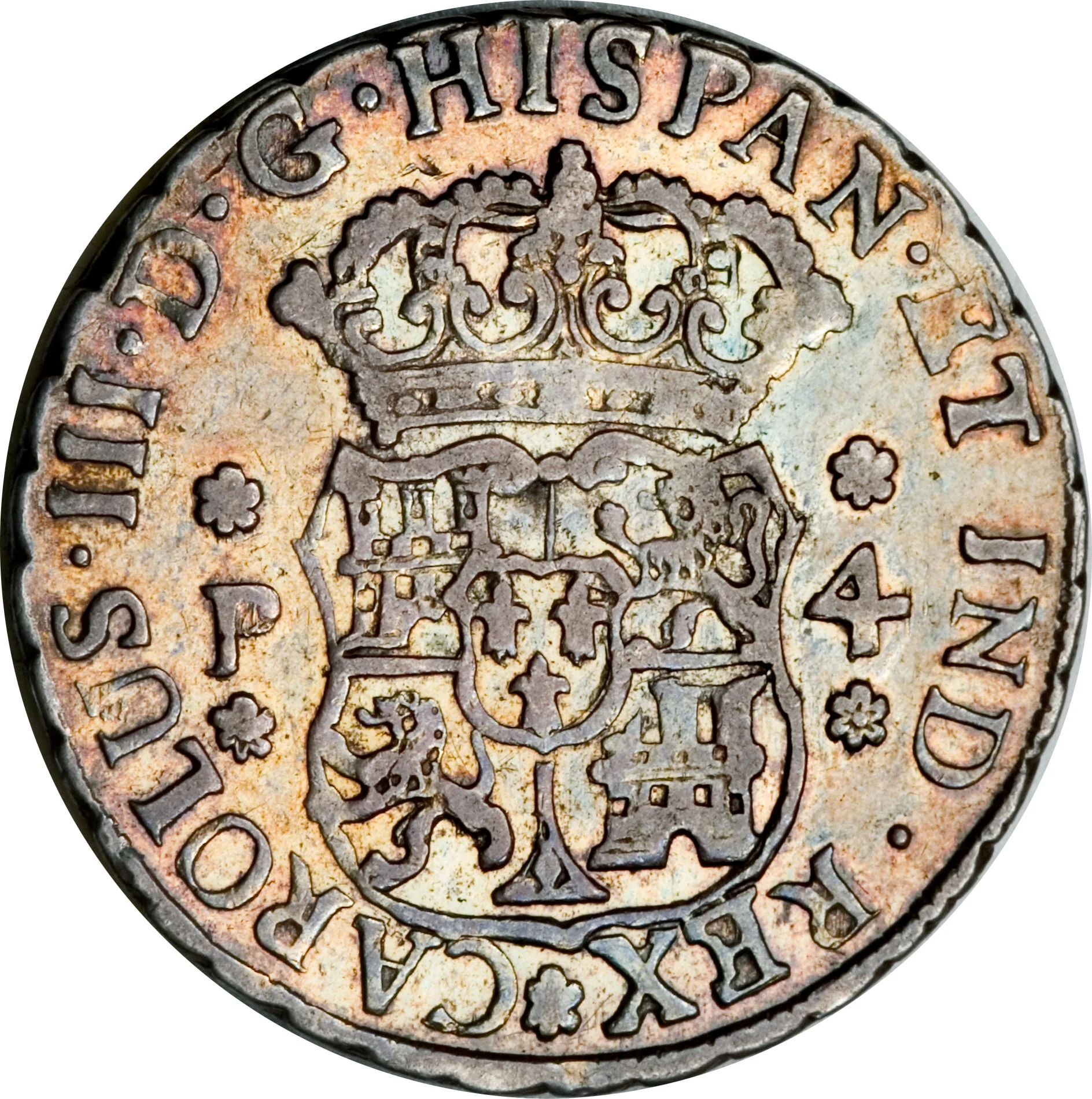
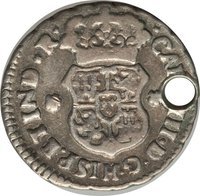
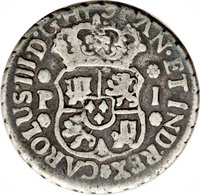
Obverse
Description:
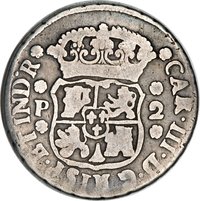
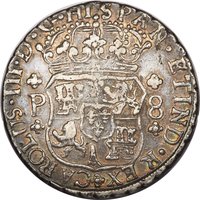
Shield with crowned arms between initial and value.
Inscription:
• CAROLUS • III • D • G • HISPAN • ET IND • REX •
* P * * 4 *
* P * * 4 *
Script: Latin
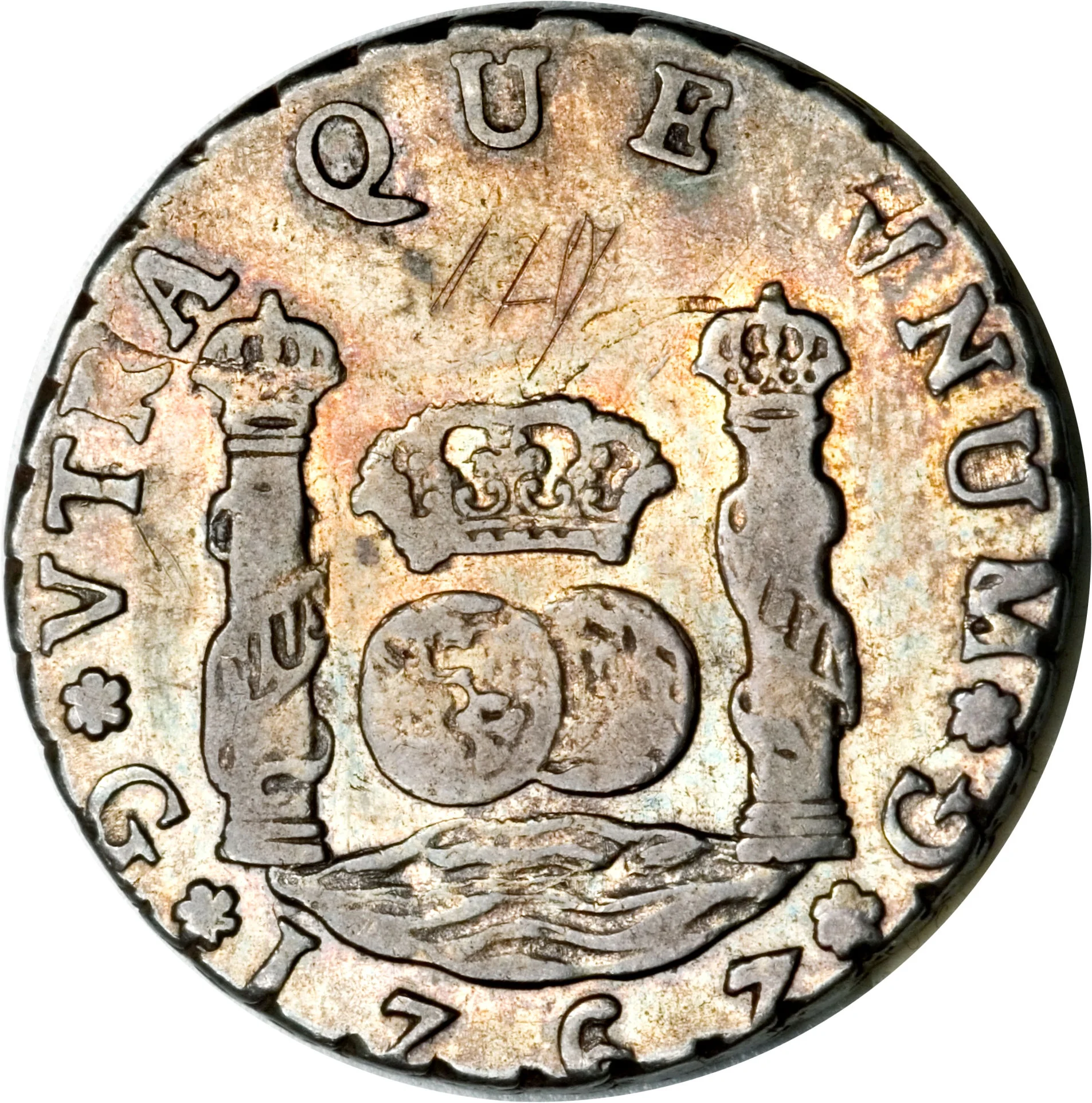
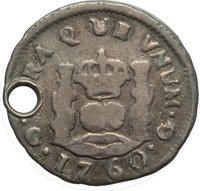
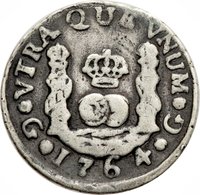
Reverse
Description:
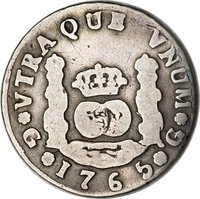
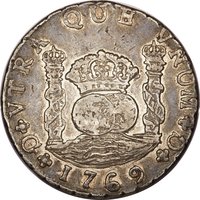
Crowned hemispheres between crowned pillars, encircled by legend, dated below.
Inscription:
UTRA QUE UNUM
• G • 1767 • G •
• G • 1767 • G •
Script: Latin
Edge
Categories
| Symbols> Coat of Arms |
Mints
| Name | Mark |
|---|---|
| Casa de Moneda de Guatemala | G |
Mintings
Historical background
In 1760, the currency situation in the Kingdom of Guatemala (which included modern-day Guatemala, Chiapas, El Salvador, Honduras, Nicaragua, and Costa Rica) was characterized by a severe and chronic shortage of official coinage. The primary unit of account was the real, with eight reales equaling one peso. However, the local economy relied heavily on a chaotic mix of physical commodities used for barter—such as cacao beans, which had a long history as a pre-Columbian currency—and a limited supply of worn and clipped Spanish silver coins that circulated at a discounted value. The scarcity was rooted in the colony's economic structure: it produced few minerals of its own, and most official silver and gold from the Spanish Empire was siphoned directly to Spain or to regional hubs like Mexico City, leaving the isthmus perpetually starved of hard currency.
This scarcity was exacerbated by Spain's mercantilist policies. Trade was restricted to authorized Spanish fleets and via the annual Fería de la Feria in Honduras, which concentrated wealth and coin in the hands of a small merchant elite connected to transatlantic commerce. Furthermore, local authorities, particularly the Audiencia in Santiago de Guatemala, lacked the royal license to mint coins. Any proposals to establish a local mint were repeatedly rejected by the Crown, which feared loss of control over bullion. Consequently, the economy functioned with a high degree of informality, using cacao (prone to spoilage and fluctuation), credit notes among merchants, and the heavily debased macacos or macuquinas—crudely cut "cob" coins that were often underweight.
The currency crisis of 1760 was not an isolated event but a persistent condition that stifled economic growth, complicated taxation, and fostered regional inequality. It highlighted the administrative neglect of the Central American provinces compared to wealthier viceroyalties. This systemic shortage would eventually contribute to social tensions and would only begin to be addressed decades later, when a royal mint was finally established in Guatemala City in 1733, after the capital's relocation following the 1773 earthquakes, finally providing a stable and official medium of exchange for the region.
This scarcity was exacerbated by Spain's mercantilist policies. Trade was restricted to authorized Spanish fleets and via the annual Fería de la Feria in Honduras, which concentrated wealth and coin in the hands of a small merchant elite connected to transatlantic commerce. Furthermore, local authorities, particularly the Audiencia in Santiago de Guatemala, lacked the royal license to mint coins. Any proposals to establish a local mint were repeatedly rejected by the Crown, which feared loss of control over bullion. Consequently, the economy functioned with a high degree of informality, using cacao (prone to spoilage and fluctuation), credit notes among merchants, and the heavily debased macacos or macuquinas—crudely cut "cob" coins that were often underweight.
The currency crisis of 1760 was not an isolated event but a persistent condition that stifled economic growth, complicated taxation, and fostered regional inequality. It highlighted the administrative neglect of the Central American provinces compared to wealthier viceroyalties. This systemic shortage would eventually contribute to social tensions and would only begin to be addressed decades later, when a royal mint was finally established in Guatemala City in 1733, after the capital's relocation following the 1773 earthquakes, finally providing a stable and official medium of exchange for the region.
Series: 1760 Guatemala circulation coins
💎 Extremely Rare