

5 baiocchi – Perugia
Add to wishlist
Italy
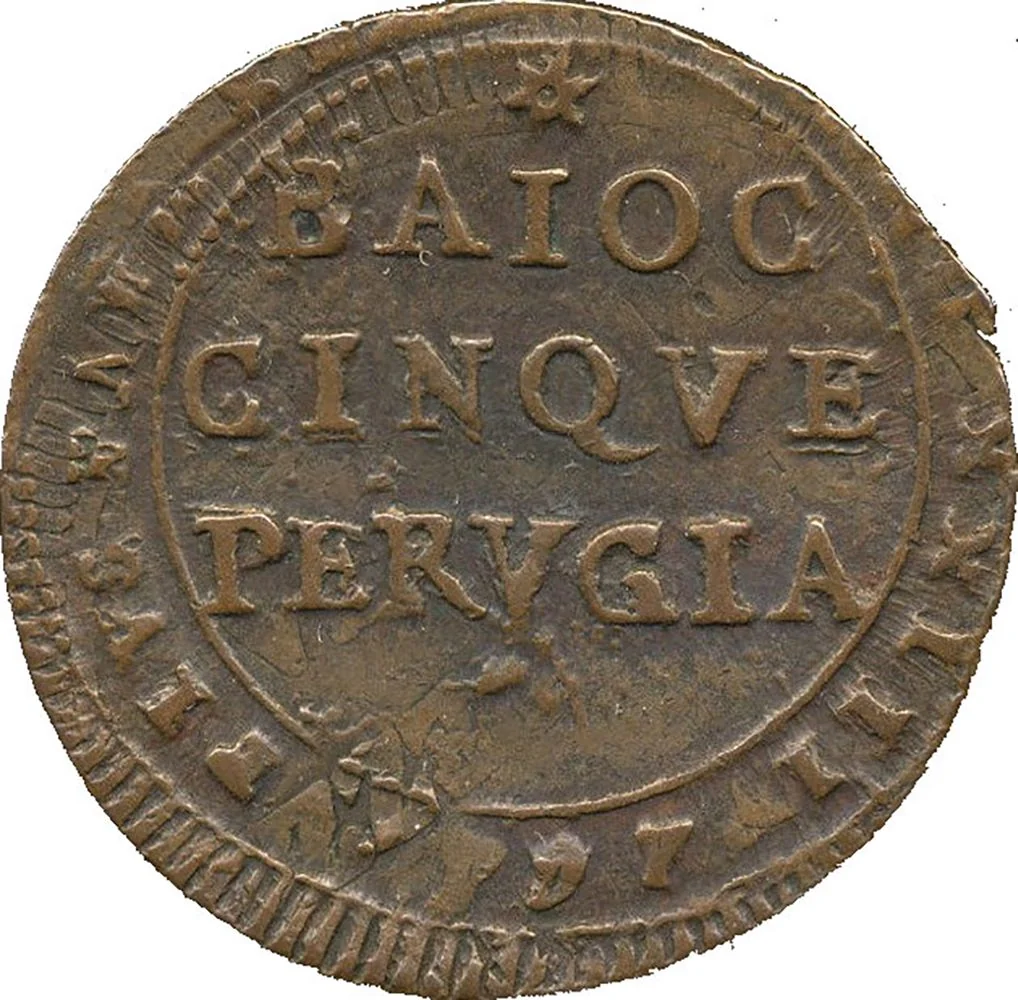
Obverse
Description:
Value and date inscription.
Inscription:
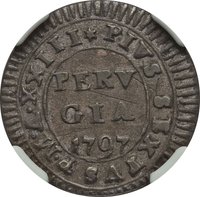
PIVS PAPA SEXTVS ANNO XXIII
* BAIOC
CINQVE
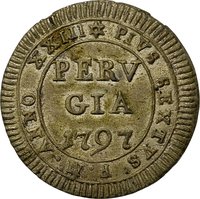
PERVGIA
1797
* BAIOC
CINQVE
PERVGIA
1797
Script: Latin
Engraver: Tommaso Mercandetti
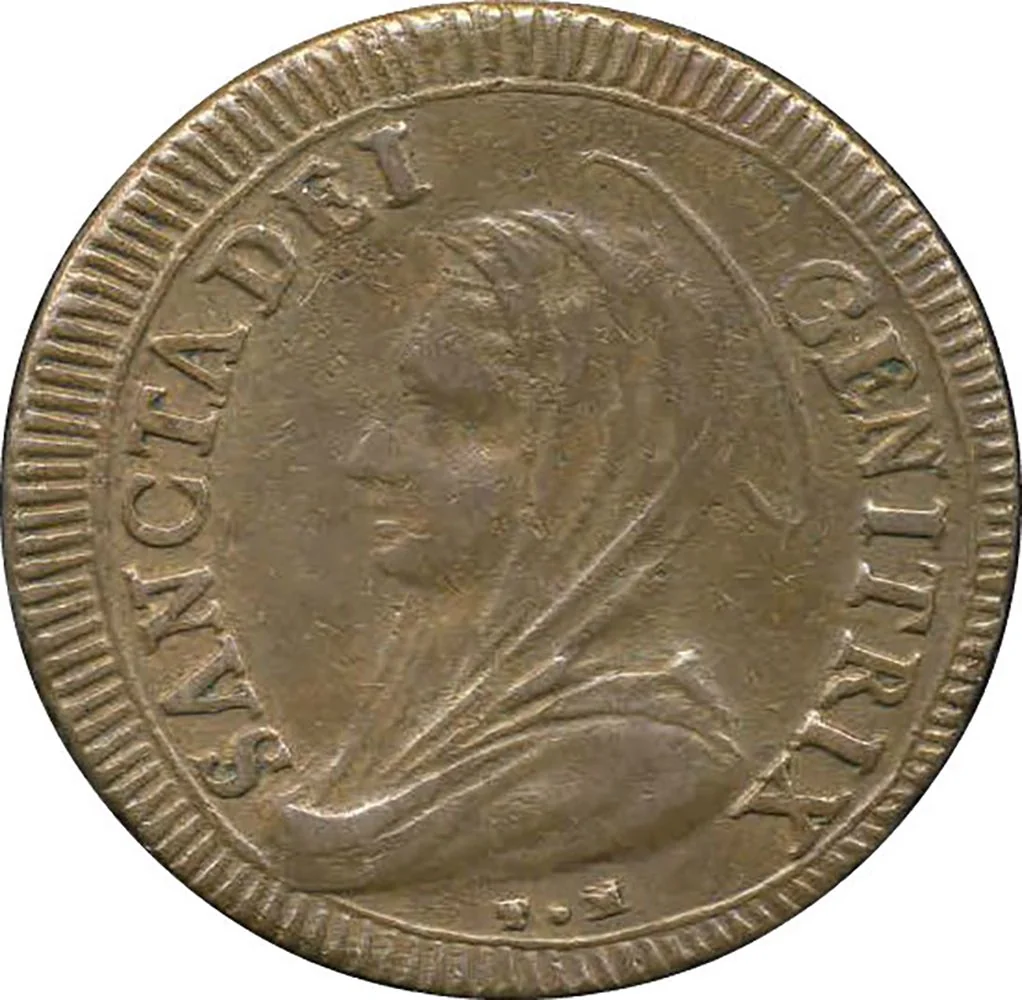
Reverse
Description:
Veiled Virgin Mary with halo.
Inscription:
SANCTA DEI GENITRIX
T٠M
T٠M
Script: Latin
Engraver: Tommaso Mercandetti
Edge
Plain
Mints
| Name | Mark |
|---|---|
| Perugia | — |
Mintings
| Year | Mint Mark | Mintage | Quality | Collection |
|---|---|---|---|---|
| 1797 | — | — |
Historical background
In 1797, Perugia found itself at a turbulent crossroads, caught between the collapsing old order and the forceful arrival of the new. The city was part of the Papal States, which used a complex monetary system based on the scudo (divided into baiocchi and quattrini), alongside a circulation of various Italian and foreign coins. However, this system was destabilized by years of economic strain and the revolutionary fervor spreading from France. In February 1797, French troops under General Louis-Alexandre Berthier entered Perugia, supporting a local uprising that established the short-lived "Perugine Republic" or Tiberina Republic, a French sister republic.
The new republican government immediately faced a severe currency crisis. It inherited empty coffers and a populace wary of its authority, compounded by the French army's demand for substantial war indemnities and supplies, often paid for through forced requisitions. To fund itself, the republic resorted to printing paper money, known as mandati, and confiscating church treasure to mint new coinage. This hastily issued currency, however, lacked public confidence and solid backing, leading to rapid depreciation and rampant inflation, which crippled daily commerce and eroded already fragile popular support.
The currency chaos of 1797 was a direct microcosm of the revolution's disruptive impact. The abrupt attempt to replace a centuries-old papal monetary system with unstable, ideologically driven paper money failed within months. By the year's end, with the withdrawal of French troops, the Perugine Republic collapsed and papal authority was restored, along with its traditional currency. The episode left the city's economy battered and demonstrated the profound practical challenges of imposing revolutionary change on deeply entrenched financial structures.
The new republican government immediately faced a severe currency crisis. It inherited empty coffers and a populace wary of its authority, compounded by the French army's demand for substantial war indemnities and supplies, often paid for through forced requisitions. To fund itself, the republic resorted to printing paper money, known as mandati, and confiscating church treasure to mint new coinage. This hastily issued currency, however, lacked public confidence and solid backing, leading to rapid depreciation and rampant inflation, which crippled daily commerce and eroded already fragile popular support.
The currency chaos of 1797 was a direct microcosm of the revolution's disruptive impact. The abrupt attempt to replace a centuries-old papal monetary system with unstable, ideologically driven paper money failed within months. By the year's end, with the withdrawal of French troops, the Perugine Republic collapsed and papal authority was restored, along with its traditional currency. The episode left the city's economy battered and demonstrated the profound practical challenges of imposing revolutionary change on deeply entrenched financial structures.
Series: 1797 Perugia circulation coins
💎 Very Rare