

2 daler – Sweden
Add to wishlist
Sweden
Obverse
Description:
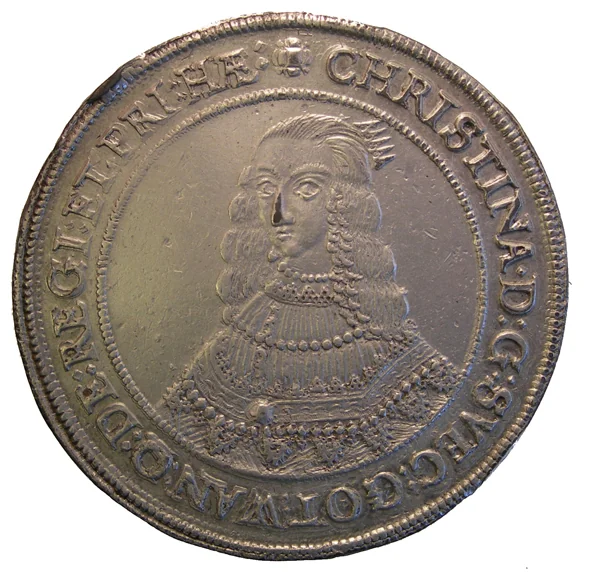
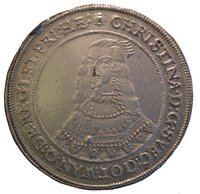
Bare-headed Queen Christina facing left within circle, legend outside.
Inscription:
CHRISTINA·D:G:SVEC:GOT:WAN:Q:DE:REGI:ET:PRI:HÆ:
Script: Latin
Reverse
Description:
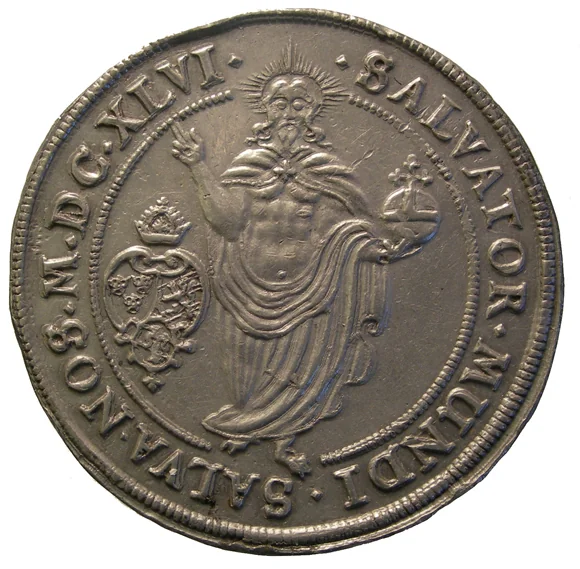
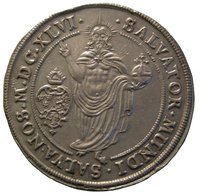
Risen Christ facing, holding orb; crowned triple arms to left. Mintmark near head or feet.
Inscription:
·SALVATOR·MUNDI·SALVA·NOS·M·DC·XLVI·
Script: Latin
Edge
Mints
| Name | Mark |
|---|---|
| Stockholm | — |
Mintings
| Year | Mint Mark | Mintage | Quality | Collection |
|---|---|---|---|---|
| 1644 | — | — | ||
| 1645 | — | — | ||
| 1646 | — | — | ||
| 1647 | — | — |
Historical background
In 1644, Sweden was in the midst of the Thirty Years' War, a period of immense military expenditure that placed severe strain on its monetary system. The kingdom's currency, based on silver, was under relentless pressure due to the cost of maintaining armies across Germany. To finance these campaigns, the state, under the regency of Queen Christina and Chancellor Axel Oxenstierna, repeatedly resorted to debasement—reducing the silver content in coins while maintaining their face value. This practice, though fiscally expedient, led to a proliferation of lower-quality coins, including the notorious "klippmynt" (clipped coin), which were often crudely cut and stamped to be produced rapidly for soldiers' pay.
The domestic economy suffered from severe inflation and monetary chaos as a result. Different coins with the same nominal value but vastly different intrinsic silver content circulated simultaneously, causing confusion and a loss of public trust. Merchants and the populace began to hoard older, purer coins (Gresham's Law in action), further exacerbating the scarcity of reliable money. This environment of currency instability disrupted trade, increased prices for essential goods, and created significant hardship for ordinary Swedes who received their wages in the degraded currency.
Recognizing the crisis, the government made attempts at reform. The Riksdag of the Estates in 1644 discussed stabilizing the currency, leading to ordinances that aimed to set official exchange rates between the new debased coins and the older riksdaler. However, these measures were largely stopgaps, as the fundamental driver—the financial demands of war—continued. True stabilization would only begin after the war's end, culminating in the major monetary reform of 1665. Thus, in 1644, Sweden's currency situation was defined by the acute tension between the Crown's desperate need for war finance and the destabilizing consequences for its domestic economy.
The domestic economy suffered from severe inflation and monetary chaos as a result. Different coins with the same nominal value but vastly different intrinsic silver content circulated simultaneously, causing confusion and a loss of public trust. Merchants and the populace began to hoard older, purer coins (Gresham's Law in action), further exacerbating the scarcity of reliable money. This environment of currency instability disrupted trade, increased prices for essential goods, and created significant hardship for ordinary Swedes who received their wages in the degraded currency.
Recognizing the crisis, the government made attempts at reform. The Riksdag of the Estates in 1644 discussed stabilizing the currency, leading to ordinances that aimed to set official exchange rates between the new debased coins and the older riksdaler. However, these measures were largely stopgaps, as the fundamental driver—the financial demands of war—continued. True stabilization would only begin after the war's end, culminating in the major monetary reform of 1665. Thus, in 1644, Sweden's currency situation was defined by the acute tension between the Crown's desperate need for war finance and the destabilizing consequences for its domestic economy.
Series: 1644 Sweden circulation coins

✨ Legendary