

1 kreuzer – Austrian Empire
Add to wishlist
Austria
Context
Year: 1743
Country: Austria
Issuer: Austrian Empire
Ruler: Maria Theresa
Currency:
(1520—1754)
Demonetized: Yes
References
KM: #
Numista: #167514
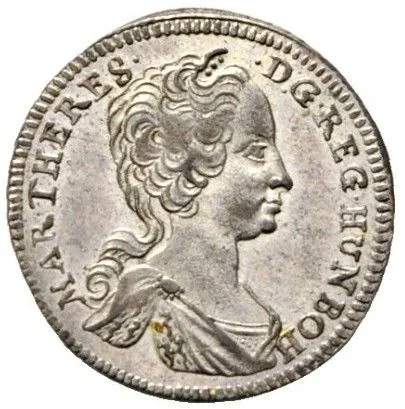
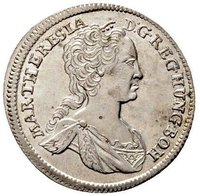
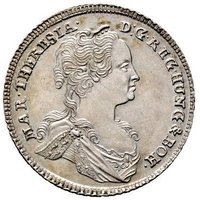
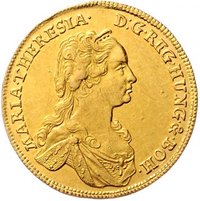
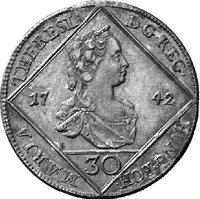
Obverse
Description:
Portrait, legend at 8 o'clock.
Inscription:
MAR THERES // D G REG HUN BOH
Script: Latin
Engraver: Anton P. Juli
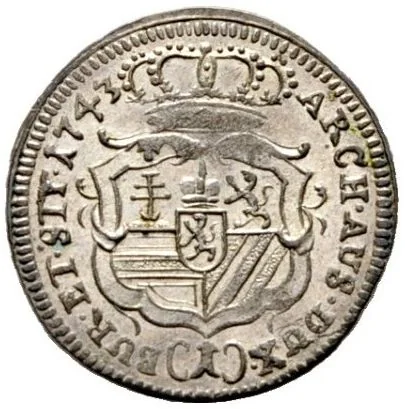
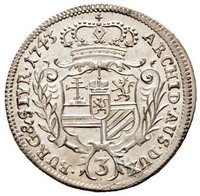
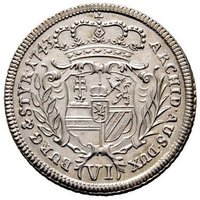
Reverse
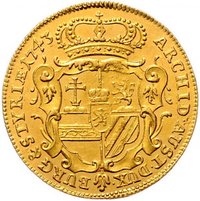
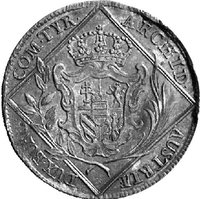
Description:
Four crowned arms (Hungary, Bohemia, Austria, Burgundy) with a central Styrian shield, all within a baroque frame and wreath. Framed value below.
Inscription:
ARCH AUS DUX (1) BUR ET STY 1743
Script: Latin
Edge
Mints
| Name | Mark |
|---|---|
| Graz | — |
Mintings
| Year | Mint Mark | Mintage | Quality | Collection |
|---|---|---|---|---|
| 1743 | — | — |
Historical background
In 1743, the Austrian Empire's currency system was a complex and fragile patchwork, reflecting the decentralized nature of the Habsburg monarchy itself. The primary silver coin was the Conventionsthaler (or Konventionstaler), established by the 1753 monetary convention with Bavaria, which was still a decade in the future. Instead, the empire operated on the older Reichsthaler standard, but the reality in circulation was a混乱 of domestic and foreign coins. Domestically, the Empress Maria Theresa's thalers and kreuzers circulated alongside a plethora of older issues from different Austrian lands, Hungarian gold ducats, and silver coins from the Austrian Netherlands. Furthermore, coins from neighboring states like Prussia and the German principalities freely circulated, creating constant difficulties in exchange rates and trade.
This monetary fragmentation was exacerbated by the financial strain of the ongoing War of the Austrian Succession (1740-1748). The immense costs of the conflict forced the state to engage in debasement—reducing the precious metal content in coins—to increase seigniorage revenue and fund the military. This practice, particularly of the small-denomination kreuzers used in everyday transactions, led to inflation, a loss of public trust in the currency, and Gresham's Law in action ("bad money drives out good"). People hoarded older, full-value coins, worsening the scarcity of sound money. The Vienna Stadtbanco, established in 1703, issued paper banknotes (Bancozettel), but these were not yet a forced legal tender and their circulation was limited, doing little to stabilize the broader chaotic system.
Consequently, the year 1743 fell within a period of significant monetary instability. The state treasury was depleted, the coinage was unreliable and heterogeneous, and the pressures of war finance took precedence over systematic reform. This unsatisfactory situation would ultimately push the monarchy toward the major reform embodied in the Conventionsthaler system of 1753, which aimed to standardize the silver content across the empire and with key southern German allies. Therefore, the currency situation in 1743 is best understood as a troubled prelude to that later, more stable, but still imperfect, monetary convention.
This monetary fragmentation was exacerbated by the financial strain of the ongoing War of the Austrian Succession (1740-1748). The immense costs of the conflict forced the state to engage in debasement—reducing the precious metal content in coins—to increase seigniorage revenue and fund the military. This practice, particularly of the small-denomination kreuzers used in everyday transactions, led to inflation, a loss of public trust in the currency, and Gresham's Law in action ("bad money drives out good"). People hoarded older, full-value coins, worsening the scarcity of sound money. The Vienna Stadtbanco, established in 1703, issued paper banknotes (Bancozettel), but these were not yet a forced legal tender and their circulation was limited, doing little to stabilize the broader chaotic system.
Consequently, the year 1743 fell within a period of significant monetary instability. The state treasury was depleted, the coinage was unreliable and heterogeneous, and the pressures of war finance took precedence over systematic reform. This unsatisfactory situation would ultimately push the monarchy toward the major reform embodied in the Conventionsthaler system of 1753, which aimed to standardize the silver content across the empire and with key southern German allies. Therefore, the currency situation in 1743 is best understood as a troubled prelude to that later, more stable, but still imperfect, monetary convention.

✨ Legendary