

1 Crown – England
United Kingdom
Context
Years: 1604–1609
Country: United Kingdom 
Issuer: England 
Ruler: James I
Currency:
(1158—1970)
Demonetized: Yes
Material
Weight: 2.25 g
Gold weight: 2.06 g
Shape: Irregular round
Composition: 91.7% Gold
Magnetic: No
Technique: Hammered
References
KM: #Click to copy to clipboard34
Numista: #16717
Value
Bullion value: $344.01
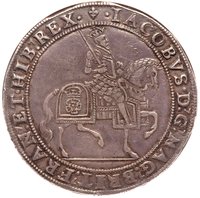
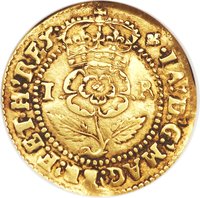
Obverse
Description:
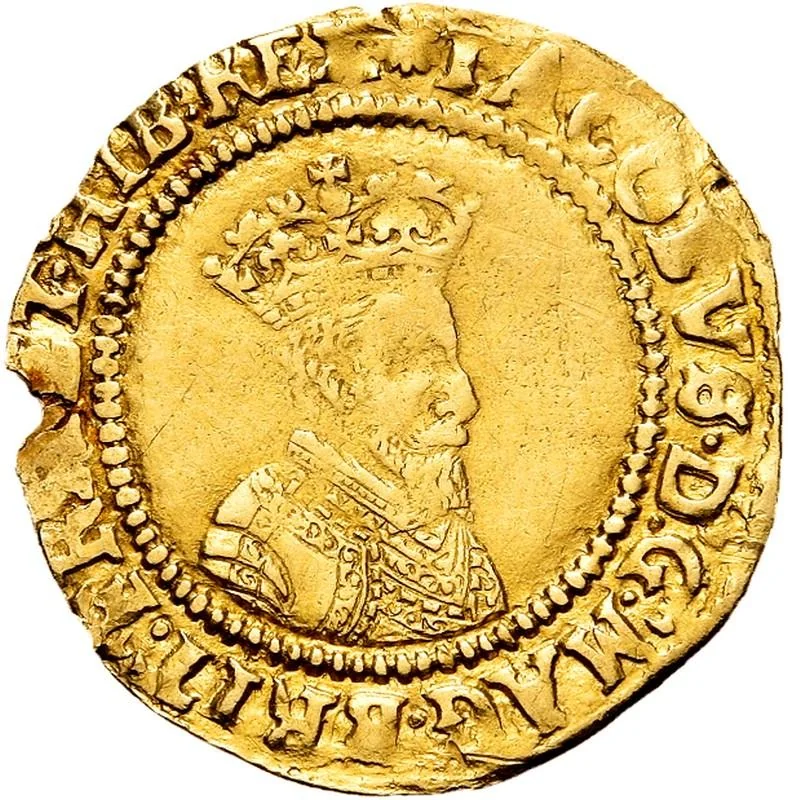
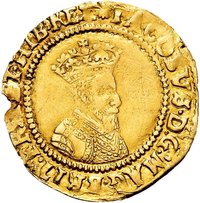
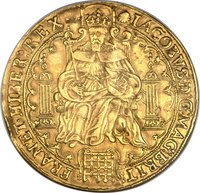
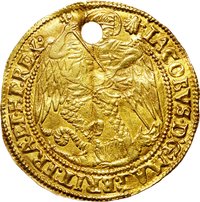
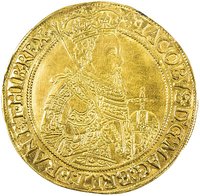
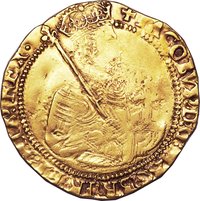
King James I crowned bust, right.
Inscription:
IACOBUS · D · G · MAG · BRIT · FRA · ET · HIB · REX
Script: Latin
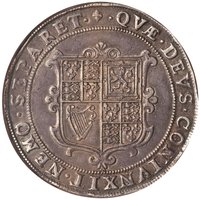
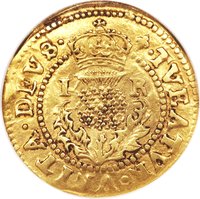
Reverse
Description:
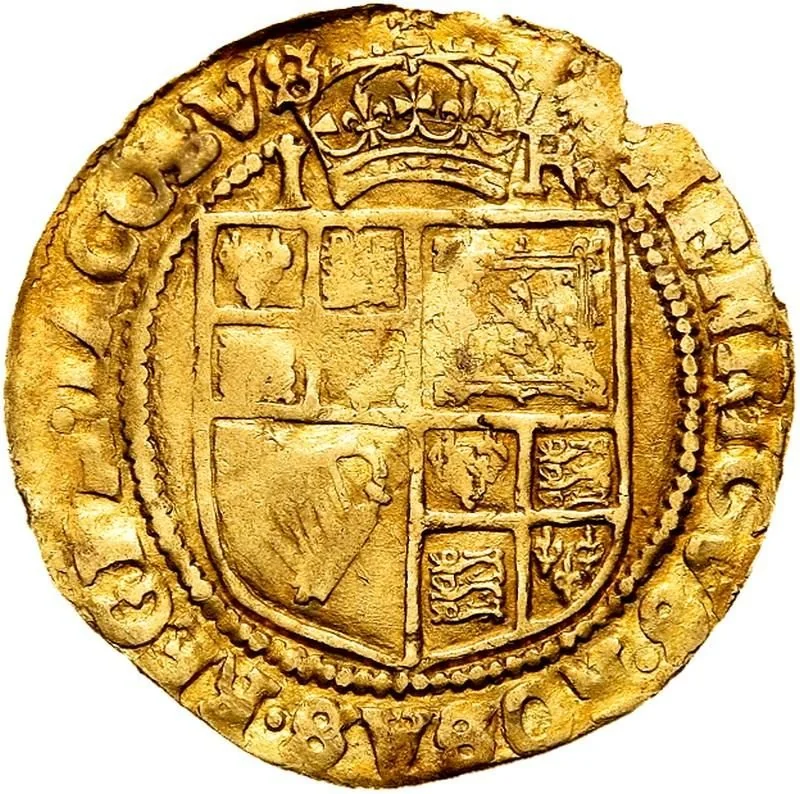
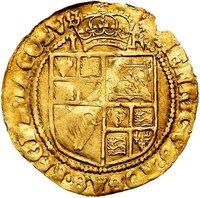
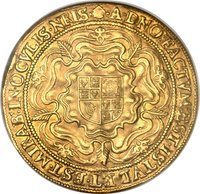
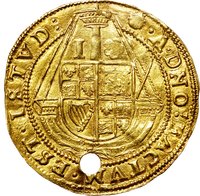
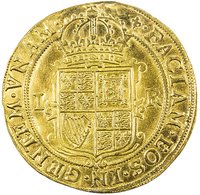
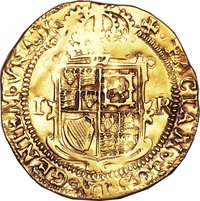
Crowned arms, legend surrounding, mintmark above.
Inscription:
· HENRICUS · ROSAS · REGNA · IACOBUS.
I R
I R
Script: Latin
Edge
Categories
| Symbol> Crown |
| Symbols> Coat of Arms |
Mintings
| Year | Mint Mark | Mintage | Quality | Collection |
|---|---|---|---|---|
| 1607 | — | — | ||
| — | — | — |
Historical background
In 1604, England’s currency was in a state of severe crisis, a problem inherited by the newly crowned King James I. The root cause was the widespread practice of "clipping" and "sweating" silver coins, where small amounts of precious metal were shaved from the edges or extracted through abrasion. This, combined with the illicit melting down of full-weight coins for their bullion value (which was often higher than their face value), had drastically reduced the silver content of coins in circulation. Consequently, public confidence in the currency collapsed; merchants hoarded good coins and foreign traders refused to accept the debased English money, disrupting both domestic trade and international commerce.
The government recognised that the coinage no longer served as a reliable store of value or medium of exchange, threatening economic stability. Previous attempts under Elizabeth I to call in old coins and re-mint them had been only partially successful and were enormously expensive. The Exchequer was already strained, and a full-scale recoinage posed a significant fiscal challenge. Furthermore, any solution had to address the underlying incentive for clipping and melting, which was the disparity between the official mint price of silver and its market value.
Therefore, in 1604, the King and his ministers, notably Lord Treasurer Thomas Sackville, were actively debating solutions. The primary option was a major recoinage, but this required careful planning to fund the operation and to set a new standard that would prevent the problem from recurring. The outcome of these deliberations would be the Great Recoinage of 1604-1606, a massive undertaking where old, debased coins were demonetised and replaced with new, milled-edge coins that were harder to clip. This restoration of sound money was crucial for stabilising the economy as James I sought to unite the crowns of England and Scotland.
The government recognised that the coinage no longer served as a reliable store of value or medium of exchange, threatening economic stability. Previous attempts under Elizabeth I to call in old coins and re-mint them had been only partially successful and were enormously expensive. The Exchequer was already strained, and a full-scale recoinage posed a significant fiscal challenge. Furthermore, any solution had to address the underlying incentive for clipping and melting, which was the disparity between the official mint price of silver and its market value.
Therefore, in 1604, the King and his ministers, notably Lord Treasurer Thomas Sackville, were actively debating solutions. The primary option was a major recoinage, but this required careful planning to fund the operation and to set a new standard that would prevent the problem from recurring. The outcome of these deliberations would be the Great Recoinage of 1604-1606, a massive undertaking where old, debased coins were demonetised and replaced with new, milled-edge coins that were harder to clip. This restoration of sound money was crucial for stabilising the economy as James I sought to unite the crowns of England and Scotland.
Series: 1604 England circulation coins
✨ Legendary