

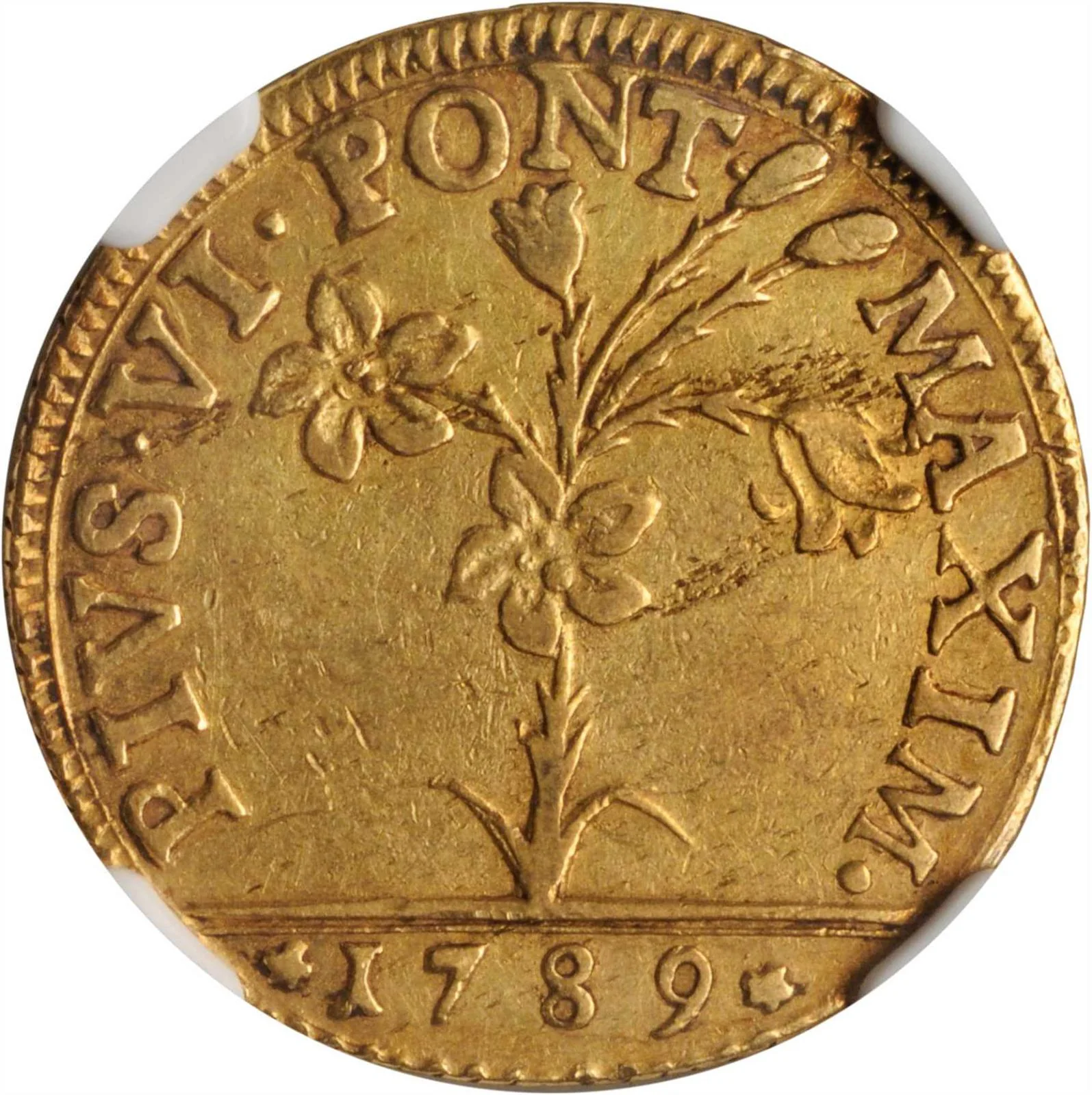
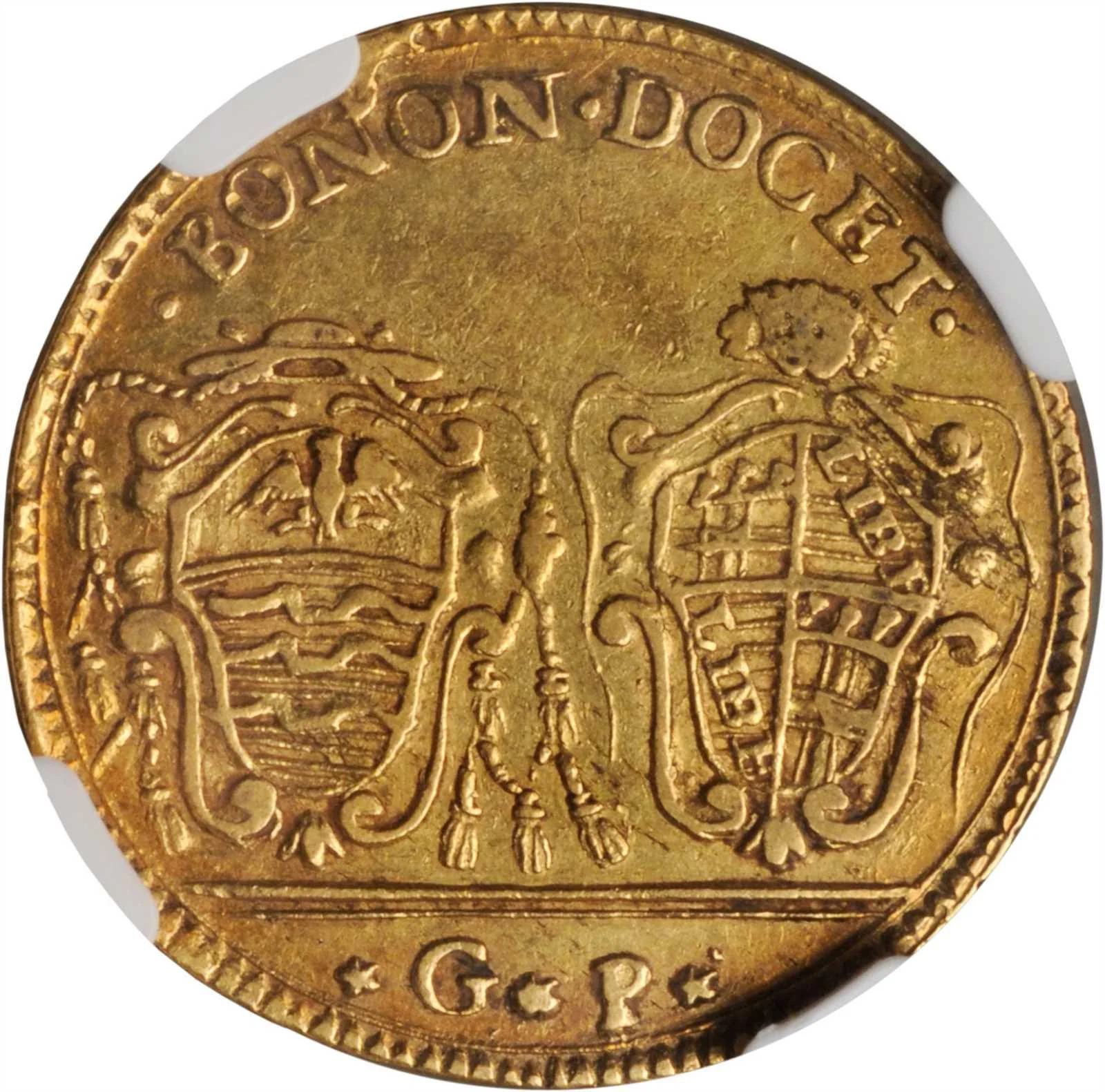

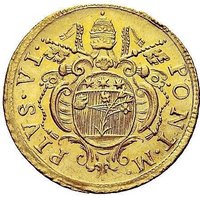
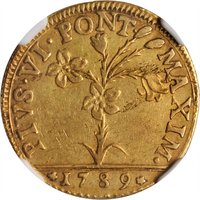
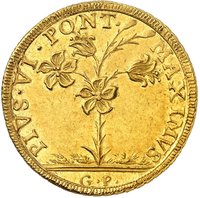
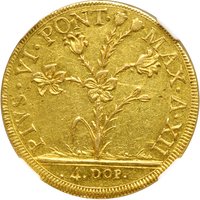
Obverse
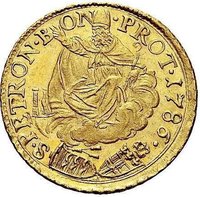
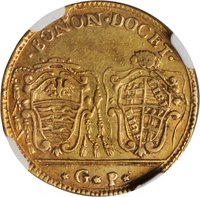
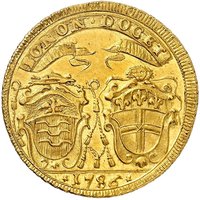
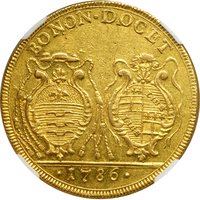
Reverse
Edge
Mintings
| Year | Mint Mark | Mintage | Quality | Collection |
|---|---|---|---|---|
| 1786 | GP | — | ||
| 1787 | GP | — | ||
| 1788 | GP | — | ||
| 1789 | GP | — | ||
| 1790 | GP | — | ||
| 1791 | GP | — | ||
| 1792 | GP | — |
Historical background
In 1786, Bologna operated under a complex and fragmented monetary system, a legacy of its political history. While officially part of the Papal States, the city retained significant local autonomy, including the right to mint its own coins at its historic Zecca (mint). Consequently, the primary circulating coins were the Bolognese lira, soldo, and denaro, with the silver scudo bolognese being a key higher-value unit. However, this local currency did not exist in isolation; it competed and coexisted with a plethora of other currencies, most notably the Papal scudo romano and various coins from neighbouring Italian and European states, all valued by their metal content.
This multiplicity created chronic problems for commerce and daily life. Exchange rates between these various coins were not fixed and could fluctuate, leading to confusion, frequent disputes, and opportunities for fraud. The system was burdensome, requiring merchants and bankers to constantly refer to published tavole di cambio (exchange tables) and be experts in assaying the often-worn and clipped coins. Furthermore, the Papal government in Rome periodically attempted to standardize the monetary system across its territories, creating tension with Bologna's traditional privileges and desire for fiscal independence.
Therefore, the currency situation in 1786 was one of unstable duality. On one hand, Bologna's coinage was a symbol of its historic civic identity and autonomy. On the other, the chaotic mix of currencies hampered economic efficiency and was a point of contention with the centralizing authority of the Papacy. This environment placed a practical burden on all transactions and reflected the broader struggle between local tradition and central administrative reform characteristic of the late 18th-century Italian states.
This multiplicity created chronic problems for commerce and daily life. Exchange rates between these various coins were not fixed and could fluctuate, leading to confusion, frequent disputes, and opportunities for fraud. The system was burdensome, requiring merchants and bankers to constantly refer to published tavole di cambio (exchange tables) and be experts in assaying the often-worn and clipped coins. Furthermore, the Papal government in Rome periodically attempted to standardize the monetary system across its territories, creating tension with Bologna's traditional privileges and desire for fiscal independence.
Therefore, the currency situation in 1786 was one of unstable duality. On one hand, Bologna's coinage was a symbol of its historic civic identity and autonomy. On the other, the chaotic mix of currencies hampered economic efficiency and was a point of contention with the centralizing authority of the Papacy. This environment placed a practical burden on all transactions and reflected the broader struggle between local tradition and central administrative reform characteristic of the late 18th-century Italian states.
Series: 1786 Bologna circulation coins
✨ Legendary