

½ Thaler – Hungary
Hungary

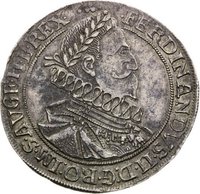
Obverse
Description:
Laureate bust right with curls, necklace, and Golden Fleece collar.
Inscription:
FERDINANDVS · II · D · G · R · IMP · S · AV · GER · HVNG · BO · REX *
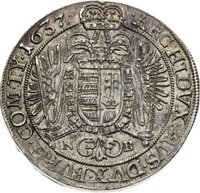
Reverse
Description:
Imperial double-headed eagle holding sword and scepter, crowned with the full Hungarian coat of arms. Mintmark at eagle's feet.
Inscription:
ARCHIDVX · AVS · DVX · BVRG · COMES · TYRO : 1635 ·
N B
N B
Edge
Plain
Mints
| Name | Mark |
|---|---|
| Baia Mare | NB |
Mintings
| Year | Mint Mark | Mintage | Quality | Collection |
|---|---|---|---|---|
| 1633 | N-B | — | ||
| 1635 | N-B | — |
Historical background
In 1633, the Kingdom of Hungary was a fractured realm, divided into three parts: Royal Hungary under Habsburg rule, Ottoman-occupied central Hungary, and the semi-independent Principality of Transylvania. This political fragmentation directly caused a chaotic and debased currency situation. The Habsburg authorities in Royal Hungary, perpetually funding wars against the Ottomans and their own Protestant estates, repeatedly resorted to debasement. They reduced the silver content in coins minted at towns like Kremnica (Körmöcbánya), flooding the economy with inferior denars and groschen that drove good money out of circulation, a classic example of Gresham's Law.
The monetary chaos was exacerbated by a flood of foreign and counterfeit coins. Turkish akçe and asper circulated in occupied regions, while Polish, Dutch, and German thalers entered through trade and military payments. These often circulated by weight rather than face value, creating a complex and unreliable exchange environment. Furthermore, the Transylvanian principality minted its own coinage, adding another layer of complexity to an already disjointed monetary system across the Hungarian lands.
This currency instability had severe economic and social consequences. It fueled rampant inflation, particularly in food prices, which eroded the living standards of peasants and soldiers paid in debased coin. It also created significant distrust in the central authority of the Habsburgs, as debasement was seen as a breach of the royal trust. The constant fluctuation in coin values hampered trade and investment, perpetuating the economic stagnation of a kingdom already devastated by continuous warfare and division.
The monetary chaos was exacerbated by a flood of foreign and counterfeit coins. Turkish akçe and asper circulated in occupied regions, while Polish, Dutch, and German thalers entered through trade and military payments. These often circulated by weight rather than face value, creating a complex and unreliable exchange environment. Furthermore, the Transylvanian principality minted its own coinage, adding another layer of complexity to an already disjointed monetary system across the Hungarian lands.
This currency instability had severe economic and social consequences. It fueled rampant inflation, particularly in food prices, which eroded the living standards of peasants and soldiers paid in debased coin. It also created significant distrust in the central authority of the Habsburgs, as debasement was seen as a breach of the royal trust. The constant fluctuation in coin values hampered trade and investment, perpetuating the economic stagnation of a kingdom already devastated by continuous warfare and division.
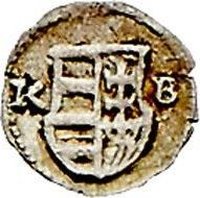
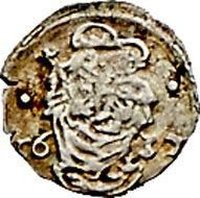
Series: 1633 Hungary circulation coins

✨ Legendary