

1 dutka – Hungary
Add to wishlist
Hungary
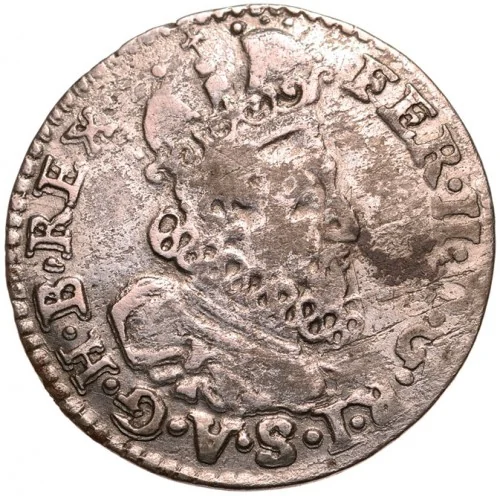
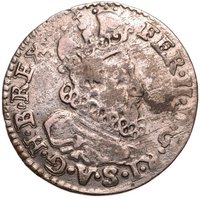
Obverse
Description:
Crowned right-facing bust, high collar, no inner circle.
Inscription:
FER · II · D · G · R · I · S · A · G · H · B · REX
Script: Latin
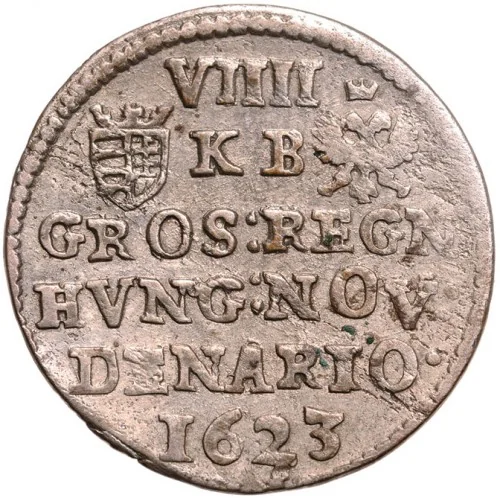
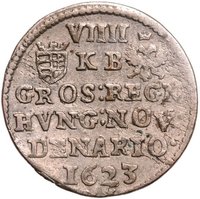
Reverse
Description:
Six-line inscription; mintmark separates crowned Hungarian shield from double-headed eagle in second line.
Inscription:
VIIII
KB
GROS · REGN
HVNG · NOV ·
DENARIO ·
1623
KB
GROS · REGN
HVNG · NOV ·
DENARIO ·
1623
Script: Latin
Edge
Plain
Mints
| Name | Mark |
|---|---|
| Kremnica | KB |
Mintings
| Year | Mint Mark | Mintage | Quality | Collection |
|---|---|---|---|---|
| 1622 | K-B | — | ||
| 1623 | K-B | — |
Historical background
In 1622, the Kingdom of Hungary, then part of the Habsburg Monarchy, was in the throes of a severe currency crisis rooted in the financial demands of the Thirty Years' War. Emperor Ferdinand II, needing vast sums to fund his armies, turned to his court chamberlain, Prince Karl I von Liechtenstein, who oversaw the royal mint in Bohemia. Their solution was a massive and reckless debasement of the coinage, primarily the silver thaler, by drastically reducing its precious metal content while maintaining its face value, thereby creating artificial profit known as seigniorage.
This policy hit Hungary with particular force. The debased, lightweight coins—known pejoratively as Kipper and Wipper money—flooded the Hungarian economy, driving out the older, full-value coins which were either hoarded or melted down (Gresham's Law in action). The result was rampant inflation, a catastrophic loss of public trust in the currency, and economic chaos. Prices for basic goods soared, devastating peasants, soldiers, and those on fixed incomes, while enriching the minting consortium and speculators.
The crisis of 1622 was not merely economic but also deeply political and social. It exacerbated existing tensions between the Habsburg crown and the Hungarian estates, who saw their economic autonomy undermined. The debasement eroded the financial stability crucial for the kingdom's defense against the Ottoman Empire and fueled widespread resentment. This period stands as a stark example of early modern fiscal mismanagement, where short-term war financing triggered long-term economic distress and social unrest within the realm.
This policy hit Hungary with particular force. The debased, lightweight coins—known pejoratively as Kipper and Wipper money—flooded the Hungarian economy, driving out the older, full-value coins which were either hoarded or melted down (Gresham's Law in action). The result was rampant inflation, a catastrophic loss of public trust in the currency, and economic chaos. Prices for basic goods soared, devastating peasants, soldiers, and those on fixed incomes, while enriching the minting consortium and speculators.
The crisis of 1622 was not merely economic but also deeply political and social. It exacerbated existing tensions between the Habsburg crown and the Hungarian estates, who saw their economic autonomy undermined. The debasement eroded the financial stability crucial for the kingdom's defense against the Ottoman Empire and fueled widespread resentment. This period stands as a stark example of early modern fiscal mismanagement, where short-term war financing triggered long-term economic distress and social unrest within the realm.
Series: 1622 Hungary circulation coins

✨ Legendary