

2 Riksdalers – Sweden
Sweden
Context
Year: 1727
Issuer: Sweden 
Ruler: Frederick I
Currency:
(1719—1798)
Demonetized: Yes
Total mintage: 63
Material
References
KM: #Click to copy to clipboard400
Numista: #106860
Value
Bullion value: $147.94
Obverse
Description:
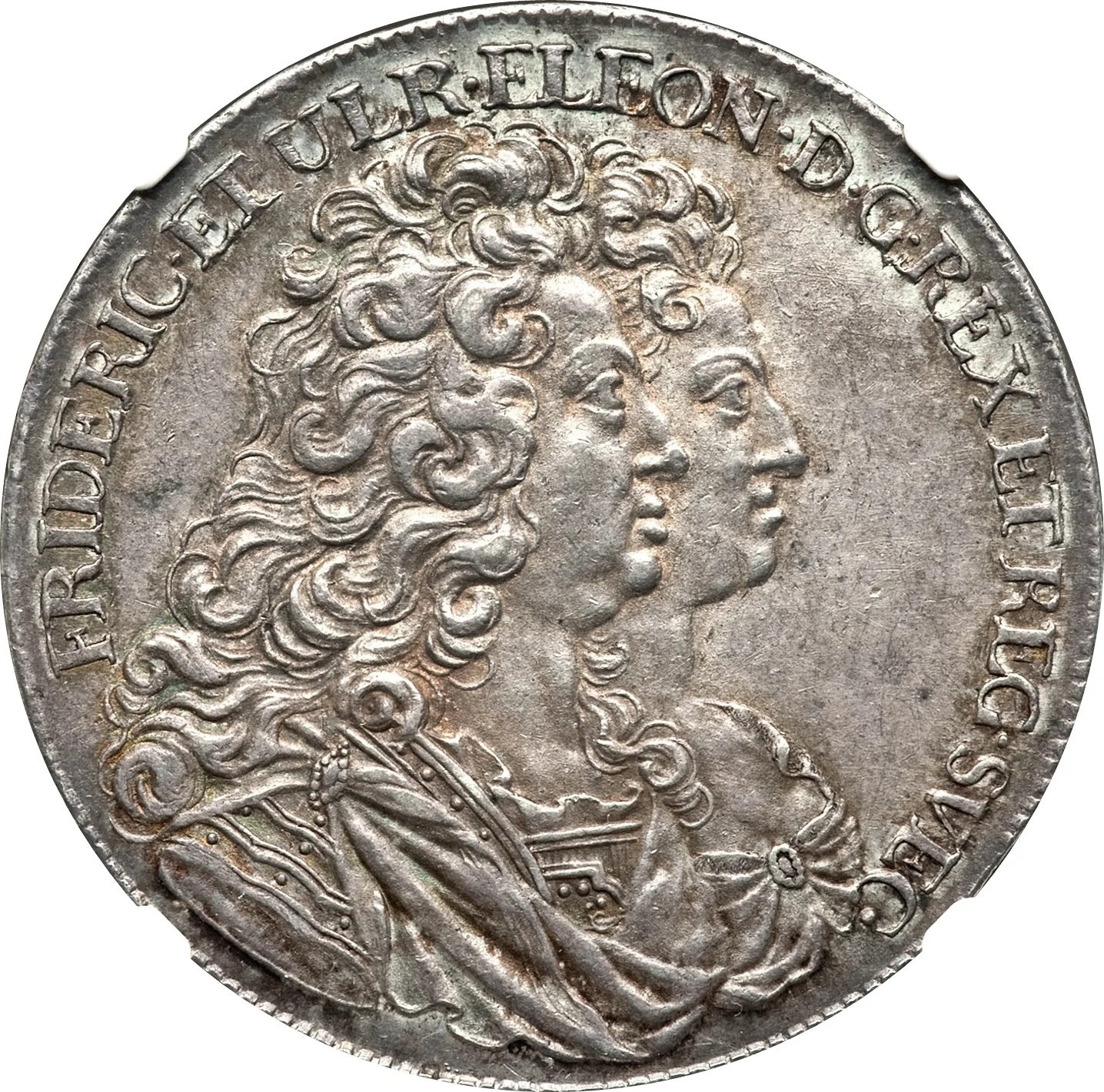
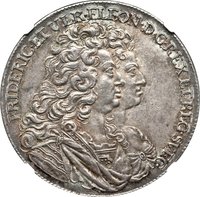
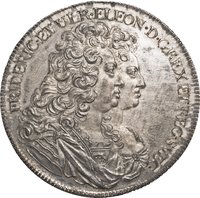
Conjoined right-facing busts of Frederick I and Ulrika Eleonora with continuous lettering above.
Inscription:
FRIDERIC•ET•ULR•ELEON•D•G•REX ET REG•SVEC•
Engraver: Daniel Haesling
Reverse
Description:
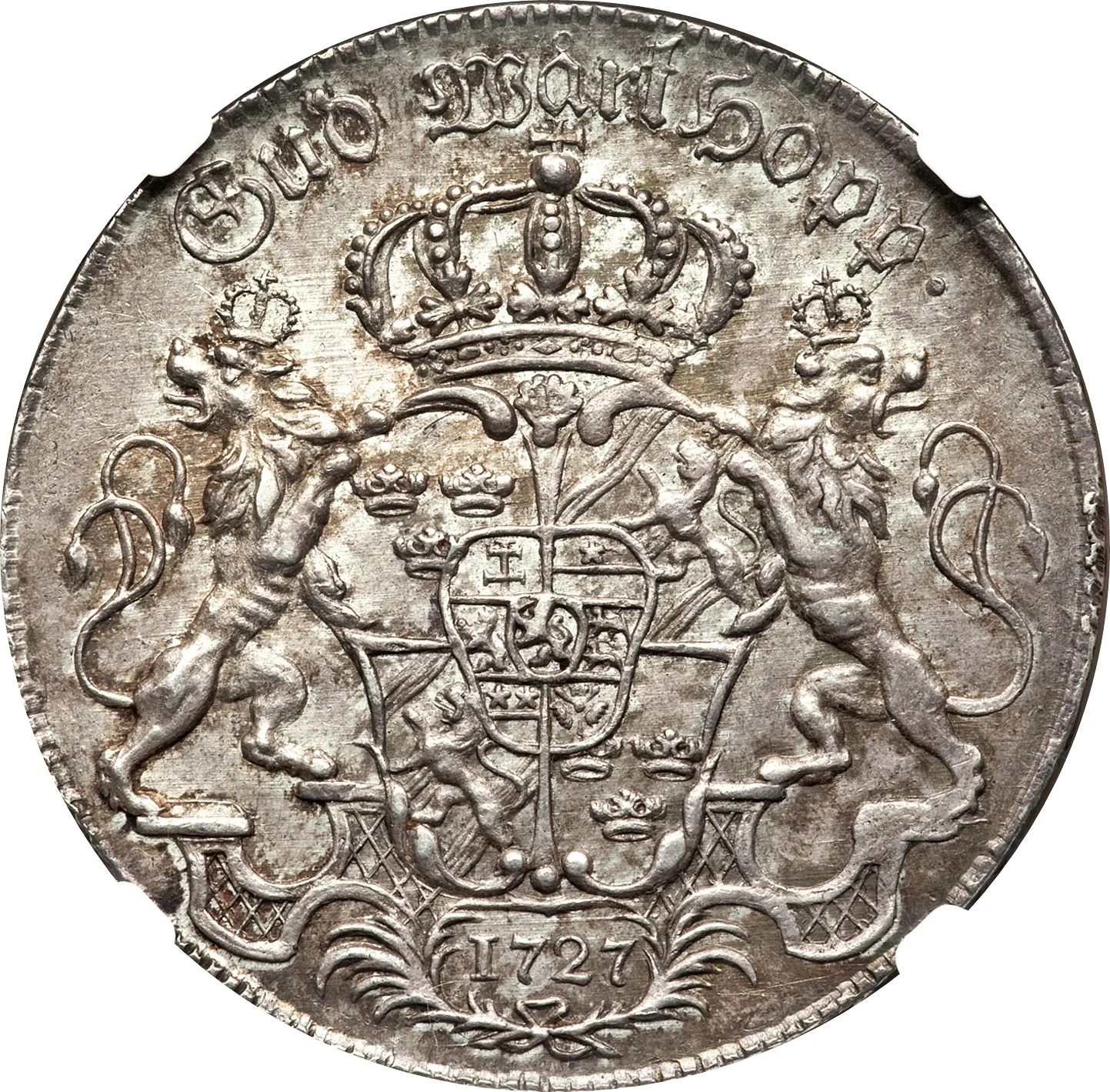
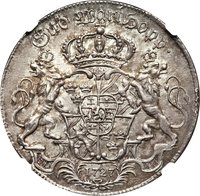
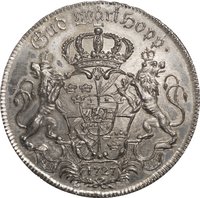
Sweden's crowned arms in a shield, supported by lions. The King's motto is above, and the date is in a palm branch cartouche below.
Inscription:
Gud Wårt Hopp
1727
1727
Engraver: Daniel Haesling
Edge
Smooth with inscription
Legend:
MANIBUS NE LAEDAR AVARIS
Categories
| Symbols> Coat of Arms |
Mintings
| Year | Mint Mark | Mintage | Quality | Collection |
|---|---|---|---|---|
| 1727 | — | 63 |
Historical background
In 1727, Sweden was navigating a complex and precarious monetary situation, a direct legacy of the Great Northern War (1700–1721). To finance the prolonged and costly conflict, the state had resorted to massive coinage debasement, issuing copper and silver coins with significantly reduced precious metal content. This practice, combined with the issuance of low-quality "emergency coins," led to severe inflation, a loss of public confidence in the currency, and a chaotic system where the nominal value of coins bore little relation to their intrinsic metal worth. The war's end left the Swedish economy depleted and its currency system in disarray.
The response was the Monetary Reform of 1726, which took full effect in 1727 under the leadership of Arvid Horn's government. This reform aimed to restore stability by returning to a silver standard. The key policy was the introduction of the riksdaler specie, a new silver coin intended to be the stable backbone of the economy. The state announced that the old, debased coins would be withdrawn from circulation and redeemed at a substantial loss to their holders, a painful but necessary measure to purge the system of bad money and re-establish trust.
Consequently, the year 1727 marked a critical juncture of transition and hardship. While the reform laid the essential foundation for long-term monetary stability by tying the currency to silver, its immediate impact was deflationary and economically painful for many. The redemption process effectively destroyed a portion of the money supply, causing a scarcity of coin and credit, which stifled trade and industry in the short term. Thus, Sweden in 1727 was a nation enduring the short-term sacrifices of a stringent stabilization policy, hoping to secure a more reliable financial future after the fiscal excesses of its wartime past.
The response was the Monetary Reform of 1726, which took full effect in 1727 under the leadership of Arvid Horn's government. This reform aimed to restore stability by returning to a silver standard. The key policy was the introduction of the riksdaler specie, a new silver coin intended to be the stable backbone of the economy. The state announced that the old, debased coins would be withdrawn from circulation and redeemed at a substantial loss to their holders, a painful but necessary measure to purge the system of bad money and re-establish trust.
Consequently, the year 1727 marked a critical juncture of transition and hardship. While the reform laid the essential foundation for long-term monetary stability by tying the currency to silver, its immediate impact was deflationary and economically painful for many. The redemption process effectively destroyed a portion of the money supply, causing a scarcity of coin and credit, which stifled trade and industry in the short term. Thus, Sweden in 1727 was a nation enduring the short-term sacrifices of a stringent stabilization policy, hoping to secure a more reliable financial future after the fiscal excesses of its wartime past.
✨ Legendary