

1 Groschen – Hungary
Hungary

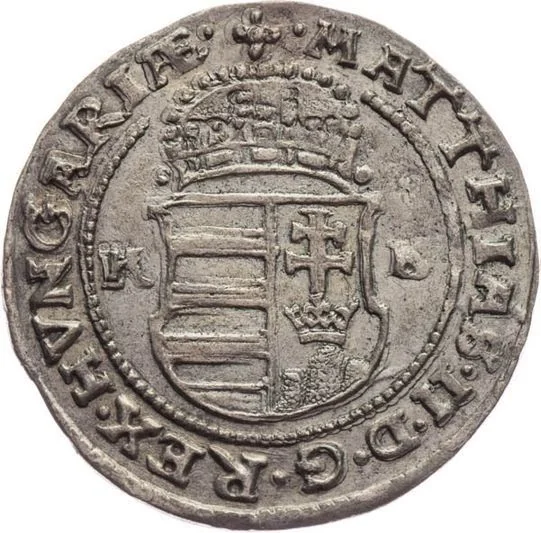
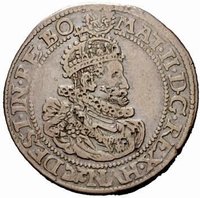
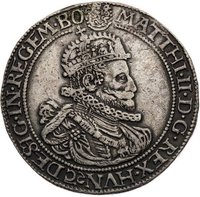
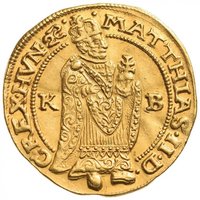
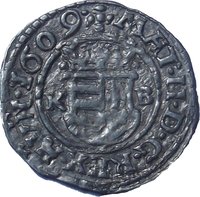
Obverse
Description:
Hungarian crown over a curved shield with the Árpád stripes and double cross on a hill; mintmark K B.
Inscription:
MATTHIAS · II · D · G · REX · HVNGARIÆ ·
Script: Latin
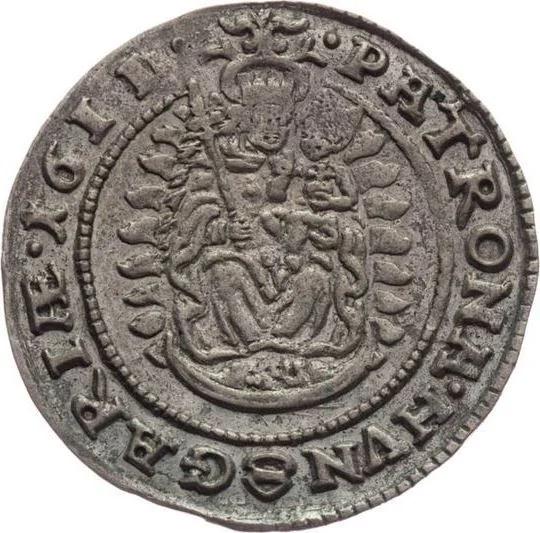
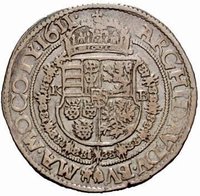
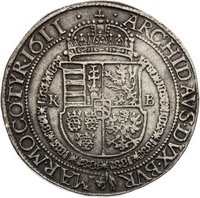
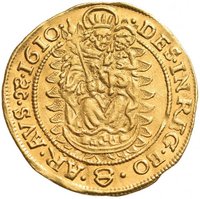
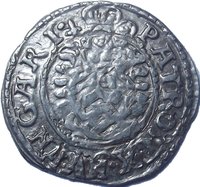
Reverse
Description:
Madonna and child, crowned, with scepter; Austrian shield below.
Inscription:
· PATRONA · HVN GARIÆ · 1611 ·
Script: Latin
Edge
Plain
Mints
| Name | Mark |
|---|---|
| Kremnica | KB |
Mintings
| Year | Mint Mark | Mintage | Quality | Collection |
|---|---|---|---|---|
| 1609 | K-B | — | ||
| 1610 | K-B | — | ||
| 1611 | K-B | — |
Historical background
In 1609, Hungary existed as a fractured kingdom divided into three parts: Royal Hungary under Habsburg rule, the Ottoman-occupied central territories, and the semi-independent Principality of Transylvania. This political fragmentation directly dictated a chaotic and multi-currency monetary landscape. The Habsburgs, ruling from Vienna and Pressburg (Bratislava), officially minted and circulated silver thalers (also known as Reichsthalers) and silver denars (or krajcárs) within their domain. However, the economic life of the entire region was profoundly influenced by the vast quantities of high-quality silver thalers and gold forints flowing from the rich mines of nearby Upper Hungary (modern-day Slovakia), which were controlled by the Habsburg monarchy.
Alongside these official coins, a plethora of other currencies circulated freely, especially along trade routes and in border regions. Ottoman gold sultani and silver akçe were common in the occupied central plains and in any market dealing with the south. Furthermore, older, worn, and clipped Hungarian gold forints from pre-Ottoman times, as well as a variety of German, Italian, and Dutch coins, were used in commerce. This created a complex environment where exchange rates fluctuated based on the metal content, origin, and physical condition of the coins, leading to frequent disputes and requiring the expertise of money-changers.
The monetary situation was further strained by the ongoing Long Turkish War (1593-1606), which had formally ended with the Peace of Zsitvatorok just three years prior in 1606. The war had drained treasuries, disrupted mining, and led to currency debasement as rulers sought to fund military campaigns. While 1609 fell in a period of tense and unstable peace, the financial legacy of the conflict—including debt, debased coinage, and continued military preparedness—meant that the currency system remained under significant pressure, complicating both state finances and everyday transactions across the divided kingdom.
Alongside these official coins, a plethora of other currencies circulated freely, especially along trade routes and in border regions. Ottoman gold sultani and silver akçe were common in the occupied central plains and in any market dealing with the south. Furthermore, older, worn, and clipped Hungarian gold forints from pre-Ottoman times, as well as a variety of German, Italian, and Dutch coins, were used in commerce. This created a complex environment where exchange rates fluctuated based on the metal content, origin, and physical condition of the coins, leading to frequent disputes and requiring the expertise of money-changers.
The monetary situation was further strained by the ongoing Long Turkish War (1593-1606), which had formally ended with the Peace of Zsitvatorok just three years prior in 1606. The war had drained treasuries, disrupted mining, and led to currency debasement as rulers sought to fund military campaigns. While 1609 fell in a period of tense and unstable peace, the financial legacy of the conflict—including debt, debased coinage, and continued military preparedness—meant that the currency system remained under significant pressure, complicating both state finances and everyday transactions across the divided kingdom.
Series: 1609 Hungary circulation coins

✨ Legendary