

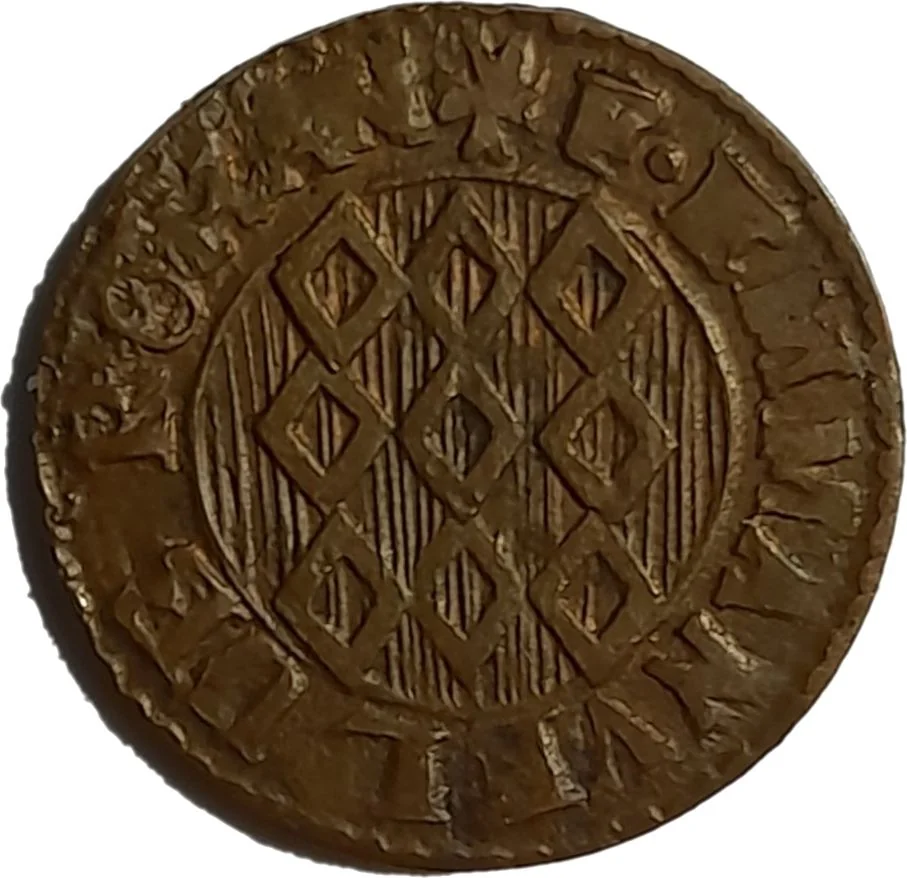
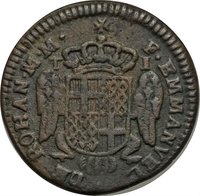
Obverse
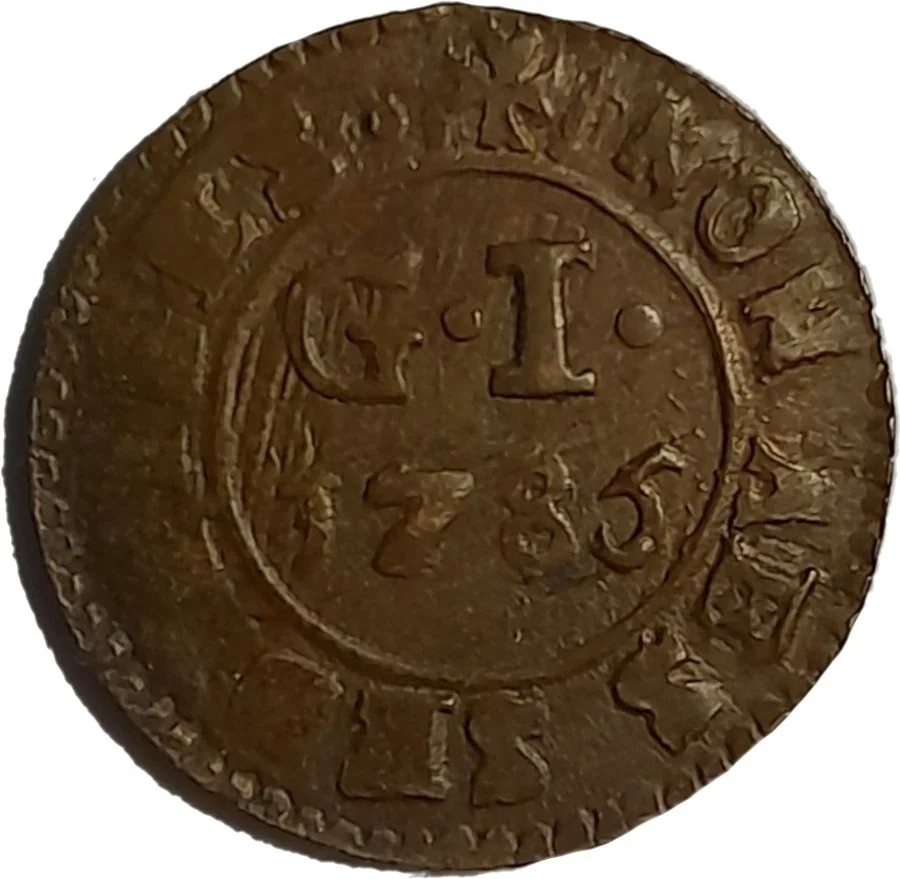
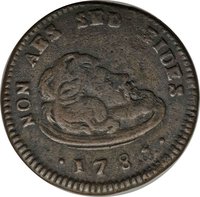
Reverse
Description:
Value and date inside, legend outside circle.
Inscription:
NON AES SED FIDES
G I
1785
G I
1785
Script: Latin
Edge
Mintings
| Year | Mint Mark | Mintage | Quality | Collection |
|---|---|---|---|---|
| 1785 | — | — | ||
| 1786 | — | — |
Historical background
In 1785, Malta's currency situation was complex and fragmented, reflecting its unique political status as a sovereign state under the nominal suzerainty of the Knights of St. John. The primary circulating coinage was a mixture of foreign and local issues. The most important was the Maltese scudo, divided into 12 tari, each of 20 grani. However, the economy was saturated with a wide variety of coins from across the Mediterranean and Europe, including Spanish pieces of eight, Neapolitan and Sicilian coins, Venetian sequins, and French louis d'or. This proliferation created significant challenges for trade and daily transactions, as merchants and officials constantly had to assess the weight, purity, and fluctuating exchange rates of these disparate coins.
The Knights, as the ruling authority, attempted to impose order through official valuations published in periodic "bando" proclamations. These edicts fixed the rates at which foreign coins would be accepted for payments to the Treasury and in public markets. However, the intrinsic value of silver and gold often differed from these official rates, leading to problems like Gresham's Law, where undervalued "good" coinage was hoarded or exported, leaving poorer-quality or clipped coins in common circulation. This instability was particularly acute given Malta's role as a bustling maritime hub; its economy relied heavily on corsairing, trade, and servicing foreign fleets, which constantly injected more foreign specie into the system.
Recognizing the need for reform, Grand Master Emmanuel de Rohan-Polduc (reigned 1775-1797) took decisive action in 1785. He initiated a comprehensive currency reform, ordering the minting of a new, standardized Maltese coinage at the Zecca in Valletta. This new series, featuring the Grand Master's portrait, clearly denominated in scudi, tari, and grani, was intended to supplant the chaotic mix of foreign money and establish a reliable, sovereign currency. While the full replacement of all foreign coinage would take time, the 1785 reform marked a critical step toward monetary stability and asserting the financial autonomy of the Order's state just over a decade before its fall to Napoleon in 1798.
The Knights, as the ruling authority, attempted to impose order through official valuations published in periodic "bando" proclamations. These edicts fixed the rates at which foreign coins would be accepted for payments to the Treasury and in public markets. However, the intrinsic value of silver and gold often differed from these official rates, leading to problems like Gresham's Law, where undervalued "good" coinage was hoarded or exported, leaving poorer-quality or clipped coins in common circulation. This instability was particularly acute given Malta's role as a bustling maritime hub; its economy relied heavily on corsairing, trade, and servicing foreign fleets, which constantly injected more foreign specie into the system.
Recognizing the need for reform, Grand Master Emmanuel de Rohan-Polduc (reigned 1775-1797) took decisive action in 1785. He initiated a comprehensive currency reform, ordering the minting of a new, standardized Maltese coinage at the Zecca in Valletta. This new series, featuring the Grand Master's portrait, clearly denominated in scudi, tari, and grani, was intended to supplant the chaotic mix of foreign money and establish a reliable, sovereign currency. While the full replacement of all foreign coinage would take time, the 1785 reform marked a critical step toward monetary stability and asserting the financial autonomy of the Order's state just over a decade before its fall to Napoleon in 1798.
💎 Very Rare