

16 Marks – Sweden
Sweden
Context
Years: 1607–1611
Issuer: Sweden 
Ruler: Charles IX
Currency:
(1598—1665)
Subdivision: 16 Marks = 1 Carolin
Demonetized: Yes
Material
References
KM: #Click to copy to clipboard25
Numista: #106280
Value
Bullion value: $807.98
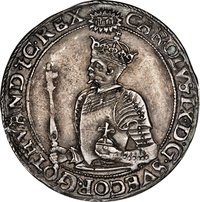
Obverse
Description:
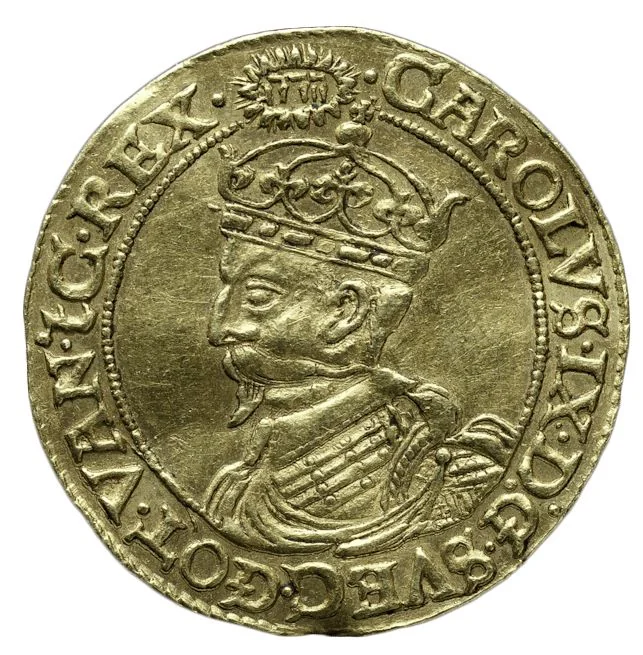
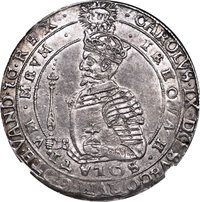
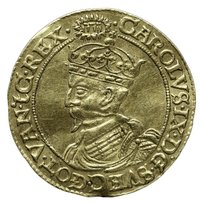
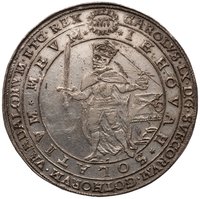
Armored bust of Karl IX left within a rope circle; Hebrew inscription for Jehovah above, legend around.
Inscription:
( יהוה ) CAROLVS·IX·D:G·SVEC·GOT·VAN·&C·REX·
Script: Latin
Reverse
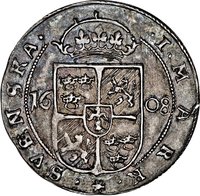
Description:
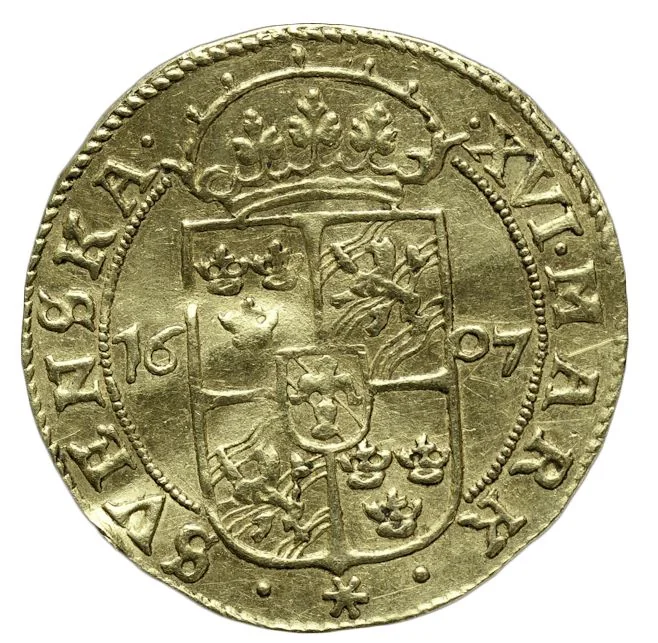
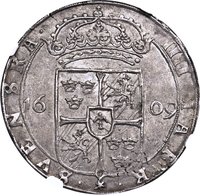
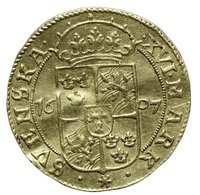
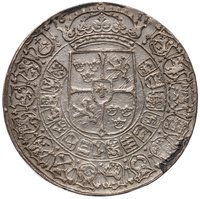
Shield with Swedish arms divides date inside circle; value written around rim.
Inscription:
· XVI · MARK · * · SVENSKA ·
16 07
16 07
Script: Latin
Edge
Mintings
| Year | Mint Mark | Mintage | Quality | Collection |
|---|---|---|---|---|
| 1607 | — | — | ||
| 1608 | — | — | ||
| 1610 | — | — | ||
| 1611 | — | — |
Historical background
In 1607, Sweden was navigating a complex and deteriorating monetary situation, a legacy of the ongoing "Kipper- und Wipperzeit" – a period of rampant currency debasement and monetary chaos that swept across Central and Northern Europe. King Charles IX, engaged in costly wars with Poland and Russia, faced constant financial strain. To fund his military ambitions, the state resorted to repeatedly reducing the silver content in its coinage, particularly the smaller öre and mark denominations, while officially maintaining their face value. This created a system where newer, debased coins circulated alongside older, purer ones, leading to widespread confusion and economic distortion.
The practical consequences were severe. Astute merchants and the public, aware of the differences, began to hoard older, high-silver coins or demanded payment in them, causing the good money to disappear from circulation (Gresham's Law in action). Meanwhile, foreign traders, especially in key ports like Stockholm, refused to accept the debased Swedish currency at face value, demanding heavy discounts or payment in foreign specie. This disrupted both domestic trade and vital international commerce, as confidence in the crown's coinage eroded.
While Charles IX was aware of the problem, his immediate military needs took precedence over monetary reform. The situation in 1607 was therefore one of entrenched instability, with the royal mint actively contributing to the inflation it was supposed to combat. Real reform would only begin under his successor, Gustavus Adolphus, who after his accession in 1611 initiated a complete recoinage to restore the silver standard and state credibility. Thus, 1607 represents a low point in this period of financial crisis, with the kingdom's currency weakened and its economy suffering from the crown's own short-term fiscal policies.
The practical consequences were severe. Astute merchants and the public, aware of the differences, began to hoard older, high-silver coins or demanded payment in them, causing the good money to disappear from circulation (Gresham's Law in action). Meanwhile, foreign traders, especially in key ports like Stockholm, refused to accept the debased Swedish currency at face value, demanding heavy discounts or payment in foreign specie. This disrupted both domestic trade and vital international commerce, as confidence in the crown's coinage eroded.
While Charles IX was aware of the problem, his immediate military needs took precedence over monetary reform. The situation in 1607 was therefore one of entrenched instability, with the royal mint actively contributing to the inflation it was supposed to combat. Real reform would only begin under his successor, Gustavus Adolphus, who after his accession in 1611 initiated a complete recoinage to restore the silver standard and state credibility. Thus, 1607 represents a low point in this period of financial crisis, with the kingdom's currency weakened and its economy suffering from the crown's own short-term fiscal policies.
Series: 1607 Sweden circulation coins
✨ Legendary