

1 Ducat – Austrian Empire
Austria
Context
Years: 1638–1652
Country: Austria 
Issuer: Austrian Empire
Ruler: Ferdinand III
Currency:
(1520—1754)
Demonetized: Yes
References
KM: #Click to copy to clipboard878
Numista: #166556
Value
Bullion value: $577.22
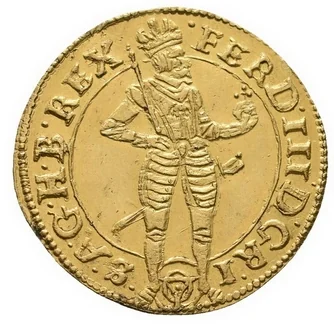
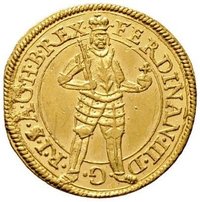
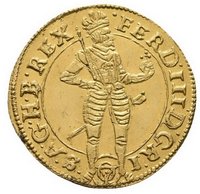
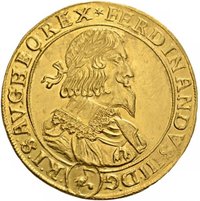
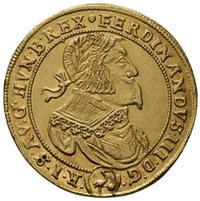
Obverse
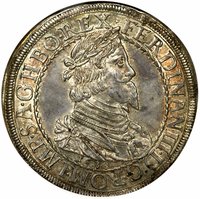
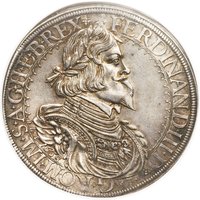
Description:
Full-length armored portrait. Mint mark beneath feet.
Inscription:
FERD III D G R I // S A G H B REX
Script: Latin
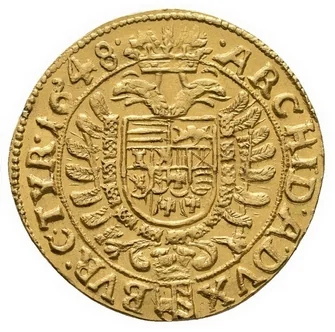
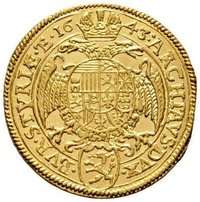
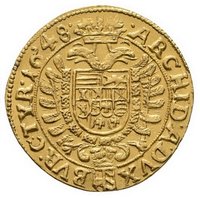
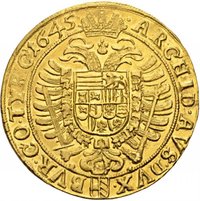
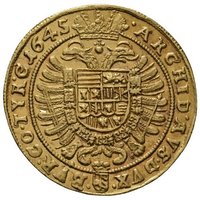
Reverse
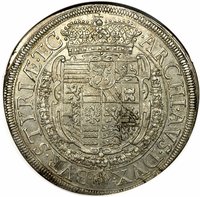
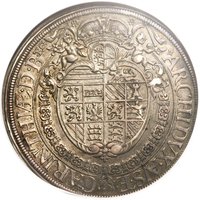
Description:
Imperial eagle with Austrian arms above divided legend.
Inscription:
ARCHID A DVX // BVR C TYR 1648
Script: Latin
Edge
Mints
| Name | Mark |
|---|---|
| Münze Österreich | — |
Mintings
| Year | Mint Mark | Mintage | Quality | Collection |
|---|---|---|---|---|
| 1638 | — | — | ||
| 1639 | — | — | ||
| 1640 | — | — | ||
| 1641 | — | — | ||
| 1642 | — | — | ||
| 1644 | — | — | ||
| 1645 | — | — | ||
| 1646 | — | — | ||
| 1647 | — | — | ||
| 1648 | — | — | ||
| 1650 | — | — | ||
| 1651 | — | — | ||
| 1652 | — | — |
Historical background
In 1638, the Austrian Habsburg monarchy was embroiled in the Thirty Years' War (1618-1648), a conflict that placed immense fiscal strain on the empire and led to a severely debased and chaotic currency situation. Emperor Ferdinand III, ruling from Vienna, faced the relentless cost of financing large mercenary armies. To meet these expenses, the state repeatedly resorted to reducing the silver content in its coinage, notably the ubiquitous Reichsthaler and smaller Kreuzer coins. This practice, carried out at various imperial mints, led to a proliferation of underweight and inferior coins circulating alongside older, purer pieces, causing widespread confusion and loss of public trust.
The monetary landscape was further fragmented by the empire's decentralized structure. While the emperor held the right of coinage (Münzregal), it was often leased to individual estates, cities, and even private financiers who operated mints for profit. This led to significant regional variations in coin quality and value. Furthermore, vast quantities of poorly regulated "Kipper and Wipper" coinage from the earlier 1620s crisis—named for the money-changers who "kipped" (clipped) and "wipped" (weighed) coins to sort good metal from bad—still flooded the markets. The result was a multi-layered system where the official exchange rates set by authorities bore little relation to the actual market value of the coins in hand.
This monetary instability had dire economic consequences. Prices for goods and services, particularly food, became highly volatile as sellers demanded premiums for trusted older coins, effectively creating a dual-price system. Long-distance trade and credit markets were hampered by the uncertainty, and the peasantry and soldiers paid in debased coin suffered from its rapidly diminishing purchasing power. While Ferdinand III attempted reforms, including issuing regulations to standardize coinage, the overwhelming financial demands of the ongoing war made genuine monetary stabilization impossible until after the Peace of Westphalia in 1648.
The monetary landscape was further fragmented by the empire's decentralized structure. While the emperor held the right of coinage (Münzregal), it was often leased to individual estates, cities, and even private financiers who operated mints for profit. This led to significant regional variations in coin quality and value. Furthermore, vast quantities of poorly regulated "Kipper and Wipper" coinage from the earlier 1620s crisis—named for the money-changers who "kipped" (clipped) and "wipped" (weighed) coins to sort good metal from bad—still flooded the markets. The result was a multi-layered system where the official exchange rates set by authorities bore little relation to the actual market value of the coins in hand.
This monetary instability had dire economic consequences. Prices for goods and services, particularly food, became highly volatile as sellers demanded premiums for trusted older coins, effectively creating a dual-price system. Long-distance trade and credit markets were hampered by the uncertainty, and the peasantry and soldiers paid in debased coin suffered from its rapidly diminishing purchasing power. While Ferdinand III attempted reforms, including issuing regulations to standardize coinage, the overwhelming financial demands of the ongoing war made genuine monetary stabilization impossible until after the Peace of Westphalia in 1648.
✨ Legendary