

¼ Thaler – County of Tyrol
Austria

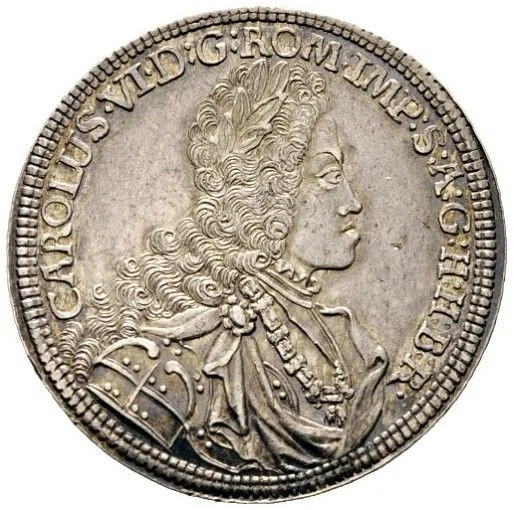
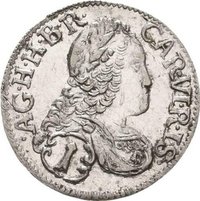
Obverse
Description:
Armored bust right, truncation dividing legend at 8 o'clock.
Inscription:
CAROLUS VI D G ROM IMP S A GE HI HU BO REX
Script: Latin
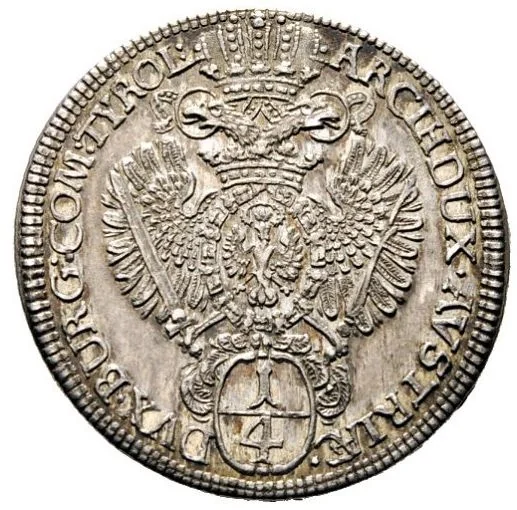
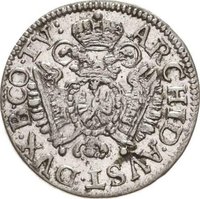
Reverse
Description:
Crowned double-headed eagle with Tyrolean eagle on breast, Golden Fleece chain, value in frame divides legend (start 1h) below.
Inscription:
ARCIHDVX AUSTRIÆ DVX BURG COM TYROL
(1/4)
(1/4)
Script: Latin
Edge
Plain
Mints
| Name | Mark |
|---|---|
| Hall | — |
Mintings
| Year | Mint Mark | Mintage | Quality | Collection |
|---|---|---|---|---|
| — | — | — |
Historical background
In 1711, the County of Tyrol, a strategic Alpine territory within the Habsburg Empire, faced a complex and challenging currency situation typical of the early modern period. The region operated on a bimetallic system, but it was plagued by a chronic shortage of high-quality specie (gold and silver coin). This was due in part to Tyrol's own declining silver production from mines like Schwaz, which had once been a European leader but were now yielding less. Furthermore, the Habsburg state's frequent military engagements, particularly during the War of the Spanish Succession (1701-1714), led to the recurring practice of debasement—reducing the precious metal content in coins to create more money to fund armies, thereby eroding trust in the currency.
The monetary landscape was a confusing patchwork. Alongside official Tyrolean kreuzers and guilders, numerous foreign coins, especially from neighboring German states and Italy, circulated widely in commerce. These often had varying weights and fineness, leading to difficulties in exchange and facilitating fraud. The Habsburg authorities attempted to regulate this by issuing mandatory exchange rates (Tarif), but these official rates frequently failed to reflect the actual market value of the disparate coins, creating a disconnect between government decree and economic reality. This environment encouraged hoarding of good coin and the circulation of inferior money, a classic manifestation of Gresham's Law.
Consequently, the local economy suffered from instability and inflationary pressures. Merchants and the populace were wary, and trade could be hindered by uncertainties over payment value. The situation demanded constant imperial ordinances to reaffirm standards, but without a consistent supply of sound coinage from the central treasury, these measures provided only temporary relief. Thus, in 1711, Tyrol's currency was characterized by scarcity, heterogeneity, and controlled yet ineffective regulation, reflecting the broader fiscal strains of the Habsburg monarchy at war.
The monetary landscape was a confusing patchwork. Alongside official Tyrolean kreuzers and guilders, numerous foreign coins, especially from neighboring German states and Italy, circulated widely in commerce. These often had varying weights and fineness, leading to difficulties in exchange and facilitating fraud. The Habsburg authorities attempted to regulate this by issuing mandatory exchange rates (Tarif), but these official rates frequently failed to reflect the actual market value of the disparate coins, creating a disconnect between government decree and economic reality. This environment encouraged hoarding of good coin and the circulation of inferior money, a classic manifestation of Gresham's Law.
Consequently, the local economy suffered from instability and inflationary pressures. Merchants and the populace were wary, and trade could be hindered by uncertainties over payment value. The situation demanded constant imperial ordinances to reaffirm standards, but without a consistent supply of sound coinage from the central treasury, these measures provided only temporary relief. Thus, in 1711, Tyrol's currency was characterized by scarcity, heterogeneity, and controlled yet ineffective regulation, reflecting the broader fiscal strains of the Habsburg monarchy at war.
✨ Legendary