

1⁄20 silver ecu – France
Add to wishlist
France
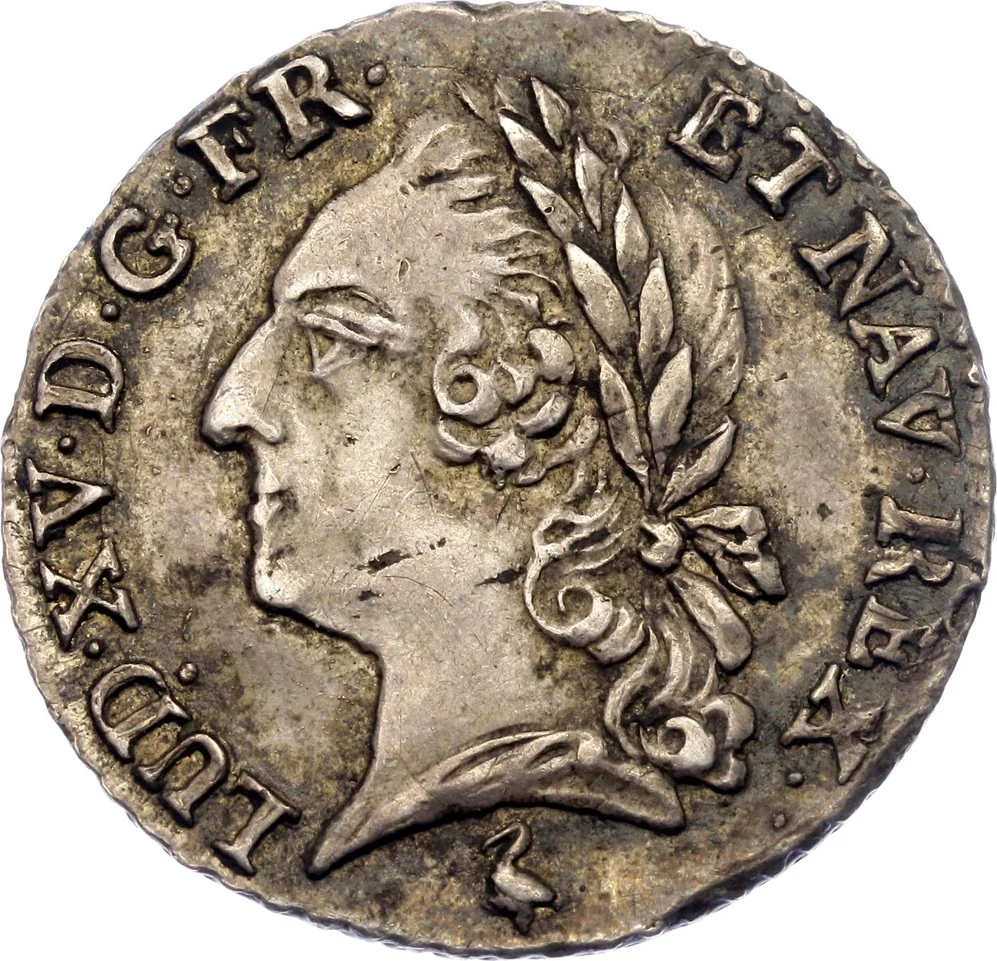
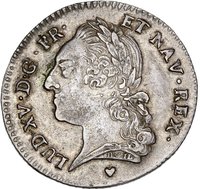
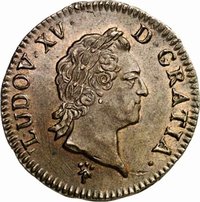
Obverse
Description:
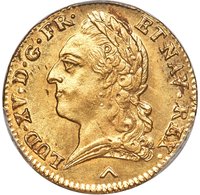
Louis XV, elderly and laureate, with draped neck.
Inscription:
LUD. XV. D. G. FR. ET NAV. REX.
Script: Latin
Engraver: C-R. Roëttiers
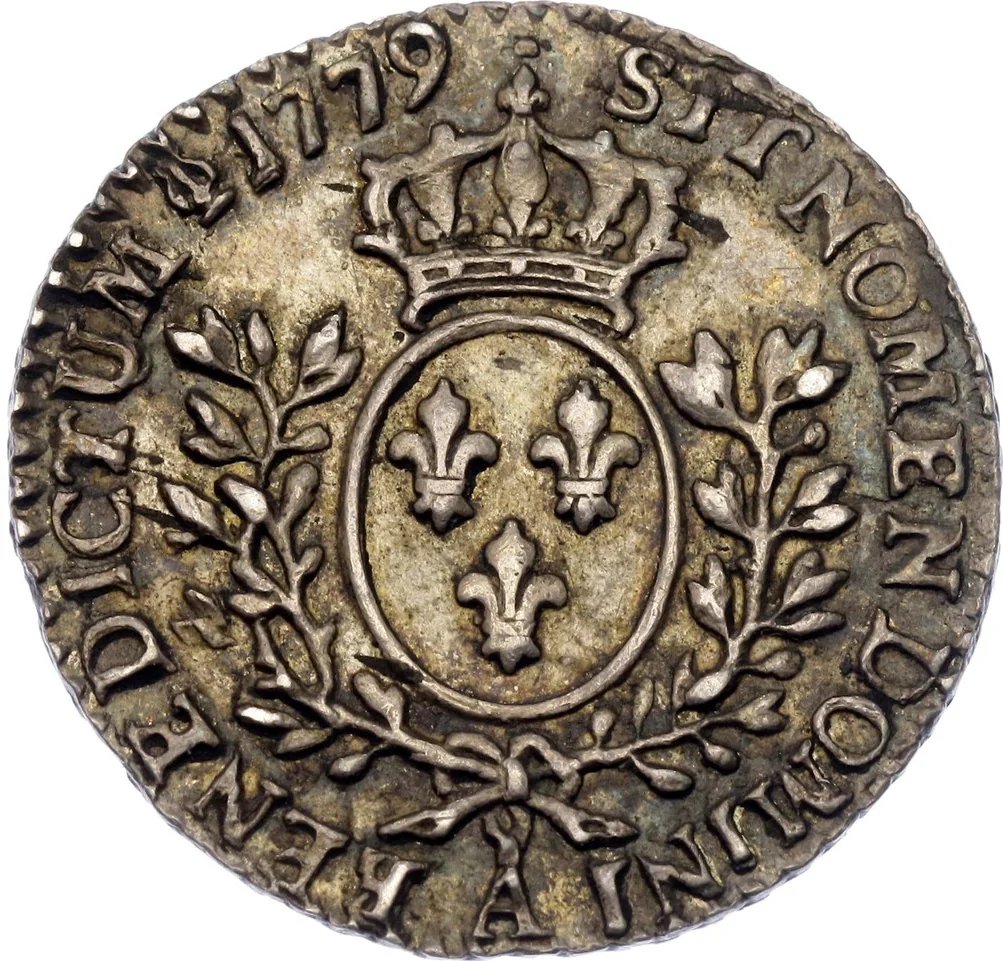
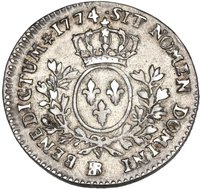
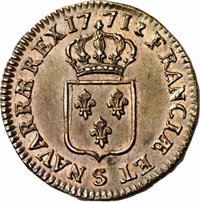
Reverse
Description:
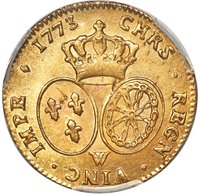
Crowned oval shield of France between olive branches.
Inscription:
.SIT NOMEN DOMINI A BENEDICTUM 1773.
Script: Latin
Engraver: C-R. Röettiers
Edge
Corded
Mints
| Name | Mark |
|---|---|
| Monnaie de Paris | A |
| Strasbourg | BB |
| Bayonne | L |
Historical background
In 1771, France found itself in a precarious financial situation, a legacy of decades of deficit spending fueled by costly wars, most notably the Seven Years' War (1756-1763), which had resulted in the loss of most of its colonial empire. The monarchy's finances were crippled by a complex and archaic tax system that exempted the nobility and clergy, placing the entire fiscal burden on the peasantry and commoners. This structural inequality, combined with rampant corruption and the immense cost of maintaining the court at Versailles, left the treasury perpetually on the brink of bankruptcy, reliant on loans from a network of financiers.
Faced with this crisis, King Louis XV and his newly appointed Chancellor, René Nicolas de Maupeou, took drastic action in early 1771. They executed a political and judicial coup known as the "Maupeou Revolution," forcibly abolishing the Parlements—the powerful sovereign courts dominated by the nobility, which had consistently blocked royal attempts at fiscal reform. Maupeou exiled the magistrates, replaced them with a more compliant judiciary, and began to centralize royal authority. This move was explicitly designed to break the institutional resistance to modernizing the tax system and restoring solvency.
The currency itself, the French livre, was relatively stable in 1771, but the underlying monetary reality was one of profound instability. The state's credit was shattered, and the looming specter of default made international borrowing exorbitantly expensive. While not in a period of active currency debasement, the financial foundation of the kingdom was so rotten that confidence in its ability to honor debts was extremely low. Thus, the "currency situation" was less about coinage and more about a systemic fiscal crisis, with Maupeou's authoritarian reforms representing a final, desperate attempt by the Ancien Régime to impose order before the pressures erupted into the revolution that would follow less than two decades later.
Faced with this crisis, King Louis XV and his newly appointed Chancellor, René Nicolas de Maupeou, took drastic action in early 1771. They executed a political and judicial coup known as the "Maupeou Revolution," forcibly abolishing the Parlements—the powerful sovereign courts dominated by the nobility, which had consistently blocked royal attempts at fiscal reform. Maupeou exiled the magistrates, replaced them with a more compliant judiciary, and began to centralize royal authority. This move was explicitly designed to break the institutional resistance to modernizing the tax system and restoring solvency.
The currency itself, the French livre, was relatively stable in 1771, but the underlying monetary reality was one of profound instability. The state's credit was shattered, and the looming specter of default made international borrowing exorbitantly expensive. While not in a period of active currency debasement, the financial foundation of the kingdom was so rotten that confidence in its ability to honor debts was extremely low. Thus, the "currency situation" was less about coinage and more about a systemic fiscal crisis, with Maupeou's authoritarian reforms representing a final, desperate attempt by the Ancien Régime to impose order before the pressures erupted into the revolution that would follow less than two decades later.
Series: 1771 France circulation coins
⭐ Rare