

3 sols – Isles de France and de Bourbon
Add to wishlist
France
Context
Years: 1779–1780
Country: France
Issuer: Isles de France and de Bourbon
Ruler: Louis XVI
Currency:
(1721—1810)
Demonetized: Yes
Total mintage: 2,000,000
References
KM: #
Numista: #16389
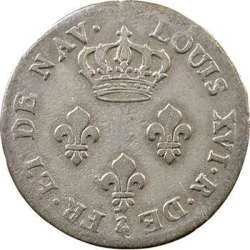
Obverse
Description:
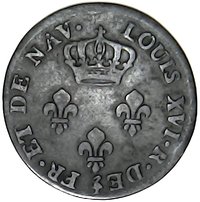
Crowned lilies.
Inscription:
LOUIS XVI·R·DE FR·ET·DE·NAV·
Script: Latin
Engraver: Pierre-Benjamin Duvivier
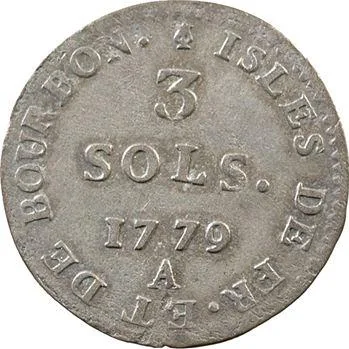
Reverse
Description:
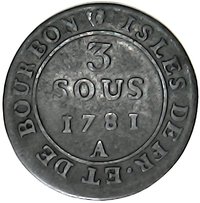
Denomination, date.
Inscription:
ISLES DE FR·ET DE BOURBON·
3 SOLS
1779
A
3 SOLS
1779
A
Script: Latin
Engraver: Pierre-Benjamin Duvivier
Edge
Plain
Mints
| Name | Mark |
|---|---|
| Monnaie de Paris | A |
Historical background
In 1779, the French Indian Ocean colonies of Isle de France (Mauritius) and Isle de Bourbon (Réunion) faced a severe and chronic currency crisis. As plantation economies reliant on coffee and spices, they operated within a mercantilist system requiring trade exclusively with France. However, this generated a persistent trade imbalance; the value of imports—including essential goods, tools, and luxury items for the planters—far exceeded that of their exports. Consequently, much of the limited supply of official French coinage (livres, sous, and deniers) that arrived on the annual fleet was immediately siphoned back to the metropole to settle debts, starving the local economy of hard currency.
To facilitate daily transactions, colonists resorted to a confusing multiplicity of substitute currencies. The most common were Spanish silver piastres (pieces of eight) and various foreign coins from regional trade, which circulated at negotiated and fluctuating values. For smaller purchases, a system of monnaie de carte (card money) was used, where playing cards, signed and stamped by the colonial administration, served as promissory notes. This fragile system was inherently unstable, prone to counterfeiting, and its value was entirely dependent on public confidence in the cash-strapped colonial government, which often struggled to honor redemptions.
The situation was exacerbated by the global context of the American Revolutionary War, in which France was a participant from 1778. This heightened naval warfare and disrupted the already irregular maritime links with France, making the annual arrival of specie even more uncertain. The shortage crippled commercial activity, inflated prices, and encouraged barter. It underscored the colonies' economic vulnerability and isolation, creating a persistent tension between the planter elite's desire for imported goods and the structural impossibility of retaining the metallic currency needed for a thriving local market economy.
To facilitate daily transactions, colonists resorted to a confusing multiplicity of substitute currencies. The most common were Spanish silver piastres (pieces of eight) and various foreign coins from regional trade, which circulated at negotiated and fluctuating values. For smaller purchases, a system of monnaie de carte (card money) was used, where playing cards, signed and stamped by the colonial administration, served as promissory notes. This fragile system was inherently unstable, prone to counterfeiting, and its value was entirely dependent on public confidence in the cash-strapped colonial government, which often struggled to honor redemptions.
The situation was exacerbated by the global context of the American Revolutionary War, in which France was a participant from 1778. This heightened naval warfare and disrupted the already irregular maritime links with France, making the annual arrival of specie even more uncertain. The shortage crippled commercial activity, inflated prices, and encouraged barter. It underscored the colonies' economic vulnerability and isolation, creating a persistent tension between the planter elite's desire for imported goods and the structural impossibility of retaining the metallic currency needed for a thriving local market economy.
⭐ Somewhat Rare