


3 sols – Isles de France and de Bourbon
Add to wishlist
France
Context
Year: 1781
Country: France
Issuer: Isles de France and de Bourbon
Ruler: Louis XVI
Currency:
(1721—1810)
Demonetized: Yes
Total mintage: 6,720,000
Material
References
KM: #
Numista: #35730
Obverse
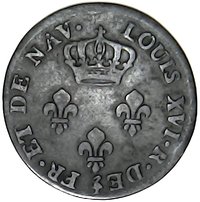
Description:
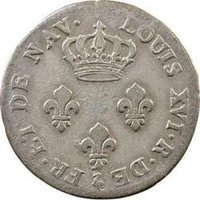
Crowned lilies.
Inscription:
LOUIS XVI·R·DE FR·ET DE NAV·
Script: Latin
Engraver: Pierre-Benjamin Duvivier
Reverse
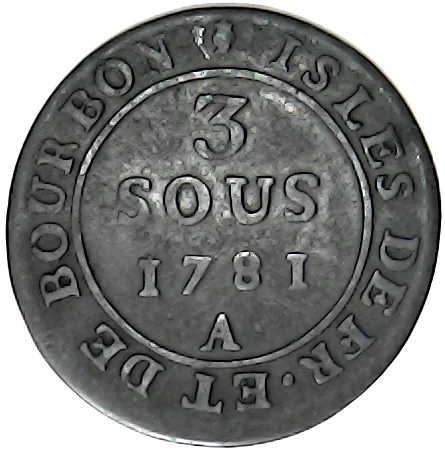
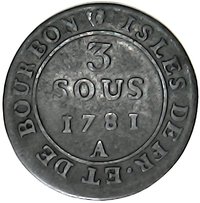
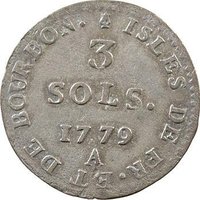
Description:
Denomination and date encircled.
Inscription:
ISLES DE FR.ET DE BOURBON
3
SOUS
1781
A
3
SOUS
1781
A
Script: Latin
Engraver: Pierre-Benjamin Duvivier
Edge
Plain
Mints
| Name | Mark |
|---|---|
| Monnaie de Paris | — |
Mintings
| Year | Mint Mark | Mintage | Quality | Collection |
|---|---|---|---|---|
| 1781 | A | 6,720,000 |
Historical background
In 1781, the French colonial islands of Isle de France (modern-day Mauritius) and Isle de Bourbon (Réunion) faced a severe and chronic currency crisis, a direct consequence of their economic structure and mercantilist policy. As plantation economies reliant on coffee, spices, and sugar, they generated significant wealth but operated under a strict colonial exclusive (l'exclusif), which mandated trade only with France. This system created a persistent trade imbalance, as the value of imported necessities—food, textiles, and manufactured goods—far exceeded the value of the islands' exports. The result was a constant drain of official French coinage (livres, sous, and deniers) back to the metropole, leaving the colonies perpetually starved of legal tender.
To facilitate local exchange, a variety of substitute currencies circulated, creating a complex and unstable monetary environment. These included Spanish and Portuguese gold and silver coins (like the piastre and the doubloon), which were widely accepted but subject to volatile valuation. More critically, the Compagnie des Indes and later the colonial administration issued paper money (billets de caisse or ordonnances). Initially intended as temporary instruments, this paper currency was over-issued to cover administrative and military costs, particularly with the ongoing Anglo-French war (the American Revolutionary War) driving up defense expenditures. By 1781, this paper was deeply depreciated, trading at a significant discount to its face value and causing inflation and public mistrust.
The situation in 1781 was therefore one of acute strain, exacerbated by the war's disruption to shipping and the islands' strategic role as a naval base. Governor François de Souillac grappled with a collapsing monetary system where official coin was scarce, paper notes were devalued, and foreign specie was both essential and unreliable. This environment hindered commerce, complicated the provisioning of troops and settlers, and reflected the broader systemic failures of the French colonial economy, where administrative expediency and mercantilist rigidity undermined long-term financial stability.
To facilitate local exchange, a variety of substitute currencies circulated, creating a complex and unstable monetary environment. These included Spanish and Portuguese gold and silver coins (like the piastre and the doubloon), which were widely accepted but subject to volatile valuation. More critically, the Compagnie des Indes and later the colonial administration issued paper money (billets de caisse or ordonnances). Initially intended as temporary instruments, this paper currency was over-issued to cover administrative and military costs, particularly with the ongoing Anglo-French war (the American Revolutionary War) driving up defense expenditures. By 1781, this paper was deeply depreciated, trading at a significant discount to its face value and causing inflation and public mistrust.
The situation in 1781 was therefore one of acute strain, exacerbated by the war's disruption to shipping and the islands' strategic role as a naval base. Governor François de Souillac grappled with a collapsing monetary system where official coin was scarce, paper notes were devalued, and foreign specie was both essential and unreliable. This environment hindered commerce, complicated the provisioning of troops and settlers, and reflected the broader systemic failures of the French colonial economy, where administrative expediency and mercantilist rigidity undermined long-term financial stability.
⭐ Somewhat Rare