

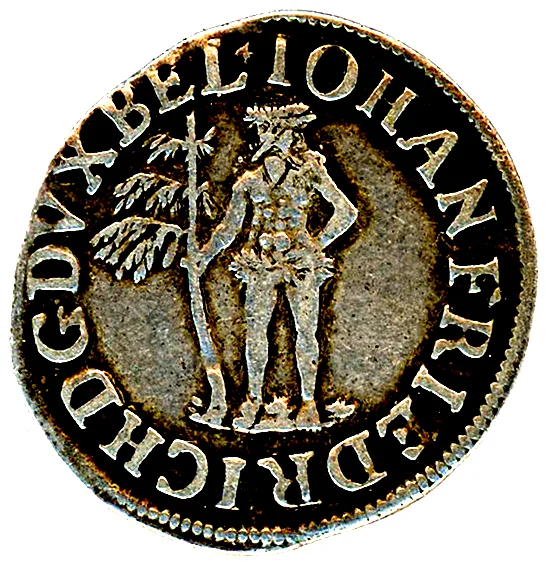
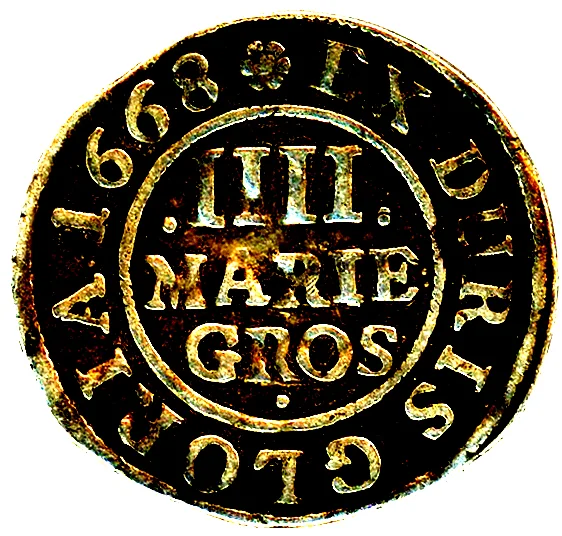
4 Mariengroschen – Brunswick-Lüneburg-Calenberg
Germany
Context
Years: 1667–1673
Country: Germany 
Issuer: Brunswick-Lüneburg-Calenberg
Ruler: John Frederick
Currency:
Demonetized: Yes
Material
References
KM: #Click to copy to clipboard108
Numista: #163170
Value
Bullion value: $6.54
Obverse
Reverse
Edge
Mintings
| Year | Mint Mark | Mintage | Quality | Collection |
|---|---|---|---|---|
| 1667 | — | — | ||
| 1668 | — | — | ||
| 1669 | — | — | ||
| 1673 | — | — |
Historical background
In 1667, the currency situation in the Principality of Calenberg (a branch of the larger Duchy of Brunswick-Lüneburg) was characterized by significant instability and complexity, a common challenge across the German states in the wake of the Thirty Years' War. The region operated within a fragmented monetary system where multiple coinages circulated simultaneously. These included not only coins minted by the local ruler, Duke John Frederick, but also a plethora of older domestic issues, as well as foreign coins from neighboring states and trade hubs like the Reichsthaler and Gute Groschen. This proliferation created chronic confusion in commerce and facilitated debasement.
The core of the problem lay in the disparity between the official Kurantgeld (accounting money used for contracts and bookkeeping) and the actual, physically circulating Scheidemünzen (small change). Local authorities, facing persistent fiscal pressures from reconstruction and court expenditures, often resorted to issuing debased Scheidemünzen with lower precious metal content than their face value. This practice, while providing short-term revenue, eroded public trust, drove better-quality coins out of circulation (Gresham's Law), and caused price inflation, particularly affecting the daily transactions of the common people.
Duke John Frederick, who was notably influenced by his residency in Renaissance Italy, was aware of these detrimental effects. While 1667 was not a year of major monetary reform, the period was one of mounting pressure for standardization. The situation underscored the urgent need for a uniform and reliable currency, a goal that would later drive his successors, particularly the Electors of Hanover, to pursue more centralized monetary policies in alignment with broader German efforts to create a stable Reichsmünzfuß (imperial monetary standard).
The core of the problem lay in the disparity between the official Kurantgeld (accounting money used for contracts and bookkeeping) and the actual, physically circulating Scheidemünzen (small change). Local authorities, facing persistent fiscal pressures from reconstruction and court expenditures, often resorted to issuing debased Scheidemünzen with lower precious metal content than their face value. This practice, while providing short-term revenue, eroded public trust, drove better-quality coins out of circulation (Gresham's Law), and caused price inflation, particularly affecting the daily transactions of the common people.
Duke John Frederick, who was notably influenced by his residency in Renaissance Italy, was aware of these detrimental effects. While 1667 was not a year of major monetary reform, the period was one of mounting pressure for standardization. The situation underscored the urgent need for a uniform and reliable currency, a goal that would later drive his successors, particularly the Electors of Hanover, to pursue more centralized monetary policies in alignment with broader German efforts to create a stable Reichsmünzfuß (imperial monetary standard).
✨ Legendary