

½ Penny – England
United Kingdom


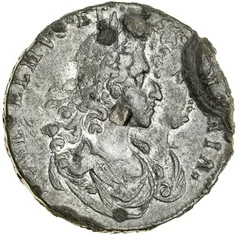
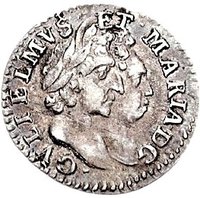
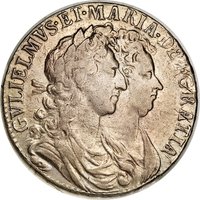
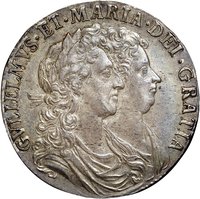
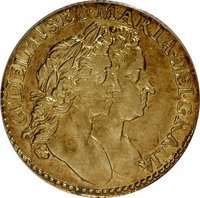
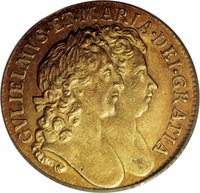
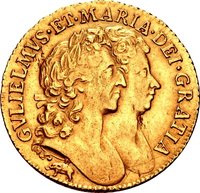
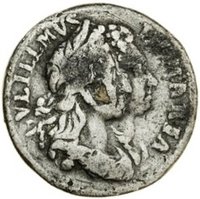
Obverse
Description:
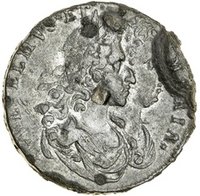
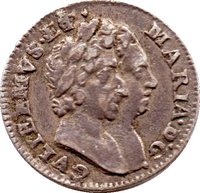
Conjoined busts of William and Mary right, draped, legend around.
Inscription:
GVLIELMVS ET MARIA.
Script: Latin
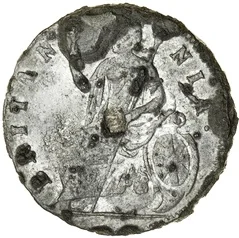
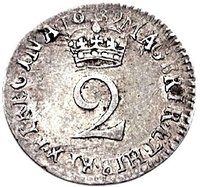
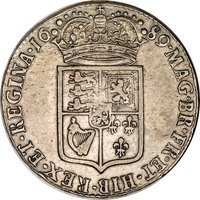
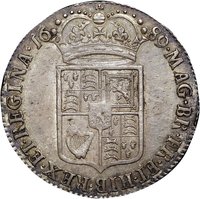
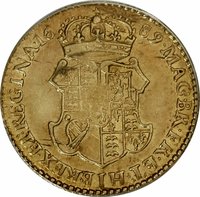
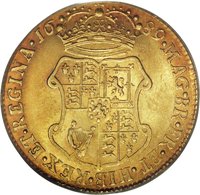
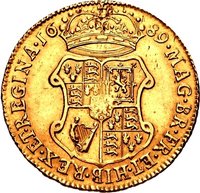
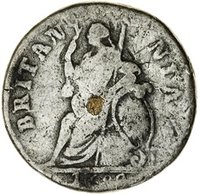
Reverse
Description:
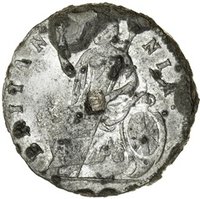
Britannia seated left, holding an olive branch and spear, with a Union Jack shield beside her. Legend around.
Inscription:
BRITANNIA
Script: Latin
Edge
Date on edge
Legend:
1689
Mintings
| Year | Mint Mark | Mintage | Quality | Collection |
|---|---|---|---|---|
| 1689 | — | — |
Historical background
In 1689, England's currency system was predominantly silver-based, anchored by the silver penny. The primary circulating coins were the hammered silver pieces, like shillings and crowns, but these were in a dire state. Centuries of "clipping" (shaving metal from coin edges) and counterfeiting had severely degraded the coinage, reducing the average silver content and undermining public trust. This created a significant discrepancy between the face value of coins and their intrinsic metal worth, disrupting trade and state finance just as England embarked on the costly Nine Years' War against France.
The situation was exacerbated by the global phenomenon of "bimetallic flow." The official mint ratio between gold and silver undervalued silver relative to European markets, causing full-weight silver coins to be illegally melted down and exported for profit. This left only the worn and clipped silver in domestic circulation, a classic example of Gresham's Law where "bad money drives out good." While gold guineas, originally worth 20 shillings, circulated at a premium, they were too high-denomination for everyday commerce, creating a severe shortage of reliable small change and hampering the economy.
Consequently, the new regime of William III and Mary faced an immediate fiscal crisis. The government could not effectively collect taxes or pay soldiers with a discredited currency, threatening the war effort. This monetary instability set the stage for the Great Recoinage of 1696, a drastic and expensive state intervention led by Treasury Secretary Charles Montagu and advised by figures like Isaac Newton. The crisis also accelerated the founding of the Bank of England in 1694, which provided government loans based on future tax revenue, fundamentally reshaping English public finance amidst the currency turmoil.
The situation was exacerbated by the global phenomenon of "bimetallic flow." The official mint ratio between gold and silver undervalued silver relative to European markets, causing full-weight silver coins to be illegally melted down and exported for profit. This left only the worn and clipped silver in domestic circulation, a classic example of Gresham's Law where "bad money drives out good." While gold guineas, originally worth 20 shillings, circulated at a premium, they were too high-denomination for everyday commerce, creating a severe shortage of reliable small change and hampering the economy.
Consequently, the new regime of William III and Mary faced an immediate fiscal crisis. The government could not effectively collect taxes or pay soldiers with a discredited currency, threatening the war effort. This monetary instability set the stage for the Great Recoinage of 1696, a drastic and expensive state intervention led by Treasury Secretary Charles Montagu and advised by figures like Isaac Newton. The crisis also accelerated the founding of the Bank of England in 1694, which provided government loans based on future tax revenue, fundamentally reshaping English public finance amidst the currency turmoil.
Series: 1689 England circulation coins
✨ Legendary