

2 thalers – Austrian Empire
Add to wishlist
Austria
Context
Years: 1625–1636
Country: Austria
Issuer: Austrian Empire
Ruler: Ferdinand II
Currency:
(1520—1754)
Demonetized: Yes
References
KM: #
Numista: #161992
Value
Bullion value: $143.75
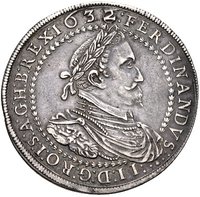
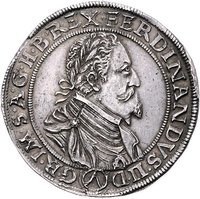
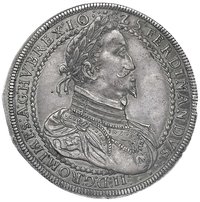
Obverse
Description:
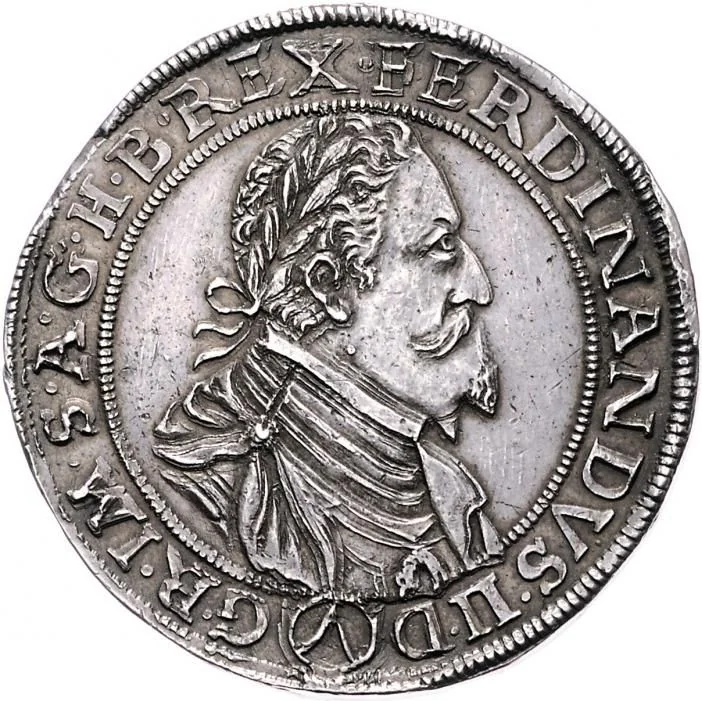
Portrait facing right, ruffled collar, chevron mint mark below.
Inscription:
FERDINANDVS II D (Λ) G R IM S A G H B REX
Script: Latin
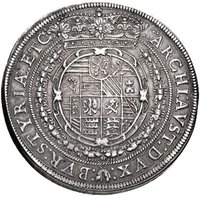
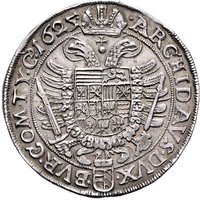
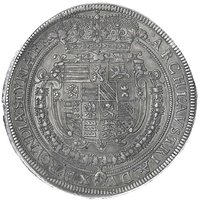
Reverse
Description:
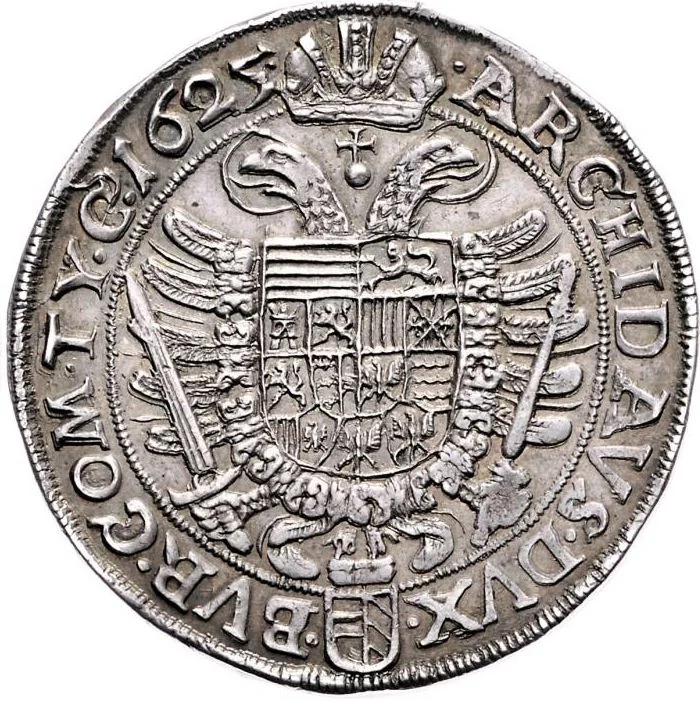
Imperial eagle with composite arms, Austrian shield beneath.
Inscription:
ARCHID AVS DVX // BVR COM TY eC 1625
Script: Latin
Edge
Smooth (thick flan)
Mints
| Name | Mark |
|---|---|
| Münze Österreich | — |
Mintings
| Year | Mint Mark | Mintage | Quality | Collection |
|---|---|---|---|---|
| 1625 | — | — | ||
| 1626 | — | — | ||
| 1629 | — | — | ||
| 1631 | — | — | ||
| 1633 | — | — | ||
| 1634 | — | — | ||
| 1636 | — | — |
Historical background
In 1625, the currency system of the Habsburg Austrian Empire was in a state of profound crisis, a direct consequence of the immense financial strains of the ongoing Thirty Years' War (1618-1648). Emperor Ferdinand II’s military campaigns against Protestant forces and his allies, particularly the costly fight against the Danish intervention led by Christian IV, required vast sums of money that far exceeded ordinary tax revenues. This led to repeated debasements of the coinage, a process where the silver content in coins was reduced while their face value was maintained, creating a short-term profit for the imperial treasury but devastating the economy.
The primary unit, the Reichsthaler, was a standard silver coin, but its value was being undermined by the proliferation of lightweight and adulterated coins, especially the smaller Kreuzer and Groschen used in daily transactions. Different regions within the heterogeneous empire, such as the Austrian hereditary lands, Bohemia, and Hungary, also minted their own variations, leading to a chaotic multiplicity of circulating currencies with fluctuating exchange rates. This period saw the widespread minting of so-called Kipper- und Wipperzeit coinage (named for the practice of "tipping" good coins out of circulation), where profiteering mint masters and princes, often with official concessions, produced floods of nearly worthless small change, leading to rampant inflation and a collapse in public trust.
The government in Vienna recognized the destabilizing effects but was largely powerless to enact effective reform in the midst of wartime exigency. Debasement was a fiscal tool of necessity, not choice, to pay soldiers and suppliers. Consequently, the year 1625 falls within a broader era of monetary disorder where the value of money was highly unstable, creditors were ruined, prices soared, and the peasantry and lower classes bore the brunt of the economic hardship. True stabilization would only begin over a decade later with the Münzordnung (coinage ordinance) of 1635, which attempted to restore a standardized silver-based currency.
The primary unit, the Reichsthaler, was a standard silver coin, but its value was being undermined by the proliferation of lightweight and adulterated coins, especially the smaller Kreuzer and Groschen used in daily transactions. Different regions within the heterogeneous empire, such as the Austrian hereditary lands, Bohemia, and Hungary, also minted their own variations, leading to a chaotic multiplicity of circulating currencies with fluctuating exchange rates. This period saw the widespread minting of so-called Kipper- und Wipperzeit coinage (named for the practice of "tipping" good coins out of circulation), where profiteering mint masters and princes, often with official concessions, produced floods of nearly worthless small change, leading to rampant inflation and a collapse in public trust.
The government in Vienna recognized the destabilizing effects but was largely powerless to enact effective reform in the midst of wartime exigency. Debasement was a fiscal tool of necessity, not choice, to pay soldiers and suppliers. Consequently, the year 1625 falls within a broader era of monetary disorder where the value of money was highly unstable, creditors were ruined, prices soared, and the peasantry and lower classes bore the brunt of the economic hardship. True stabilization would only begin over a decade later with the Münzordnung (coinage ordinance) of 1635, which attempted to restore a standardized silver-based currency.

✨ Legendary