

17 Kreuzers – Austrian Empire
Austria
Context
Years: 1750–1765
Country: Austria 
Issuer: Austrian Empire
Ruler: Maria Theresa
Currency:
(1754—1857)
Demonetized: Yes
References
KM: #Click to copy to clipboard1795
Numista: #160829
Value
Bullion value: $17.30
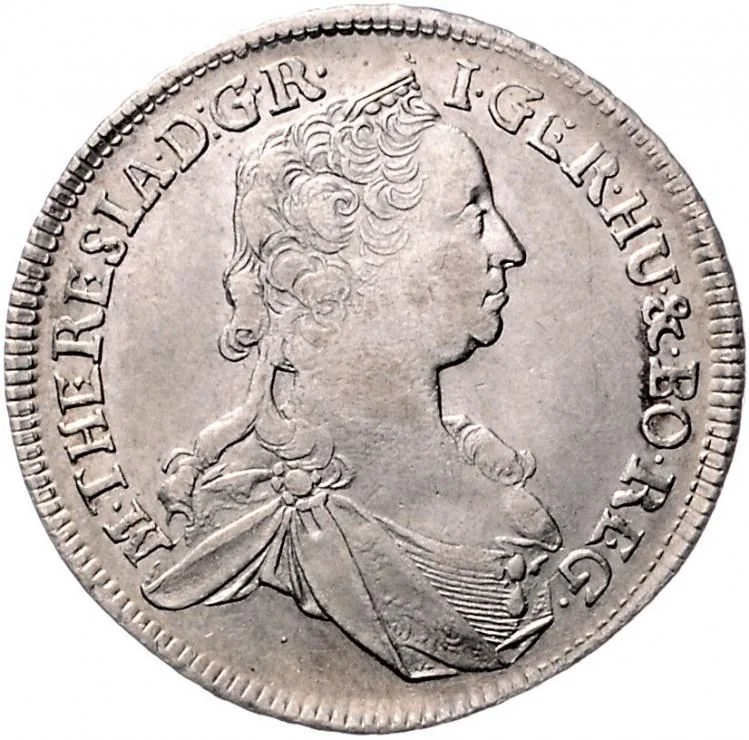
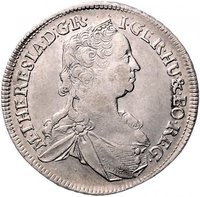
Obverse
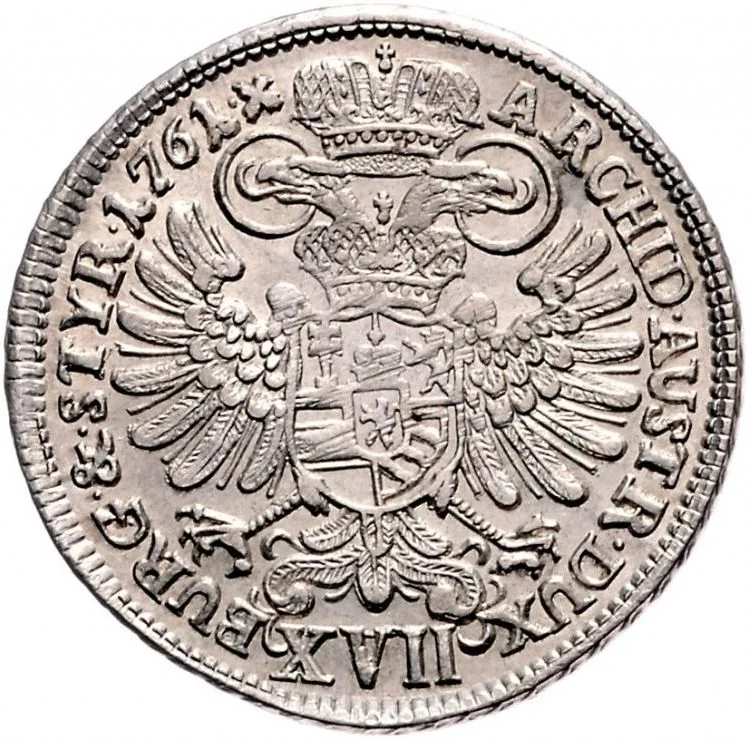
Reverse
Description:
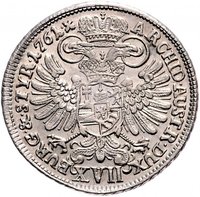
Crowned double-headed eagle holding shields of Hungary, Bohemia, Old Burgundy, and Tyrol, with Styria at the center. Value in Roman numerals below. Legend begins at 1 o'clock.
Inscription:
ARCHID AUSTR DUX XVII BURG & STYR 1761 X
Script: Latin
Edge
Mints
| Name | Mark |
|---|---|
| Graz | — |
Mintings
| Year | Mint Mark | Mintage | Quality | Collection |
|---|---|---|---|---|
| 1750 | — | — | ||
| 1751 | — | — | ||
| 1752 | — | — | ||
| 1753 | — | — | ||
| 1754 | — | — | ||
| 1761 | — | — | ||
| 1762 | — | — | ||
| 1763 | — | — | ||
| 1765 | — | — |
Historical background
In the mid-18th century, the currency situation of the Habsburg Monarchy, commonly referred to as the Austrian Empire, was characterized by profound complexity and instability. The core of the problem was a fragmented monetary system, a legacy of the empire's diverse and loosely integrated territories. While the official unit of account was the Gulden (florin), divided into 60 Kreuzer, actual circulation was a chaotic mix of domestic and foreign coins. Silver Reichsthalers from the Holy Roman Empire, Dutch ducats, and even Ottoman piasters circulated alongside debased domestic coinage, leading to confusing and fluctuating exchange rates between regions like Austria, Bohemia, and Hungary.
This monetary disorder was largely a consequence of the state's chronic fiscal crises, exacerbated by the costly War of the Austrian Succession (1740-1748). To finance its military campaigns, the treasury under Empress Maria Theresa repeatedly resorted to debasement—reducing the precious metal content in coins while maintaining their face value. This practice, managed by the Universal Bankalität in Vienna, generated short-term revenue but triggered inflation, eroded public trust in the currency, and disrupted commerce. Merchants and the public faced significant uncertainty, as the intrinsic value of a coin could differ greatly from its nominal worth.
Recognizing the severe economic damage, Maria Theresa's government initiated major reforms in the years following 1750. The pivotal year 1753 saw the signing of the Imperial Coinage Convention (Münzkonvention) with Bavaria, which began to standardize the Gulden across southern Germany and the Habsburg lands. More concretely, the state moved to centralize minting operations and, in 1762, introduced the first state paper money, the Bancozettel, issued by the newly founded Wiener Stadtbanco. These were foundational steps toward a unified monetary system, aiming to stabilize the economy and strengthen central authority, though full stability remained a long-term challenge.
This monetary disorder was largely a consequence of the state's chronic fiscal crises, exacerbated by the costly War of the Austrian Succession (1740-1748). To finance its military campaigns, the treasury under Empress Maria Theresa repeatedly resorted to debasement—reducing the precious metal content in coins while maintaining their face value. This practice, managed by the Universal Bankalität in Vienna, generated short-term revenue but triggered inflation, eroded public trust in the currency, and disrupted commerce. Merchants and the public faced significant uncertainty, as the intrinsic value of a coin could differ greatly from its nominal worth.
Recognizing the severe economic damage, Maria Theresa's government initiated major reforms in the years following 1750. The pivotal year 1753 saw the signing of the Imperial Coinage Convention (Münzkonvention) with Bavaria, which began to standardize the Gulden across southern Germany and the Habsburg lands. More concretely, the state moved to centralize minting operations and, in 1762, introduced the first state paper money, the Bancozettel, issued by the newly founded Wiener Stadtbanco. These were foundational steps toward a unified monetary system, aiming to stabilize the economy and strengthen central authority, though full stability remained a long-term challenge.

✨ Legendary