

10 Kreuzers – Austrian Empire
Austria
Context
Years: 1754–1765
Country: Austria 
Issuer: Austrian Empire
Ruler: Maria Theresa
Currency:
(1754—1857)
Demonetized: Yes
Material
References
KM: #Click to copy to clipboard1810
Numista: #160754
Value
Bullion value: $10.95
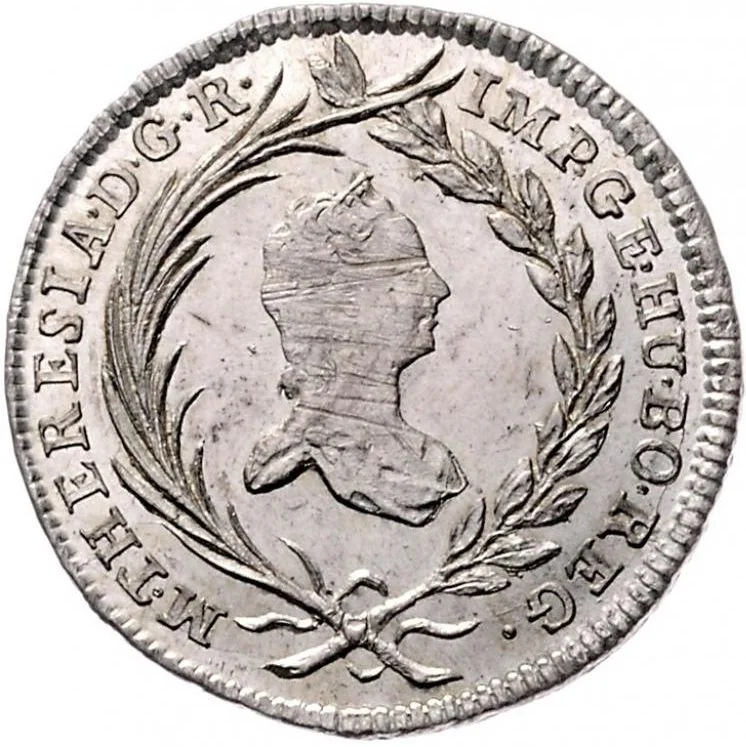
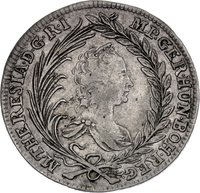
Obverse
Description:
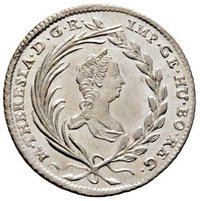
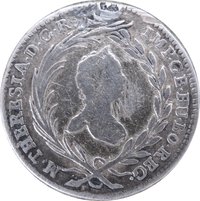
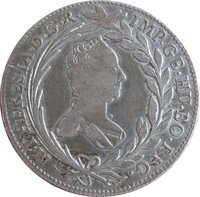
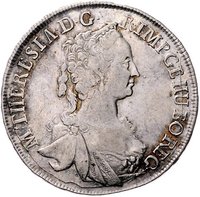
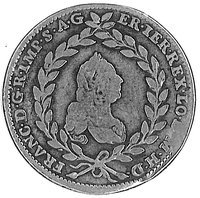
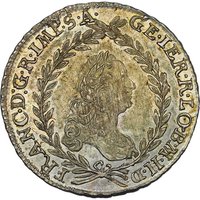
Crowned bust right in palm and laurel wreath.
Inscription:
M THERESIA D G R // IMP GE HU BO REG
Script: Latin
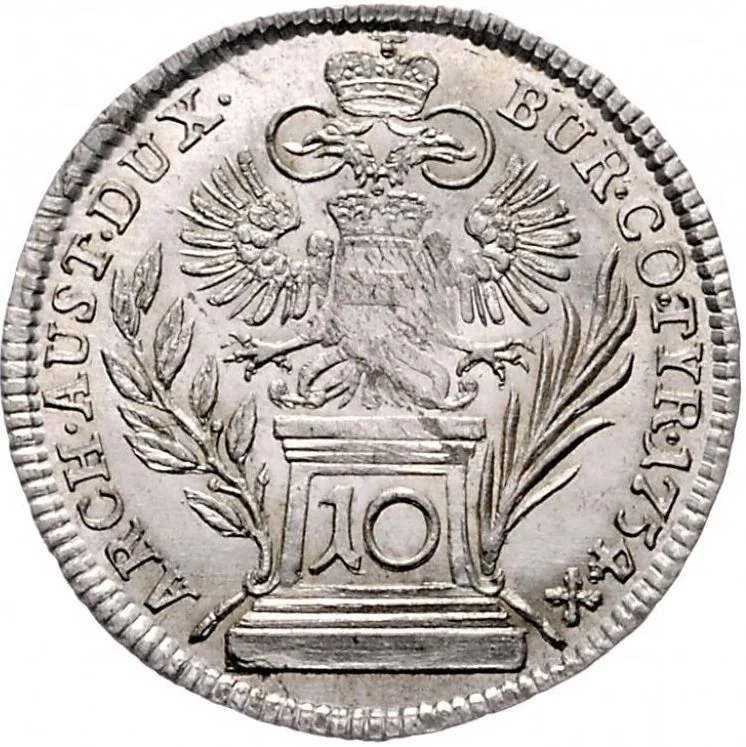
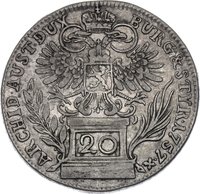
Reverse
Description:
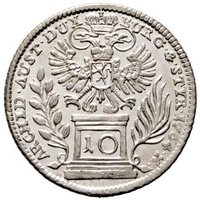
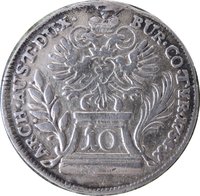
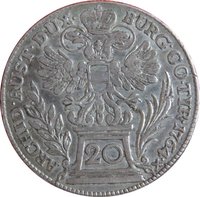
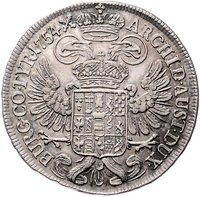
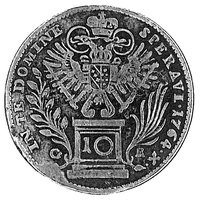
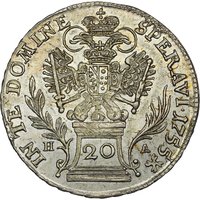
Crowned double-headed eagle with Austrian arms on breast above pedestal, value inside. Legend begins at 7 o'clock.
Inscription:
ARCH AUST DUX // BURG CO TYR 1754 X
Script: Latin
Edge
Mints
| Name | Mark |
|---|---|
| Münze Österreich | — |
Mintings
| Year | Mint Mark | Mintage | Quality | Collection |
|---|---|---|---|---|
| 1754 | — | — | ||
| 1755 | — | — | ||
| 1756 | — | — | ||
| 1757 | — | — | ||
| 1758 | — | — | ||
| 1759 | — | — | ||
| 1760 | — | — | ||
| 1761 | — | — | ||
| 1762 | — | — | ||
| 1763 | — | — | ||
| 1764 | — | — | ||
| 1765 | — | — |
Historical background
In 1754, the currency situation within the Habsburg Monarchy, often referred to as the Austrian Empire, was characterized by significant complexity and instability. The core of the problem was a fragmented monetary system, where different regions of the empire used different currencies. The Austrian hereditary lands primarily operated on a convention standard based on the Conventionsthaler, established in 1753, while the Kingdom of Hungary retained its own separate system based on the Forint (Gulden). This lack of uniformity created constant difficulties for trade, taxation, and state finance, as exchange rates between these systems fluctuated.
The root cause of this instability was a chronic shortage of silver, the primary metal for high-value coinage. Decades of warfare, particularly the recent War of the Austrian Succession (1740-1748), had drained the treasury and led to repeated debasements of the coinage. Authorities would reduce the silver content in coins to mint more of them, a short-term fix that eroded public trust and caused inflation. Furthermore, the empire struggled with a flood of inferior foreign coins and counterfeits circulating within its borders, which further undermined the value of legitimate currency and confused everyday transactions.
Recognizing the crisis, Empress Maria Theresa's government had just undertaken a major reform. The pivotal Imperial Mint Patent of 1753 aimed to stabilize the situation by defining a new standard: the Conventionsthaler, which was to contain a specific amount of fine silver and be equivalent to 2 Gulden in the Austrian lands. This convention system was a concerted effort to create a uniform, stable currency across much of the empire. However, in 1754, the reform was in its very early stages of implementation. Its success was not yet assured, and the monetary landscape remained a fragile patchwork, with the state's ability to manage its coinage and debt being a constant challenge to its central authority and economic health.
The root cause of this instability was a chronic shortage of silver, the primary metal for high-value coinage. Decades of warfare, particularly the recent War of the Austrian Succession (1740-1748), had drained the treasury and led to repeated debasements of the coinage. Authorities would reduce the silver content in coins to mint more of them, a short-term fix that eroded public trust and caused inflation. Furthermore, the empire struggled with a flood of inferior foreign coins and counterfeits circulating within its borders, which further undermined the value of legitimate currency and confused everyday transactions.
Recognizing the crisis, Empress Maria Theresa's government had just undertaken a major reform. The pivotal Imperial Mint Patent of 1753 aimed to stabilize the situation by defining a new standard: the Conventionsthaler, which was to contain a specific amount of fine silver and be equivalent to 2 Gulden in the Austrian lands. This convention system was a concerted effort to create a uniform, stable currency across much of the empire. However, in 1754, the reform was in its very early stages of implementation. Its success was not yet assured, and the monetary landscape remained a fragile patchwork, with the state's ability to manage its coinage and debt being a constant challenge to its central authority and economic health.
💎 Extremely Rare